
Things convey in global politics on February 7, 2026, President Donald Trump put pen to paper on an executive order that’s got everyone talking – he’s officially scrapping that burly 25% penalty tariff he’d slapped on Indian goods back in August 2025. You know, the one bind to India’s purchases of Russian oil amid all the Ukraine tensions? It’s a big proceed that’s easing some serious economic strain between the US and India, and it feels like a win for diplomacy, at least on the surface.

This all started last year when Trump, frustrated that countries like India were still buying cheap Russian crude – which he says finance Moscow’s war efforts – decided to hit back with tariffs. India, being one of the biggest buyers of discounted Russian oil to keep its energy costs low, faced a whopping 50% duty on its exports to the US, with half of that being this “penalty” for the oil deals. It hurt Indian industries like textiles and manufacturing, and let’s be real, it put a damper on the whole US-India partnership that both sides have been building up.
But fast-forward to now: After some back-and-forth talks, including a reported phone call between Trump and Prime Minister Narendra Modi, India has apparently committed to ditching Russian oil imports – both direct and indirect – and pivoting to US energy sources instead. In return, Trump’s order kicks in immediately, dropping the tariffs down to 18% overall and wiping out that extra 25% punishment. The White House says this is part of a broader interregnum trade substructure, where India also concur to buy a enormous $500 billion worth of US goods over the next five years, including energy, military gear, and tech. It’s like Trump is saying, “Hey, let’s do business in my way – America first, but we’ll make it toil for you too.”
Of course, it’s not all smooth sailing. The order comes with a catch: US officials will keep a close eye on India’s oil imports. If they spot any sneaky Russian links popping up again, boom – the tariffs could snap right back. Analysts are calling this “coercive” diplomacy, pointing out that it might crimp India’s strategic autonomy – you know, that whole thing about not getting too tied to any one power. New Delhi hasn’t outright confirmed the oil commitment yet, with the Ministry of External Affairs sticking to “our policy remains unchanged” vibes, but actions speak louder, right? Meanwhile, on social media, folks are buzzing – some hailing it as Modi outsmarting the system, others worried it’s a surrender to US pressure.
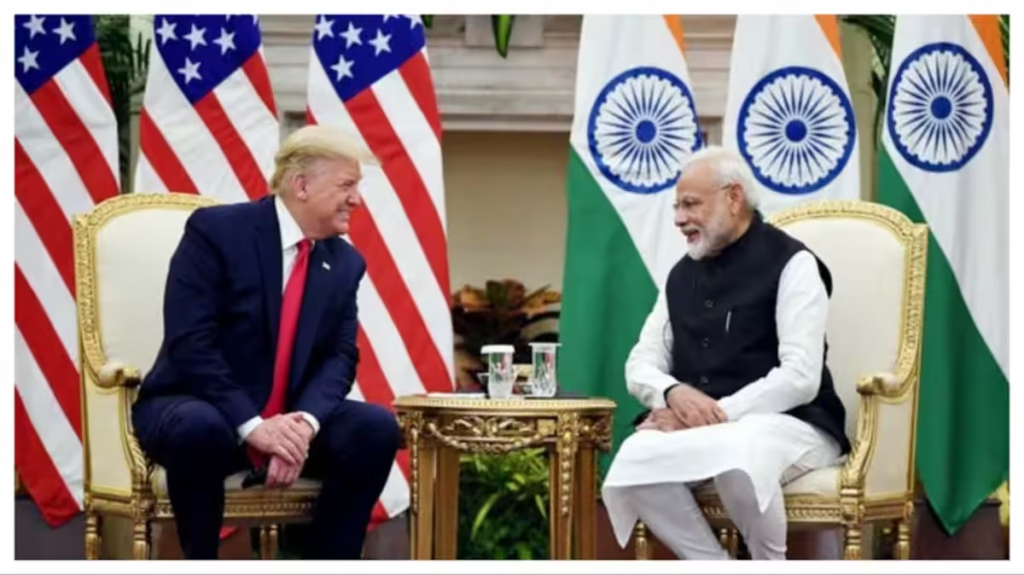
Economically, this could be a game-changer. Indian exporters are already lining up for refunds on those duties, and it might boost ties in defense and tech too. But geopolitically? It reshuffles the deck for BRICS and energy markets worldwide. Russia’s mislay a key buyer, while the US scores points in segregate Moscow. Trump framed it as protecting US national security, but critics say it’s just strong-arming fuse. All in all, this feels like a realistic reset after months of tension.
Sources:
The Indian Express
The Wire
Hindustan Time’s
CNBC
Times of India
Reuters
The Hindu