
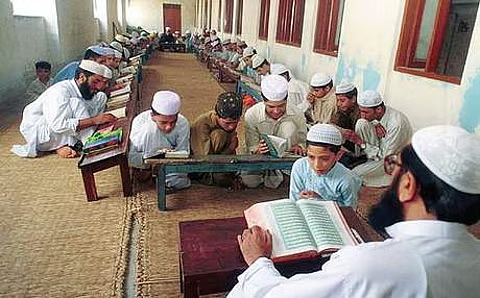
Governor of Uttarakhand, Lieutenant General Gurmit Singh (Retd.) recently passed the Uttarakhand minority Bill, 2025 that aims to amend the Madrasa Education Board Act 2016 and the Non-Government Arabic and Persian Madrasa Recognition Rules, 2019. The Chief Minister of Uttarakhand, Pushkar Singh Dhami stated that once the Bill is implemented, all the minority institutions in Uttarakhand will have to follow the rules and regulations of the new minority Bill 2025. The move, which the government has hailed as historic, requires affiliation with the state school education board and abolishes the current Madrasa Board. This means that in addition to religious studies, students in madrasas will now study the same subjects as those in regular schools, such as science, math, and social studies. The government claims that this action will provide equal educational opportunities for all students in the state.
What Changes will now come into action?
- New Curriculum and Subjects
Under the New Curriculum Framework (NCF), the Madrasas and the minority institutions will have to follow the rules of National Education Policy 2020 (NEP-2020). From the upcoming academic sessions 2026-27, these institutions will work towards social inclusion and blend modern education with traditional learning. CM Dhami stated in his X post, “Heartfelt thanks to the Honourable Governor Lt Gen Gurmit Singh ji (Retd.) For granting approval to the Minority Education Bill-2025! With the Governor’s approval, the path for this bill to become law has now been paved. Under this law, an authority will be established for the education of minority communities, which will handle the task of granting recognition to minority educational institutions. Additionally, after the implementation of this bill, minority educational institutions such as madrasas will be required to obtain recognition from the Uttarakhand Education Board.”
- One System of Education for All
Up until now, a distinct Madrasa Board oversaw the operation of madrasas in Uttarakhand and established their curricula and examinations. This board will be disbanded under the new bill. Rather, the Uttarakhand Board of School Education (UBSE), which oversees other schools, will require all madrasas to register.The Uttarakhand Minority Education Authority, a new organization, will oversee these schools and ensure that they abide by the new regulations. New opportunities are created by the introduction of subjects like science, math, and the social sciences as well as vocational training.

- Providing Equal Opportunities
According to the state government, a lot of madrasa students have trouble applying for jobs or further education because the main education board does not accept their certificates. That issue will be resolved by this reform. Similar to students from regular schools, madrasa students will receive board-recognized certificates under the new system. They can use this to apply for government and private jobs or to further their education. As CM Dhami stated, “Our goal is that every child in the state, regardless of their class or community, should progress with equal education and opportunities.”
Advantages of the new Bill
- Better Careers and Accredited Degrees- Students at madrasas will be granted official board certificates upon their affiliation with the state board. They will find it simpler to apply for jobs in the public or private sectors or to attend college as a result.
- Acquiring Contemporary Skills- The new bill will introduce topics like environmental studies, computer science, and vocational training. Students will become more employable and prepared for a range of career paths as a result.
- Encouraging Social Inclusion and harmony- Better understanding between various groups in society is facilitated when students from all communities study related subjects. The government anticipates that this reform will lessen social divisions and increase educational inclusivity.
How is the public and opposition reacting?
Pushkar Singh Dhami, the chief minister of Uttarakhand, described the act as “historic.” According to him, the goal of the action is to guarantee that all Uttarakhand children receive an education of the same status, regardless of their community. The bill is now a law after receiving the governor’s approval.The idea has received support from some madrasa representatives who claim it will help their students get more recognition and improve their employment prospects. They think their institutions will be strengthened by combining religious teachings with contemporary education. However, a number of minority groups and political figures have criticized the action. They claim that before passing the bill, the government ought to have had a more in-depth conversation with madrasa authorities about the changes. They worry that the action might lessen religious schools’ autonomy.
Conclusion
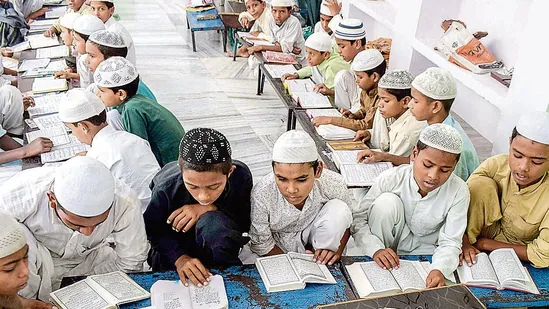
Uttarakhand now becomes the first state in India to pass the Minority Bill Act 2025. One of the most significant educational reforms in recent years was the Uttarakhand government’s decision to place madrasas under the state education board. It seeks to preserve cultural education while giving every student equal access to educational opportunities.If executed properly, this measure could help close the gap between traditional and modern education and provide thousands of children from minority communities with new opportunities. As the Uttarakhand government moves ahead with the execution of the Act, all eyes are on the state now as to how the reforms unfold in the upcoming academic year.