
August 2025 is one of the scariest months in the history of Jammu and Kashmir. A cloudburst in the Kishtwar region of Jammu and then the unprecedented rains, along with huge landslides have ravaged the region, which lead to destruction, loss of lives, and unanswered questions for the authorities from the people of j&k.
The Worst Rainfall in Over a Century
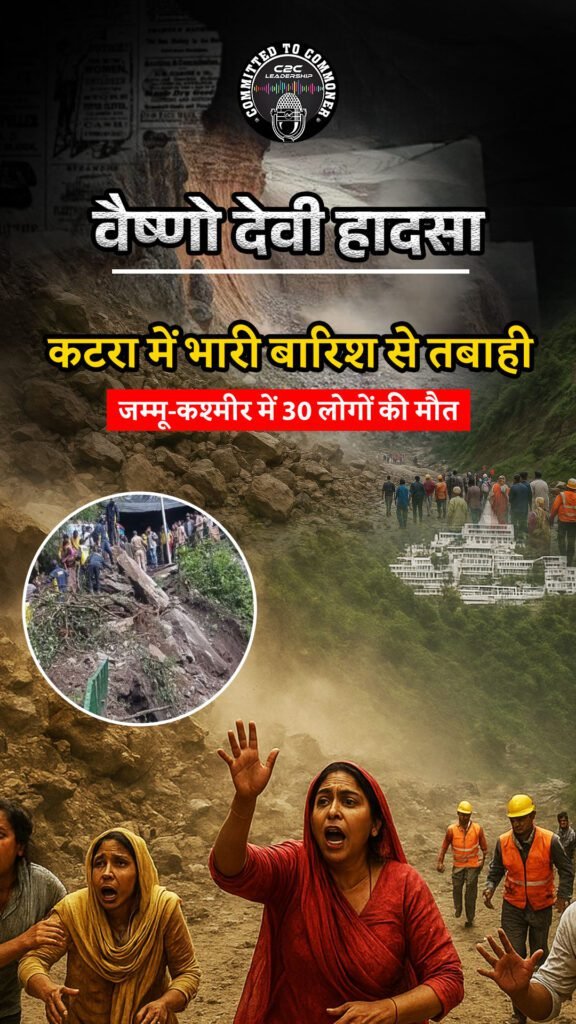
Within a period of just 24 hours, Jammu had received 330 mm of rain, the largest ever received since 1910. Udhampur, another district in Jammu, wasn’t left behind either. That resulted due to extreme weather that caused floods, landslides, and a disastrous cloudburst close to the Vaishno Devi shrine path.
A Holy Pilgrimage Turned Deadly
The pilgrimage, which was intended to be a spiritual one, turned out to be a nightmare for thousands of Vaishno Devi devotees. On Tuesday afternoon, a cloudburst hit the area near Adhkuwari, a major halting point along the pilgrimage route. A total of 34 pilgrims perished on the spot.
In spite of previous weather alerts, hundreds of pilgrims were still on the journey. A later landslide killed four worshippers taking refuge under a metal shed. Another four lost their lives in Doda district because of flash floods caused by rain. The number of deaths rose rapidly to 41, one of the most fatal weather events in recent history.
Relief Efforts and Rescue Missions
Thousands of individuals were left stranded in water-logged roads, roadblockaded highways.. The Indian Air Force, NDRF, Indian Army, and SDRF started speedy rescue operations:
Over 5,000 individuals were evacuated from flooded areas.
22 CRPF men and 3 civilians were airlifted from Madhopur Headworks.
Railway services were suspended, and over 2,500 passengers were rescued.
A few major roads such as the Jammu-Srinagar and Batote-Doda-Kishtwar roads were shut down for landslides also, some areas of Srinagar were also put on high alert since the Jhelum river had risen close to the flood level.
Government Response and Questions Raised
J&K Lt Governor Manoj Sinha met the injured pilgrims in Katra and declared an relief of ₹9 lakh to the next of kin of the victims. But his promise of “all possible assistance” was eclipsed by skeptical questions posed by former CM Omar Abdullah.
Omar asked why pilgrims were on the track even after an open weather warning had been issued days in advance. “Why were they not stopped or shifted to safer places?” he questioned at a press conference. His allegations hint towards potential administrative failures that might have proved costly in terms of lives.
Looking Ahead
As the region turns attention towards relief and reconstruction, the disaster also brings into focus a larger debate on disaster preparedness, particularly for pilgrimage sites and tourist areas prone to natural disasters. With intensified climate change bringing unnatural intensification of natural disasters, infrastructure and warning mechanisms need to change in tandem.
In Remembrance
As Jammu & Kashmir’s hills witnessed the loss of life, the nation observed in sorrow and unity. The tragedy of Vaishno Devi is not so much an outcome of nature’s wrath ,but also a wake-up call to preparedness, governance, and empathy in the wake of increasing environmental threats.