
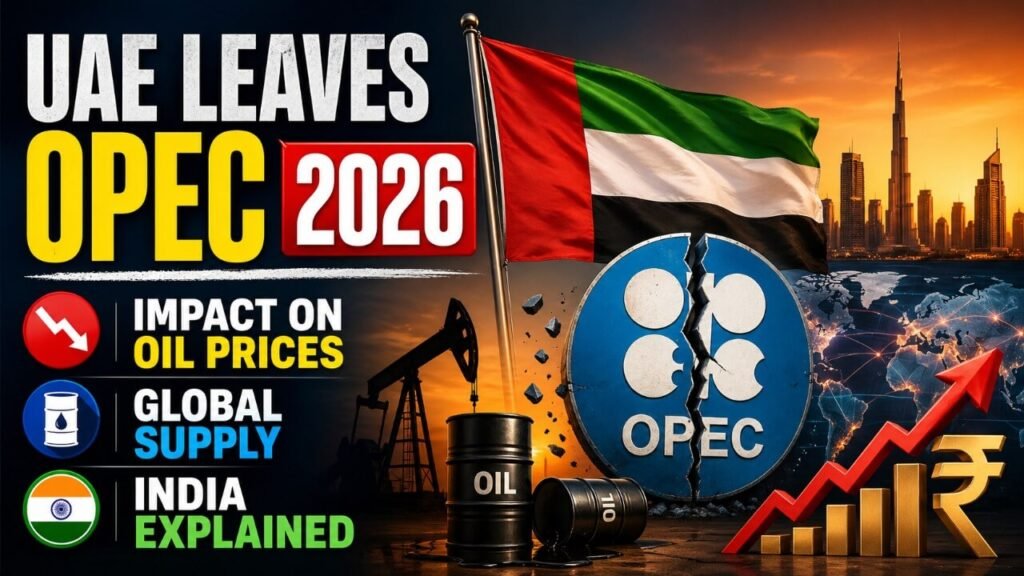
The United Arab Emirates just announced they’re quitting OPEC and the whole OPEC+ setup, and it’s happening really soon — from May 1st, which is basically this Friday. After being part of it since 1967, almost 60 years, Abu Dhabi has had enough and wants to go its own way.
Why should this matter to us sitting here in India? Well, it does, because we bring in most of our oil from outside. About 85% of what we use comes from imports. So when global crude prices twitch even a bit, it ends up hitting our petrol pumps, diesel for trucks, LPG cylinders at home, and honestly, the cost of pretty much everything we buy. Your monthly fuel bill and grocery expenses feel it directly.
So, why are they leaving now?
From what everyone’s saying, the UAE has been irritated for years with those production limits the group puts on them. They’ve poured a ton of money into building up their oil fields and can pump way more, but the quotas — mostly pushed by Saudi Arabia — kept holding them back. Now, with the world still needing lots of energy and all the dynamism happening because of the Iran situation and worries about the Strait of Hormuz, they just want the freedom to produce what makes sense for them, without waiting for approvals from the cartel.
The timing feels sudden. They gave hardly any notice, and right when oil prices had jumped up with all the Hormuz tension, this news actually cooled things down a little yesterday.
What could this mean for oil prices and our pockets?
Short term, things might still jump around a lot because the Middle East mess isn’t going away. But if you look a little further ahead, a lot of folks think this could help keep prices from staying too crazy high. Once the UAE isn’t tied down by quotas anymore, they can slowly increase how much they pump. More oil floating around in the market usually means prices don’t keep climbing forever.
For India, even if the price per barrel drops by a few dollars, it saves us a huge amount on the total import bill. That can translate into less pressure on fuel prices at the pump over the next few months. Maybe your commuting costs and household expenses won’t feel quite as heavy. It also helps the government a bit with inflation and subsidies.
The part that actually feels good for India
While they were inside OPEC, their sales and volumes were tied to the group’s decisions. Now that they’re stepping out, we can talk to them straight as an independent supplier. India and the UAE already get along well — good trade ties, that CEPA agreement, and plenty of energy cooperation happening.
Being able to negotiate our own deals directly gives us a real chance to get better pricing and handle risks smarter. Especially right now, when everyone’s nervous about ships going through Hormuz. If things get blocked there, having the option to route some crude through other paths, maybe even overland pipelines or different routes, could be a big help. It gives us more flexibility when we need it most.
People who follow the oil business closely, like experts from Grant Thornton and PwC, are calling this an opportunity for us. More supply flexibility from a friendly country like the UAE could mean stronger long-term contracts and a bit better energy security. It’s not like everything gets fixed tomorrow, but it does feel like a small advantage for big buyers like India and China.
The bigger picture with Iran, the Gulf tensions, and possible differences with Saudi is still messy. We’ll keep buying from Russia, Saudi, America, and wherever else it makes sense. Diversifying is still super important. And honestly, we need to keep pushing our own oil fields and renewable energy so we’re not depending on imports this much in the long run.
Will your fuel bills actually come down?
But if the UAE starts producing more freely and we manage to lock in some smarter bilateral deals, there should be less upward push on prices in the coming months. That could mean a little relief on diesel for your bike or car, cheaper transport costs for goods, and inflation not biting as hard.
At the end of the day, this whole thing shows how the old oil cartel system is cracking a bit. Countries are starting to put their own interests first instead of sticking strictly to the group. For us as a huge importer, having more direct partnerships with reliable sellers like the UAE is exactly the kind of thing we need when times are uncertain.
Sources:
- Reuters, Bloomberg, CNN, The New York Times, Al Jazeera — reports on the UAE announcement and background
- Indian Express, Livemint, The Hindu, Times of India — analysis on what it means for India and oil prices
- Comments from energy experts at Grant Thornton Bharat and PwC India