
In a bold and stiff narrative that’s become a hallmark of his second term, President Donald Trump on Wednesday evening accelerate his self-proclaimed role in averting a probable nuclear holocaust between India and Pakistan, crediting a dramatic 350% tariff threat with forcing both nations to the thrash out table. Speaking at the flashy US-Saudi Investment Forum in Riyadh—flanked by Saudi Crown Prince Mohammed bin Salman—Trump painted a vivid picture of high-stakes diplomacy, where economic leverage trumped customary mediation. “I’m going to do it. Come back to me and I’ll take it down. But I’m not going to have you guys shooting nuclear weapons at each other armament, killing millions of people and having the nuclear dust floating over Los Angeles. I’m not going to do it, Trump declared, his voice echoing through the opulent hall packed with global investors.
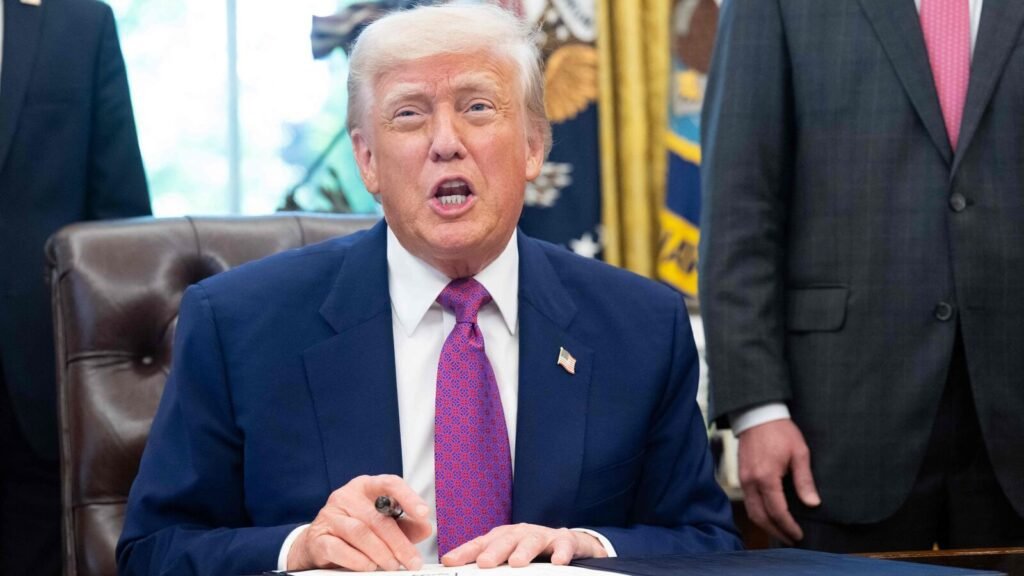
The remarks, delivered just hours ago, mark the 61st time Trump has publicly touted his intervention in the May 2025 India-Pakistan crisis, according to a tally by fact-checking outlet PolitiFact. The crisis, which held the world in suspense for three tense days, erupted after a deadly terror attack in the picturesque Pahalgam valley of Indian-administered Kashmir on May 4, 2025. The assault, claimed by the Pakistan-based Lashkar-e-Taiba, left 26 civilians dead—mostly Indian tourists—igniting fears of escalation between the two nuclear-armed rivals. India’s swift retaliation—codenamed Operation Sindoor—comprised precision airstrikes on nine terror camps across the Line of Control in Pakistan-occupied Kashmir and deep inside Pakistani territory. Satellite imagery from the time revealed plumes of smoke rising over Muzaffarabad and nearby sites, as Indian Mirage 2000 jets evaded Pakistani air defenses in a display of military precision that left observers stunned.
What followed was a whirlwind of diplomatic frenzy. On May 7, as artillery duels lit up the border and global markets dipped in panic, Trump took to his Truth Social platform, posting a cryptic message: “India and Pakistan are engaged in high-level conversation. It will be a long night, but there is hope for peace. Stay tuned. —DJT” By dawn on May 10, the Directors General of Military Operations from both sides announced a “full and immediate” ceasefire, halting the exchanges that had already claimed over 150 lives. Washington hailed it as a triumph of quiet off the record, but New Delhi has been unequivocal: no third party was involved. “The understanding was reached bilaterally through direct military hotlines, reflecting the maturity of our armed forces,” Indian Foreign Secretary Vikram Misri said at the time—a statement reiterated in subsequent briefings.
Trump’s latest salvo at the Saudi forum adds a theatrical layer to his version of events. He described frantic calls from both Islamabad and New Delhi, painting himself as the disinclined peacemaker wielding the Treasury Department’s tariff hammer. “Both countries called me up—’Please, Mr. President, don’t do the tariffs.’ I said, ‘Too bad, unless you stop this madness,'” he quipped, drawing chuckles from the audience. According to Trump, Pakistan’s Prime Minister Shehbaz Sharif was highly appreciative, allegedly calling him—alongside White House Chief of Staff Susie Wiles—to thank him for “saving millions of lives.” Trump further claimed that Sharif was “crying on the line—real tears.” On the Indian side, the story takes a folksy turn: Prime Minister Narendra Modi, in Trump’s reprising, picked up the red phone and declared, “Sharif reportedly assured, “We’re not going to go to war.” Trump’s response, according to his account: “Good—let’s make a deal. Tariffs are off the table if you cooperate.
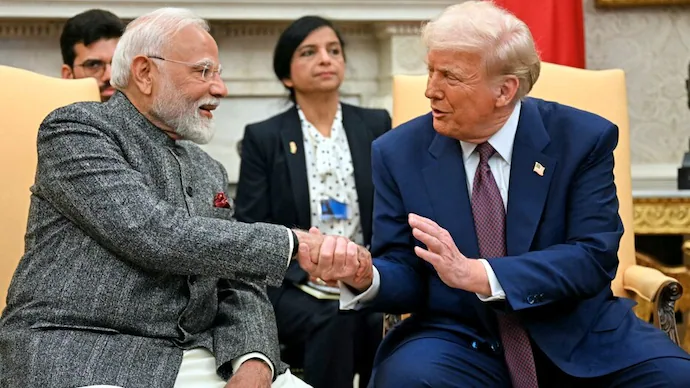
The tariff specter Trump invoked wasn’t idle bluster. In the feverish days of early May, US Trade Representative Katherine Tai had reportedly drafted executive orders slapping 350% duties on key exports—textiles and pharmaceuticals from Pakistan, gems and auto parts from India—potentially crippling $15 billion in annual mutual trade. Treasury Secretary Scott Bessent, a Wall Street veteran and close Trump ally, was prepared to approve the measures, according to sources familiar with the deliberations who spoke to Reuters last spring. “It was economic mutually assured destruction,” one anonymous official quipped, nodding to the nuclear doctrines both South Asian powers maintain. Trump reiterated this leverage during a bilateral meeting with the Saudi Crown Prince in the Oval Office on Wednesday, saying, ‘No other president would have done that. I used tariffs to resolve these conflicts—though not all of them. Five of the eight were settled because of the economy, because of trade, because of tariffs.”
Scepticism in India remains as strong as ever. In a statement released moments after Trump’s Riyadh speech hit airwaves, the Indian Ministry of External Affairs dismissed the claims as “a figment of imaginative recollection,” urging focus on “substantive bilateral cooperation” instead of “unilateral attributions.” This isn’t the first rebuke; since May, Indian envoy have stonewalled US queries on the matter, with Modi himself avoiding direct comment during his September state visit to Washington. Analysts suggest the denials stem from domestic politics—Modi’s Bharatiya Janata Party thrives on a narrative of assertive nationalism, where foreign intervention could undermine the “self-reliant India” ethos. “Acknowledge external pressure would play into opposition hands,” says Happymon Jacob, a professor at Jawaharlal Nehru University in New Delhi. “At its core, it’s a matter of sovereignty and optics,” he said.
Pakistan’s response has been more muted, perhaps reflecting Sharif’s fragile coalition government, which relies on IMF bailouts often greenlit by Washington. No official confirmation of the thank-you call has emerged, though a Sharif aide told Dawn News last year that “US economic signals were noted” during the de-escalation. Privately, senior Pakistani military officials—long wary of perceived Indian adventurism—may view Trump’s rhetoric as a useful buffer against future flare-ups.

The broader implications of Trump’s tariff tale ripple far beyond the subcontinent. As the US-Saudi forum underscores, his administration is doubling down on “America First” economics, using trade as a cudgel in foreign policy. With midterm elections looming in 2026, Trump’s war stories— from Ukraine grain deals to Middle East ceasefires—serve as red meat for his base, portraying him as the dealmaker who bends history with a tweet. Yet critics, including former National Security Advisor Former National Security Adviser John Bolton cautioned that tariffs are blunt instruments, saying, “Tariffs aren’t scalpels; they’re sledgehammers. If India or Pakistan had called the bluff, the U.S. could have isolated itself while the world burned. Six months on, the ceasefire holds tenuously. Cross-border pilgrimages have resumed via the Kartarpur corridor, and trade volumes at the Wagah–Attari post are up 12%, according to Indian commerce data. But beneath the calm, fault lines persist: Kashmir’s autonomy debates rage in New Delhi, while Islamabad eruptive with economic woes exacerbated by climate floods. Trump’s narrative, true or not, injects capriciousness into an already eruptive equation. As he concluded his address to the Saudi leadership—declaring, “I saved a lot of people, millions of people, in many other wars”—the lingering question remained: in the arena of nuclear bluffing, who truly holds the upper hand?