
For thousands at Meta, that’s exactly what happened this week. On May 20, around 8,000 people – roughly 10% of the company – got the news that their roles were gone. No sugarcoating it. But what struck a lot of folks, both inside and outside the company, was how Mark Zuckerberg addressed it. He didn’t just send a cold corporate note. He spoke directly to the people leaving, and then turned to the 70,000 still there with some real promises.
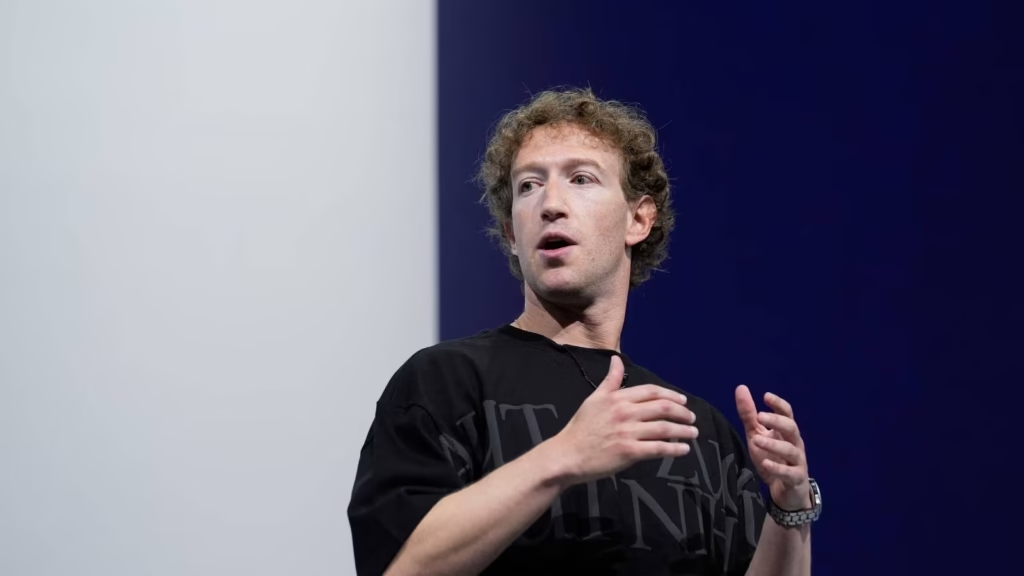
The Email That Landed in 78,000 Inboxes
Zuckerberg’s message hit early that Wednesday morning, timed with layoff notices rolling out in waves starting in Asia. Singapore folks got hit first at 4 a.m. local time – a brutal way to start the day. Then Europe, then the Americas. The email wasn’t long, but it carried weight.
To those leaving, he said something that felt almost personal: “It’s always sad to say goodbye to people who have contributed to our mission and to building this company. I feel the weight of that.” He thanked them for their hard work serving the community. No grand speeches about efficiency or pivots right there – just gratitude. That line about feeling the weight? It landed differently for some. In an industry where leaders sometimes sound detached, admitting the emotional load felt… human.
But here’s the reality check: Meta isn’t struggling financially. They’re posting huge profits. This wasn’t about survival. To free up resources and flatten layers, they cut 8,000 jobs, reassigned another 7,000 to AI projects, and scrapped around 6,000 open roles. Success in this space, Zuckerberg warned, “isn’t a given.” The companies that lead AI will shape the next era. Those that don’t? They fade.
Employees have been under pressure – some even reporting that their keystrokes and mouse clicks are being tracked to train AI models. The culture is shifting fast from the old social media days to this high-stakes AI push. One departing engineer even posted a parody video inside the company, singing a farewell to the tune of “American Pie.” That kind of dark humor says a lot about the mood.
Two Promises to Those Who Stayed
For the survivors – the 70,000 still logging in, wondering if the axe would fall again – Zuckerberg offered something rarer lately: clarity and reassurance. Two main promises stood out.
First, no more company-wide layoffs this year. “We do not expect other company-wide layoffs this year,” he wrote. That’s not a lifetime guarantee, and it doesn’t rule out smaller, targeted cuts. But after years of turbulence – remember the big 2022-2023 rounds where over 20,000 jobs went? – hearing “not this year” felt like a deep breath for many.
Second, he owned up to communication missteps. He admitted Meta hadn’t been as clear as they should have been in the lead-up, and he wants to improve that. It shows he’s listening, at least a bit, to the human side of all this change.
He also painted a bigger picture: AI as “the most consequential technology of our lifetimes.” Optimism mixed with urgency. Meta’s betting big – doubling down on efficiency while expanding in AI. Some see it as smart leadership. Others call it ironic: record profits, yet more cuts to fund the future.
What It Means for the People
Let’s talk real impact. For those laid off, especially in places like the US, the package includes 16 weeks of base pay plus two extra weeks for every year served. Health coverage through COBRA for 18 months. Some career support too. Not nothing, but it doesn’t erase the shock. Many are skilled engineers, product folks, marketers who poured years into Instagram, Facebook, WhatsApp, and the metaverse experiments.
For international employees – think Indian engineers in Seattle or Singapore teams – visa worries add another layer of stress. One story floating around involved a family man suddenly facing uncertainty. These aren’t faceless “resources.” They’re people who relocated, built lives, contributed to products billions use daily.
For survivors? Relief mixed with survivor’s guilt and pressure. The reassigned 7,000 are moving into AI roles – a signal of where the company’s heart is now. But everyone’s working in a leaner, flatter structure. More responsibility, higher expectations. The message is clear: perform, adapt, or risk future turbulence.
This fits a broader tech trend. We’ve seen cuts at other companies too – Cisco, Oracle, LinkedIn. The industry boomed during pandemic years, over-hired, then corrected. Now AI is accelerating everything. It’s exciting for innovation, but tough on the workforce.
Broader Context: Meta’s Journey
Think back. Meta (then Facebook) was once all about connecting people. Then came scandals, regulation, the metaverse pivot that cost billions with mixed results. Zuckerberg took heat, owned some mistakes publicly, and shifted to “Year of Efficiency.” They’ve stabilized financially – strong ad revenue, user growth. But the AI race with OpenAI, Google, xAI, and others demands speed and focus.
Still, critics point out the human cost. Layoffs at a profitable company feel cold to outsiders. Inside, it’s created record-low sentiment in some surveys. People worry about burnout, constant change, and whether the “family” culture many joined for still exists.
Looking Ahead
So what now? For those leaving: time to grieve, then hustle. Update resumes, network, maybe pivot to AI startups or other sectors hungry for talent. Tech has always been volatile – boom and bust cycles are the norm.
For those staying: clearer direction, but higher bar. Focus on AI integration, efficiency, delivering value. Zuckerberg wants better communication going forward. If he follows through, that could help morale.
For all of us watching: it’s a reminder that even at the biggest companies, change hits hard. Technology moves fast. Careers have to adapt with it. Empathy matters in how leaders handle it.
Zuckerberg’s message wasn’t perfect. No message like this ever is. But the gratitude to those departing and the promises to those remaining show he’s trying to balance the ruthless demands of competition with the reality that people are at the center.
In the end, this is tech in 2026 – exhilarating, unforgiving, and deeply personal for everyone touched by it. Whether you’re a Meta employee, a user of their apps, or just someone navigating your own career, the story hits home. Change is constant.
Sources:
- Times of India coverage of Zuckerberg’s memo and layoff details
- CNBC report on the internal memo and AI context
- Business Insider on full employee communications
- Wall Street Journal and New York Post for broader analysis and quotes
- NDTV and other outlets confirming severance and rollout