The Supreme Court on Wednesday gave some relaxation on the firecracker-ban in Delhi-NCR region. Sale of green crackers approved by NEERI (National Environment Engineering Research Institute) will be allowed from 18 October to October 20. The decision relaxed the absolute prohibition on firecrackers only under strict regulatory conditions. The bench ordering the relaxation constituted Chief Justice of India B R Gavai and Justice K Vinod Chandran.Relaxation was described as a test to see the implementation of a “balanced approach” as having a complete ban has its own problems. The approach of conditional relaxation was supported by both the Union government and Delhi government.

For the years now, Delhi had been celebrating non-pollution Diwali, due to the ban backed by courts and government. In recent years Delhi government and the Supreme Court of India had imposed a complete ban on all kinds of firecrackers in NCR. Crackers being banned since 2020 in Delhi were declared to contribute significantly to the air-pollution. Air quality and air pollution level already being at threatening scale, the ban was welcomed by many. Green crackers are being said to cause almost 30% less pollution than traditional ones by the makers.
What are the orders and new points?
- NEERI (National Environment Engineering Research Institute) approved green crackers are the only type which can be sold.
- The firecrackers can be used on only two days- that’s a day before Diwali and the day of Diwali. Timin restriction is also there- 6-7 am in the morning and 8-10 pm in the evening.
- Sale of crackers is only permitted from the locations identified by District Collectors and police.
- Crackers which contain barium salts or other banned chemicals are strictly prohibited.
- Any sale or purchasing of firecrackers through e-commerce websites is not allowed.
- Patrolling teams of Police and Pollution Control Board will monitor sale sites and take samples for testing.
- Penalties will be imposed on those violating the protocols, including cancellation of licences of sellers.
What was the reason behind relaxation on ban?
- The court said that smuggling of highly polluting firecrackers was taking place in NCR despite the ban. Thus, allowing less-polluting alternative like green crackers could be a more effective approach.
- The court therefore favored a conditional relaxation that allows a less-polluting alternative under strict supervision — a compromise intended to reduce harm while curbing the illegal market. The court described the order as a pilot to test whether strict regulation can work better than an outright ban.
What “green crackers” actually mean
By changing the raw ingredients and eliminating some additives, green crackers are designed to reduce particulate emissions, often by 20–30% when compared to traditional fireworks, according to NEERI’s testing. The goal is to control noise and lower emissions of harmful gases and PM2.5/PM10 pollutants. Scientists and environmental organizations stress that “less polluting” does not equate to “pollution-free,” as the decrease in emissions may be counterbalanced by an increase in cracker volumes or the passing off of non-certified crackers as green.

Reactions on the ground
The reactions were not all the same. After years of severe restrictions, traders and some citizens applauded the court’s ruling as a return to festive normalcy, while many locals, doctors, and environmentalists advised caution. They cautioned that lax enforcement might permit the sale of traditional crackers under the pretense of being “green,” pointing out that even cleaner formulations release toxic substances. The test-based approach was supported by Delhi and Central authorities, who stated that they would assist with enforcement and monitoring measures.
The open questions and risks
Three issues have been identified by experts as crucial to the success of this experiment:
1. Smuggling and fraud: The benefits of green crackers for reducing pollution will be compromised if illegal crackers keep making their way into the market.
2. Scale effect: If a lot more crackers are used than previously, a modest decrease in emissions per cracker might not prevent a significant pollution spike. Volume can negate the benefits of cleaner formulations, according to scientists.
3. Enforcement capacity: Police, municipal agencies, collectors, and pollution labs must work together to ensure successful implementation, and violations must be promptly followed up on.
What to expect next
The relaxation has been presented by the court as a short-term, closely watched trial. Following Diwali, pollution control organizations will submit data, and the judiciary will evaluate the results to determine whether to expand, reverse, or continue the experiment. The immediate lesson for locals is simple: the permission is limited, subject to conditions, and enforceable; it is not a free pass to resume using fireworks as they please.
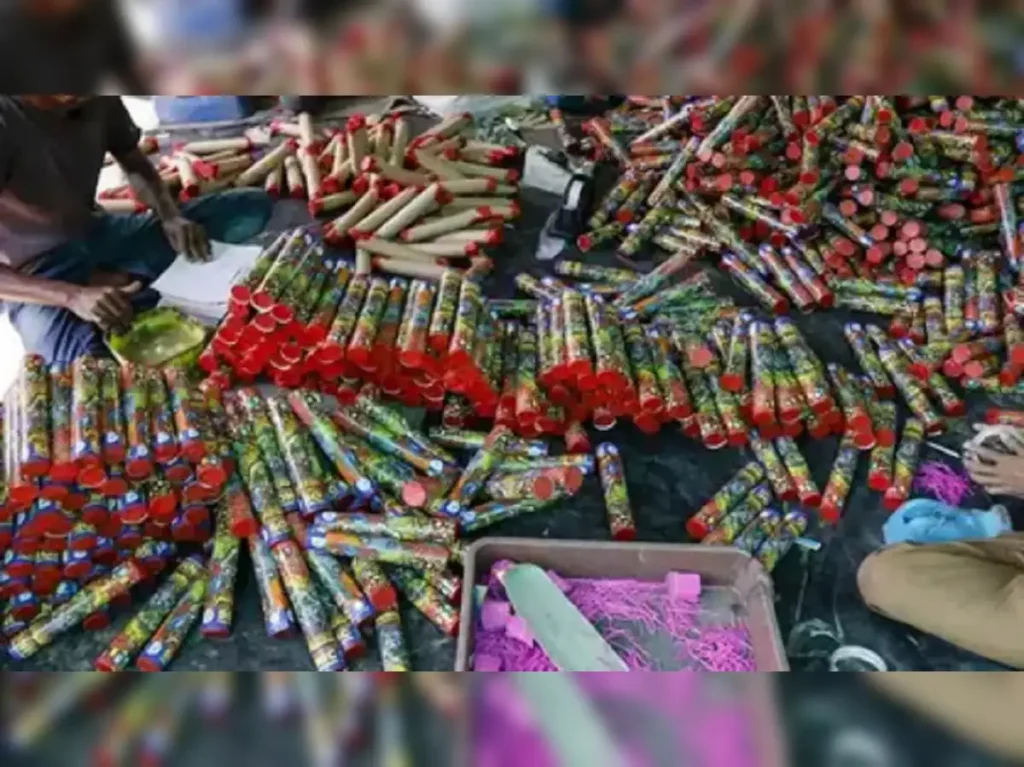
Conclusion Supreme Court’s limited green-cracker relaxation is a cautious, data-driven experiment balancing cultural practice and public health. Its success depends wholly on strict certification checks, vigilant enforcement, and transparent air-quality monitoring. If authorities act decisively, the pilot may offer compromise; otherwise, the court may reinstate tighter restrictions to protect Delhi-NCR’s air.