
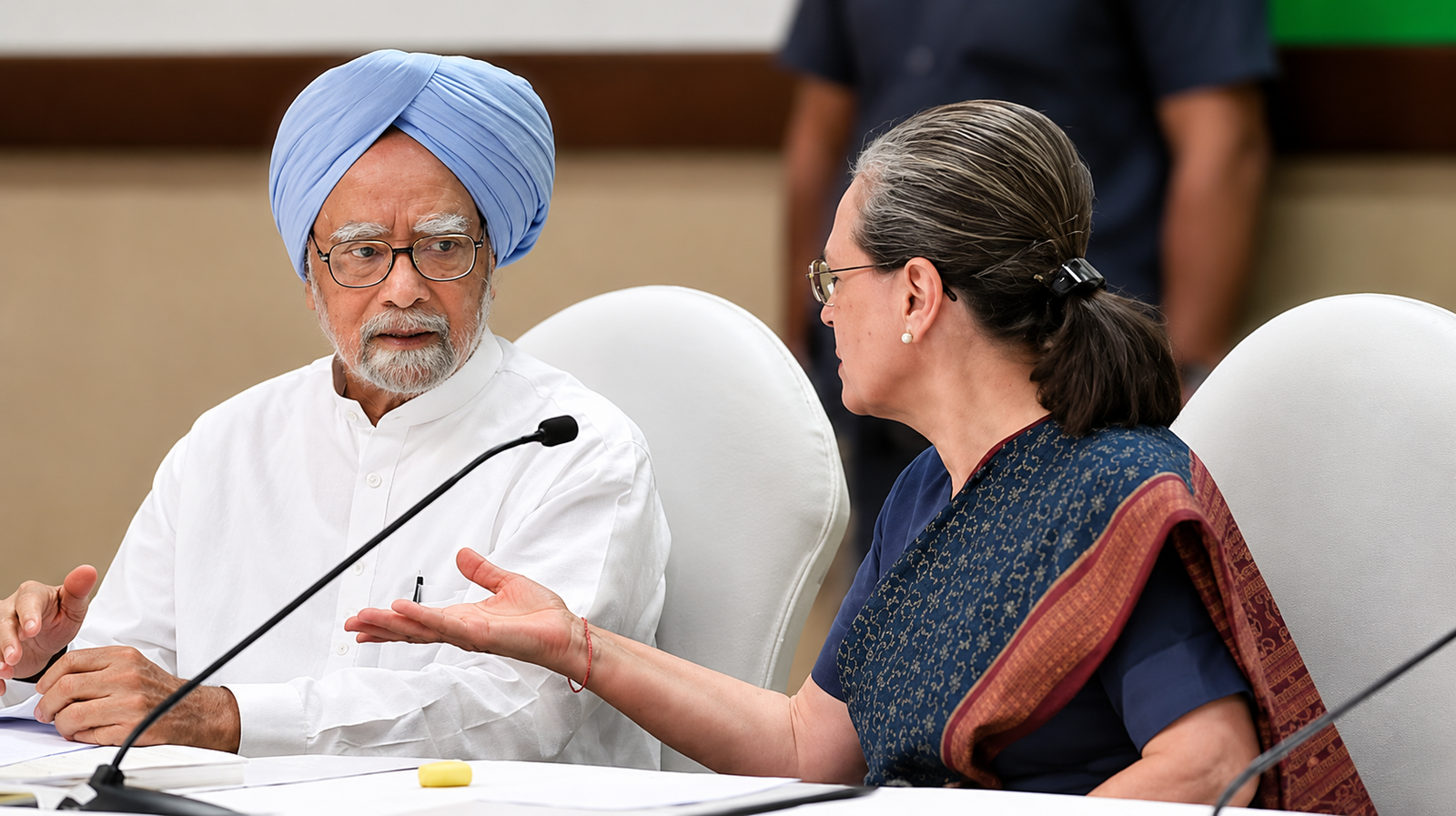
Sonia Gandhi’s memoir Belonging: A Journey of Love is finally out, and the pages about the UPA years are the ones everyone’s talking about. She lays it out plain: Manmohan Singh ran the government, she ran the party. That was the deal from day one, she says. No mixing of the two.
She admits she gave her views when the government was being formed after the 2004 win, mostly so the old loyalists who had stuck around when the party was out of power got looked after. But she is firm on one thing. Those stories about files from the PMO being sent over to her? She calls them malicious and completely false.
The decision not to take the prime minister’s job herself wasn’t some sudden drama on the day of the results. She writes that she and the kids, Rahul and Priyanka, had already settled it months earlier. They didn’t want her in that seat. Safety was a big reason. The family had already lost too much. When the numbers came in and the alliance formed, she stuck to that earlier call. Manmohan’s name made sense because of the 1991 reforms. That image, she felt, would ease the worries some people had about the Left parties supporting the government from outside.
Then comes the bit about Pranab Mukherjee. Around 2010, a year after they came back to power, Pranab suggested to her that maybe it was time for a change at the top. She understood exactly what he meant. It was a quiet hint at his long-standing wish to become prime minister. She says it shocked her. She gently changed the subject. This was around the time he and P. Chidambaram were having serious differences. She notes that he may have been disappointed, but he never made her feel he held it against her.
That lines up with what Pranab and his daughter had written earlier. He always seemed to know Sonia preferred Manmohan in 2004, and later talk of any switch never really went anywhere. By 2012, when the presidential election came up, there were even quiet whispers that if Manmohan moved to Rashtrapati Bhavan, Pranab might finally get the top job. It didn’t happen. Pranab went to the presidency instead.
Sonia also recalls an earlier moment that still stung. At a tense Congress meeting in Shimla in July 2003, she found herself left out of a discussion. When she asked what they were talking about, someone hesitantly said they were discussing who should lead the party in the elections. She felt wounded. Some of her own colleagues still saw her as an outsider. She made it clear that as Congress president she would lead the campaign.
The book isn’t just about power. It’s her story from a small town in Italy, through Cambridge and the love story with Rajiv, and then into the hard years after Indira and Rajiv were gone. She has said it’s a personal book, not a political one, and that she wanted to show the human side of the people she knew. Still, the political chapters are what most people will flip to first.
For years people described the UPA as two centres of power, or one real one and one formal one. Books by Sanjaya Baru and others painted a picture of a prime minister who accepted that the party president held the final say. Sonia’s version insists the lines were clear and that she never interfered in the day-to-day running of the government the way some claimed. Whether that ends the argument is another story. These things rarely do. But at least now we have her voice on it, after years of staying mostly quiet.
She doesn’t dwell much on the 2014 defeat the way Pranab did in his own last book. She simply sets out how she saw her role and Manmohan’s during those ten years. Clear division. He ran the government. She focused on the party. And when Pranab floated the idea of a change in 2010, she quietly steered the conversation away.
It’s the kind of detail that makes those UPA years feel less like old history and more like real conversations that happened behind closed doors. Anyone who followed that time will recognise the tensions. Others will just read it as one more piece in a puzzle that never quite fits the same way for everyone.
Sources: Hindustan Times coverage of Belonging: A Journey of Love by Sonia Gandhi (HarperCollins India, 2026); earlier accounts from Indian Express, Pranab Mukherjee’s memoirs, and Sanjaya Baru’s book.
@Rohit Manral