
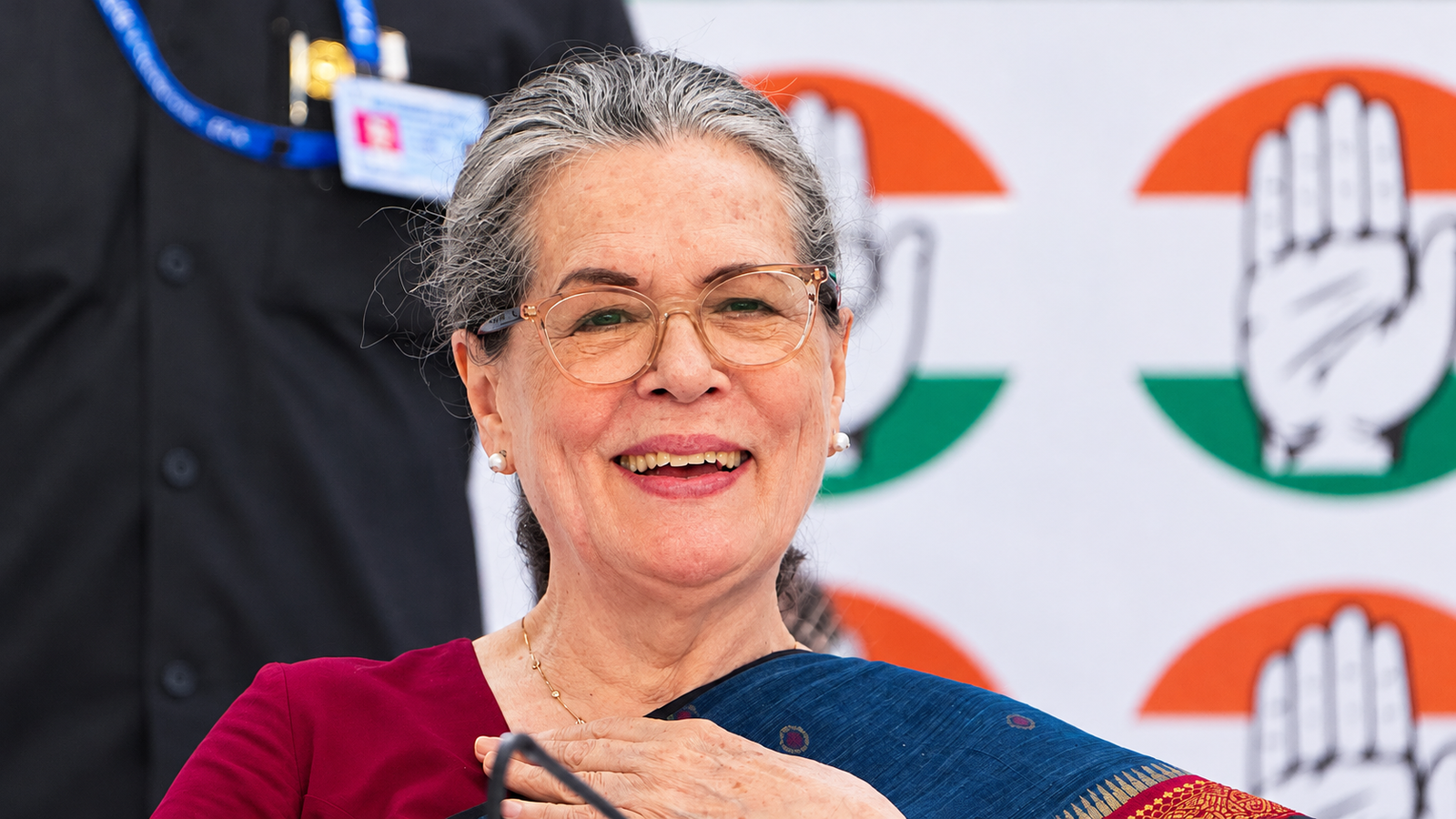
Sonia Gandhi’s book is finally here. Belonging: A Journey of Love reached bookstores on 10 November. After decades of other people writing her story, she has decided to tell it herself.
She has always been careful with words. This book feels the same way. Quiet. Measured. No loud claims. In a piece she wrote just before the release, she made one thing clear: “This is not a political book. It is a personal one.” She wanted to show her family the way she knew them — their ordinary strengths, their quiet struggles, their human flaws. Not the versions that filled newspapers for years.
The story starts far from Indian politics. A girl growing up in post-war Veneto in Italy. Ordinary days. Then Cambridge in 1965. She is nineteen. She meets Rajiv Gandhi. It is love at first sight, she writes. The kind that changes everything without warning.
She comes to India. Learns Hindi. Learns the food. Learns the silences of a new household. Indira Gandhi is already a formidable presence. Sonia stays mostly in the background at first, raising children, protecting the private life she valued so much.
Then the losses arrive, one after another. Sanjay Gandhi dies in a plane crash. Indira is assassinated in 1984. Rajiv is killed in 1991. Each one pulls her deeper into public life. She says it was heartbreak that threw her into politics. Until then she had guarded her privacy fiercely.
The book moves through those years without drama. She remembers the small moments and the heavy ones. The long evenings when the house felt empty. The slow process of a foreign girl beginning to call this country home. She watched India change over more than fifty years — first from the edges, later from the centre.
There is the 2004 decision, of course. After the election, the party wanted her to become prime minister. She said no. She chose to lead from the side instead. The book touches that choice without fanfare. Just the fact of it and the reasons that lived inside her.
Getting the book published was not smooth. There was an impasse with the first publisher over editorial changes. Some reports mentioned discomfort around certain passages. HarperCollins India stepped in. The book came out on schedule anyway.
Sonia has said others spent decades telling her story. Now it is her turn. You can feel the quiet determination in that line. No bitterness. Just a settled decision.
The pages carry love and absence in equal measure. She writes about the family as people she loved, not as figures fixed in history books. Human. Loyal. Flawed. Trying.
It is a soft book. Almost intimate. The kind you read slowly, the way you listen when someone speaks late at night and the house is still.
Whether it changes how people see her remains to be seen. For now the book is simply here — her voice, after all these years, choosing what to say and what to leave in the quiet.
Sources: India Today, The Hindu, HarperCollins India, New Indian Express, Hindustan Times, Rediff, National Herald, Times of India, and statements from Alfred A. Knopf / Penguin Random House.