
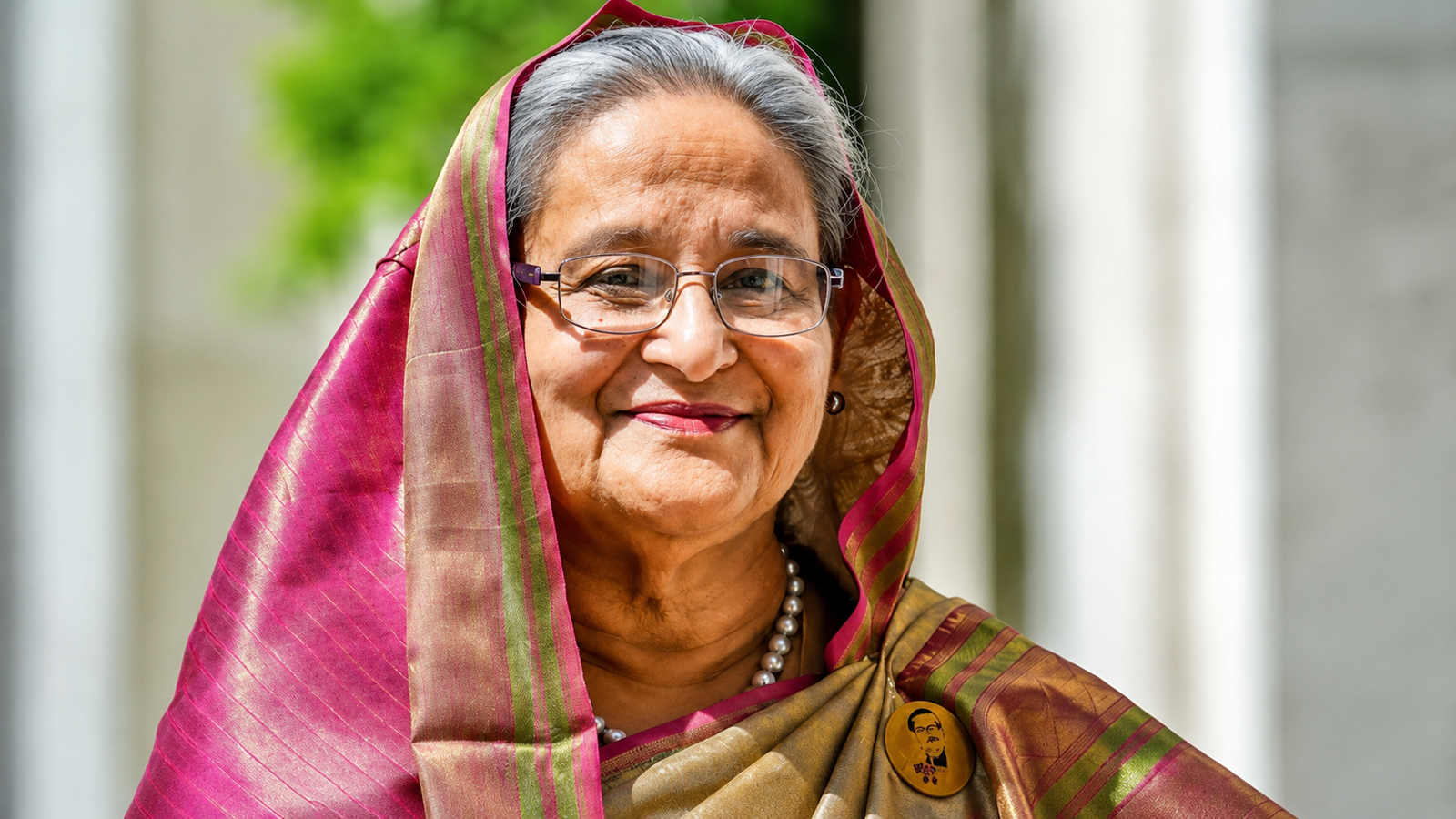
In a phone interview with Hindustan Times just the other day, the former Bangladesh prime minister basically said, plain and simple: I’m coming back, and it’s not because I want the chair again. It’s because I can’t keep sitting outside while people back home are going through it.
She’s been in India since August 2024, when those big protests pushed her out after years in power. There’s a death sentence hanging over her from a tribunal that tried her in her absence, and her Awami League party is banned. Still, she told the paper she’s aiming for December. That’s victory month for Bangladesh, the month they won independence in 1971, so the symbolism isn’t lost on her. She said she’ll announce the exact day, time and place later. “I have said I intend to return by December because Bangladesh’s political crisis cannot be allowed to continue indefinitely,” she put it.
What really stood out was how she framed the whole thing. “I am not worried about my own future. My return is not about power. It is about standing beside the people.” That’s the line that stuck. She talked about how she can’t just live abroad forever. “Can I stay abroad my whole life? I have to return to my country, to my own people.”
The Bangladesh government under Tarique Rahman has been making her extradition a condition for any possible visit he might make to Delhi. Hasina didn’t buy that. She pointed out that she wants to go back on her own, not through some treaty process. She even brought up how Rahman used to do politics from London years ago while living there under certain conditions, and nobody made a big international fuss then. “I addressed a press conference at an international forum. How can this be a problem for relations between two countries?” she asked.
She spent a good bit of time talking about what’s happening on the ground. According to her, Awami League workers and leaders are being rounded up, homes attacked, families harassed. She said more than 600 cases have been slapped on her alone, and the courts are being used for political score-settling. She mentioned people getting killed, elderly folks beaten, young party workers targeted. “Not a day goes by without people being killed,” she said.
On the economy, she drew a sharp contrast. When she was in charge, she claimed the country’s economy went from about $70 billion to around $450 billion, and per capita income climbed from $482 to $2,784. Now, she said, growth has dropped hard, industry has actually shrunk for the first time in decades, poverty is up, jobs are disappearing, and basic things like electricity, gas and fertiliser are short again. “This is not only an Awami League issue, it is a national crisis,” she told the interviewer.
She also pushed back on the ban on her party. The Awami League, she reminded everyone, goes back to 1947 and was central to the independence struggle under her father. “Why did they ban the Awami League? If the Awami League has done a lot of bad things, let the people decide.” She said the party still has public support despite everything, and that thousands of workers are tied up in court cases while others who took part in violence in 2024 have been given a free pass.
Threats to her life aren’t new, she pointed out. She lost almost her entire family in 1975. She survived a grenade attack on a rally in 2004 that killed 24 people. “That attack could not stop me then, and threats will not decide my duty now.”
She’s grateful for how India has treated her — dignity and respect, she said — but her head is still in Bangladesh every single day. She follows the news on her party people, the economy, minority safety, the frustration among young folks. What she misses most is the people themselves: their faces, the language, that simple trust you find in the villages, the Bangladesh that felt like it was moving forward with hope instead of fear.
She also raised questions about the current government’s priorities, like spending big on Chinese fighter jets while people are dealing with shortages at home. And she backed up her son Joy’s warning about extremist groups gaining ground, saying it’s not just political talk — there are real security worries that could spill beyond Bangladesh’s borders.
Look, this is a deeply divided story. One side sees her as a convicted leader trying to stage a comeback. The other sees someone who still feels tied to the country’s founding story and the people who supported her for years. Whether she actually lands in December, and what happens after that, is anyone’s guess. But in this interview, she kept coming back to the same point: this isn’t about her sitting in power again. It’s about standing next to the people she says she can’t abandon.
Sources:
Hindustan Times exclusive interview by Rezaul H Laskar, 2 September 2026; her earlier virtual address at the Foreign Correspondents’ Club in August 2026; related reporting from Indian Express, Times of India and NDTV on her statements about returning, the economy and conditions in Bangladesh.
@Rohit Manral