
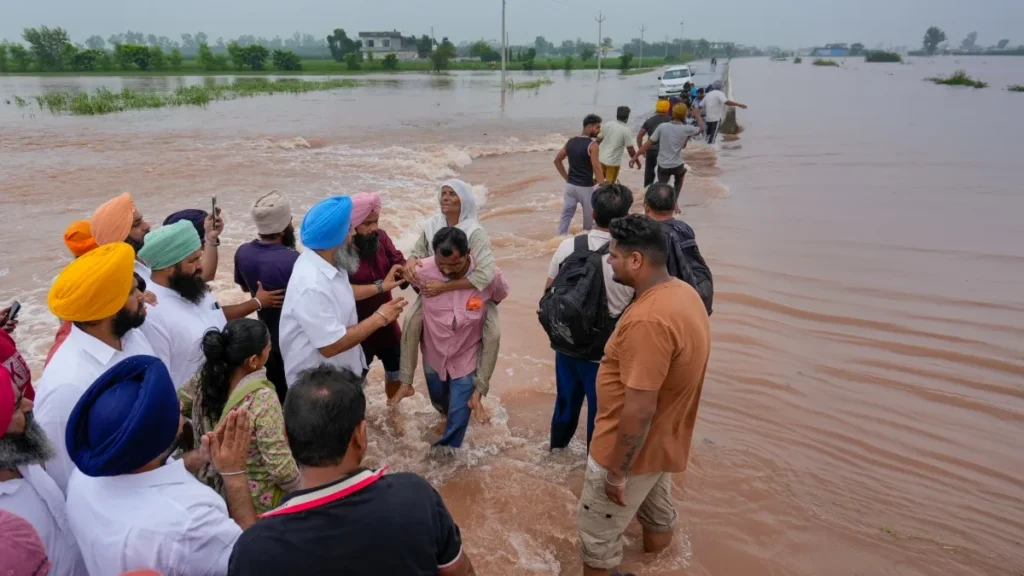
The agrarian lands of Punjab have been adversely affected by the worst climatic conditions in the decades in 2025. The torrential rains of Indian monsoon brought with it mass-destruction of houses, fertile lands and many villages of Punjab leading to displacement of millions of people from their homes. As per the official news reports, approximately 2 million people have been affected with the rains and have lost their shelters. Rivers of the Punjab region namely, Sutlej, Chenab and Ravi swelled above the record levels and flooded across both Pakistani and Indian parts of Punjab. Across the social media platforms such as Instagram and Facebook, ‘Pray for Punjab’ is being floated by citizens of India to seek prayers, assistance and unity from the people to help Punjab come out of this hard time.
Displacement and Suffering
As per the official reports, 12 out of 23 districts of Punjab have been affected by the floods ever since the starting of August. Chandigarh, Hoshiarpur, Gurdaspur, Pathankot, Fazilka, Tarn Taran, Ferozpur, Amritsar and Kaputhala have been announced by the meteorological centre as the worst affected districts. More than 13,000 villages have been submerged under the water and thousands of acres of fertile land has been damaged by the rains. The residents of the affected districts have been shifted to higher places where relief camps have been settled for the people. On reports combined by C2C leadership, 29 individuals have lost their lives due to the rains in Punjab. NDRF. SDRF and the army officials have been sent over to the affected areas for rescue and relief operations.
he Agricultural destruction
The floods have damaged Punjab’s reputation of being the most fertile and agrarian land of India. Farmlands have been destructed by the rains from August. Rice, Sugarcane, cotton and many other crop fields have been submerged under the water leading to soaring crop prices and economic instability. This flood in Punjab is being called as the worst and severe flood in the history of Punjab. The basmati production of the nation will be reduced due the rains affecting the crop land. Agriculture minister of Punjab, Gurmeet Singh Khudian stated that around 6 lakh acres of agrarian land of Punjab has been affected by the rains.
Government Support
Prime Minister of India, Narendra Modi called up Chief Minister of Punjab, Bhagwat Mann and assured constant relief support to the affected districts of Punjab. The Government of Punjab has further announced the educational institutes of the state to be closed till September 3 due to red alert. CM Mann declared that every resident of the affected areas will be rescued and placed on the relief shelters. He has also issued a plea to Prime Minister of India, Narendra Modi for the release of Rs 60,000 crore for the aid of rehabilitation and relief camps for the affected people. Authorities have asked people living in the low-lying areas to leave their homes and secure places in high areas to remain safe from the havoc of rains.
Reaction of Influential figures
After hearing the news of the devastating floods in Punjab, many influential figures came up to pray for Punjab and offer support. Shubham Gill, widely known Indian cricketer shared on his Instagram story- “Heartbroken to see my Punjab devastated by floods. Punjab will always be stronger than any adversity, and we’ll rise up from this. My prayers are with all affected families. Standing strong with my people.” Further, the entertainment industry stars have come up to support and provide relief to the affected areas. Ammy Virk, renowned actor and singer announced on his Instagram post his support for adopting 200 houses who have been massively affected by the rains, He shared-

(picture of the post)
Actress Sonam Bajwa as well shared on her Instagram post announcing support to the affected families. She wrote- “In these difficult times, my heart goes out to Punjab and everyone affected by the floods. The images and stories coming from there are truly heartbreaking, but what keeps me hopeful is the spirit of unity and resilience that Punjab has always shown. I am doing my part to help by donating to organisations actively working on the ground as rescue teams, and I humbly urge you to do yours too.”
Conclusion
The daunting process of recovery for the affected families of Punjab has begun. Although the recovery of homes and livestock will take years to come back to normal, the affected families will be forever left with a mental trauma of loss and pain caused due to the rains of 2025 in the region. This disaster in Punjab has served as a reminder to the entire nation to come together for support of the victims of the calamity. Further the government must take precautionary steps in future during the monsoon times to avoid such destructions.