In the process of ongoing bihar assembly elections 2025,the opposition alliance under the umbrella of mahagathbandhan , is now facing a difficulty, as a poster in a press conference, that was supposed to showcase an alliance, featured only a single leader picture, Tajaswi Yadav (of Rashtriya Janat Dal).No other senior party leaders were seen on the poster.
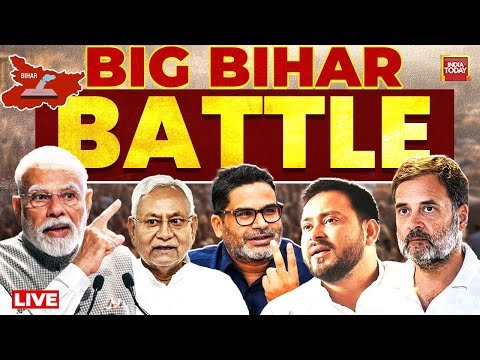
If one sees it from the surface it might appear as a small thing, but digging deeper it has now become a lightning rod, raising questions on the party’s unity, clarity of leadership, and coherence within the alliance.
The ruling party NDA (National Democratic Alliance) jumped on the situation and mocked the alliance’s claim of standing in solidarity.
BJP (Bhartiya Janta Party) also mocked the maha gathbandhan sarkar As one article writes: “‘Joint PC? But only one picture’
Precisely, an event which was meant to showcase , different dominant political parties end up showcasing one leader on the poster.
Why does it matter?
1. Leadership:
In elections and in the coalition government, the face matters a lot, it is important to know who is participating in the elections.
The poster particularly or otherwise, showed Tajesvi Yadav as the face of the party, making him the sole candidate of the party.
2. Internal Party Dynamics:
If the other partner from the [party feels sidelined, the morale may steep down.,as the party workers from the alliance may feel less wanted and visible, which can in turn lead to friction between the party workers.
3. Voter perception:
Voters usually look for clarity and coherence in a party if a party shows strong alliance and unity in various spaces and shows only one person on the poster , it might just confuse the voters and it might raise questions on the election campaign as well.
4. Political ammunition for rivals:
The opposition parties might raise questions on this ,and this also leaves a space for the rival parties to question the party’s loyalty.
What are the implications?
- Portraying Confusion:
If the narrative and visible message do not align with each other, it might portray a situation of confusion.
- Branding challenge:
In Bihar, opposition parties frequently use a combination of caste math, socioeconomic messaging,etc. A poster that appears to promote the leader of one party could damage the coalition’s reputation.
Conclusion:
Symbols are frequently more powerful than words in politics. A press conference poster that was seemingly straightforward turned into more significant problems, such as perception, strategy, leadership, and unity. The controversy surrounding the poster for the Mahagathbandhan in Bihar highlights a deeper fault line: striking a balance between the need to bring in and energize the other partners (Congress, Left, and regional outfits) and the dominance of one partner (RJD/Tejaswi).
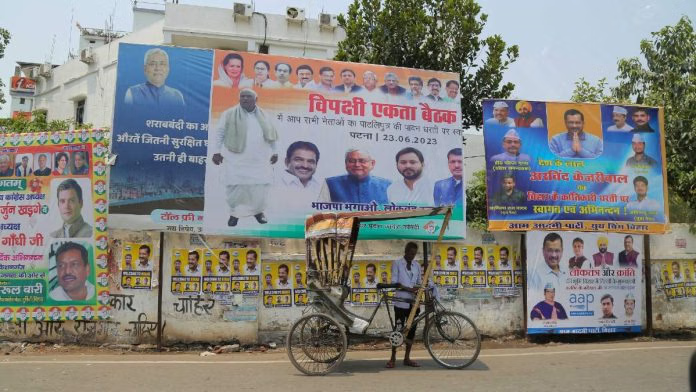
Achieving the ideal visual narrative is strategic, not merely aesthetic. There isn’t much space for conflicting messages at this point in the Bihar campaign. In order for the opposition to actually take on the ruling bloc, they need to act, feel, and look like an alliance—not just in words, but in every press conference, stage, and poster