
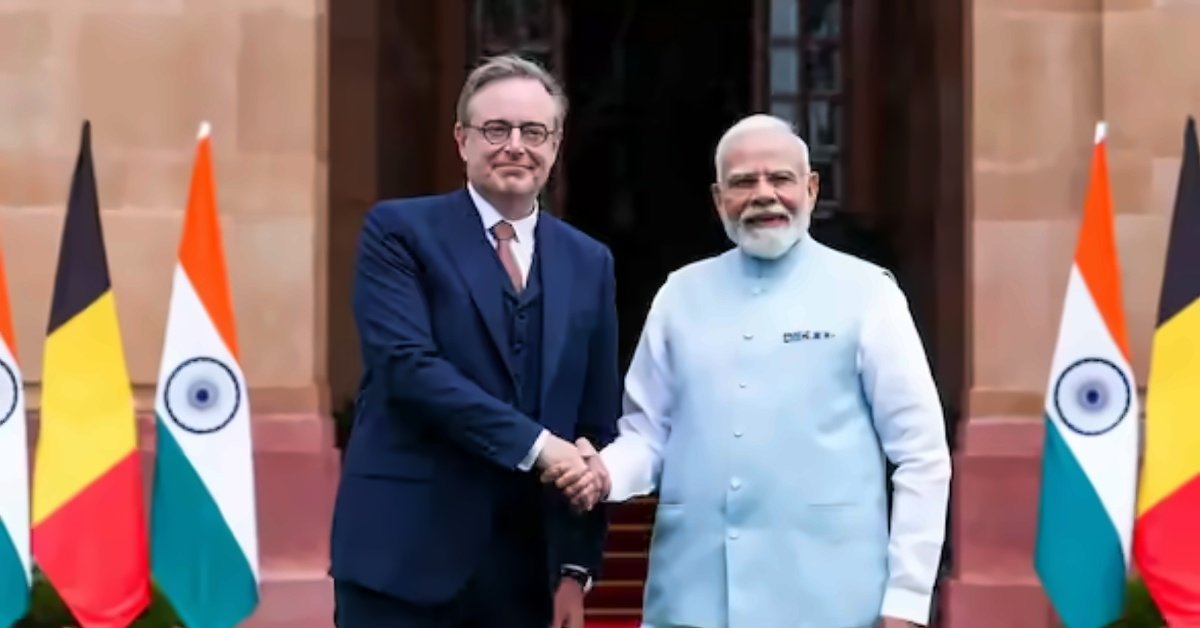
Belgium’s Prime Minister Bart De Wever was in Delhi this week and he said something pretty blunt.He looked at the Indian business crowd and basically confessed that Europe had been living in a bubble. For years they watched cheap Chinese goods flood their markets — sold below cost, killing local factories, slowly making Europe dependent. And then one day they woke up and realised those dependencies could be used against them. He called it a “rude awakening.”
He didn’t name China out loud. He just said, “The country that has profited most from that practice does not lie very far from here. It’s a neighbour you all know.” Everyone in the room knew exactly who he meant.
Then he went further. He told them India had seen this coming long before Europe did. “India saw this earlier than we did and they warned us and we didn’t listen,” he said. And then he pointed straight at Modi: “Your prime minister warned Europe about this a long time ago already, but he was ignored. He wasn’t listened to. We are listening now. It’s a bit late maybe… but it is happening.”
That’s a rare thing — a European leader standing in India and openly saying, “You were right, we didn’t listen, and now we’re paying for it.”
This comes at a time when Belgium and India are trying to get closer. De Wever is the first Belgian PM to visit India in twenty years. They’re talking about doubling trade in five years, working together on defence, semiconductors, critical minerals, green energy, pharma — the usual list of things that matter these days. Belgium wants to be a useful doorway into Europe for Indian companies, especially once the India-EU trade deal finally gets moving.
De Wever made it clear India is high on their list right now. In a world where trade is getting weaponised, they’re looking for partners they can actually trust. India, with its size and its own experience dealing with China, fits that need.
Europe’s problem isn’t new. For years they took the cheap imports and ignored the longer-term cost. Now factories are struggling, supply chains feel risky, and the trade deficit with China is huge. Suddenly diversification and “friend-shoring” are the new buzzwords. India has been saying this for a while. Looks like some people in Europe are finally hearing it.
De Wever wasn’t dramatic about it. He just admitted they were late. And that earlier warnings from India should have been taken more seriously. In today’s climate, that kind of honesty actually stands out.
Whether Europe really changes course or just talks about it is another story. But for now, a Belgian prime minister standing in Delhi and saying “Modi warned us and we didn’t listen” is something you don’t hear every day.
Sources:
Times of India, India Today, Firstpost, News18, Business Today, The Hindu, LiveMint, ETV Bharat, Mathrubhumi English, Newsbytes, Moneycontrol (reporting on Belgian PM Bart De Wever’s remarks at the CII event in New Delhi, September 2026, and related bilateral statements).
@Rohit Manral