
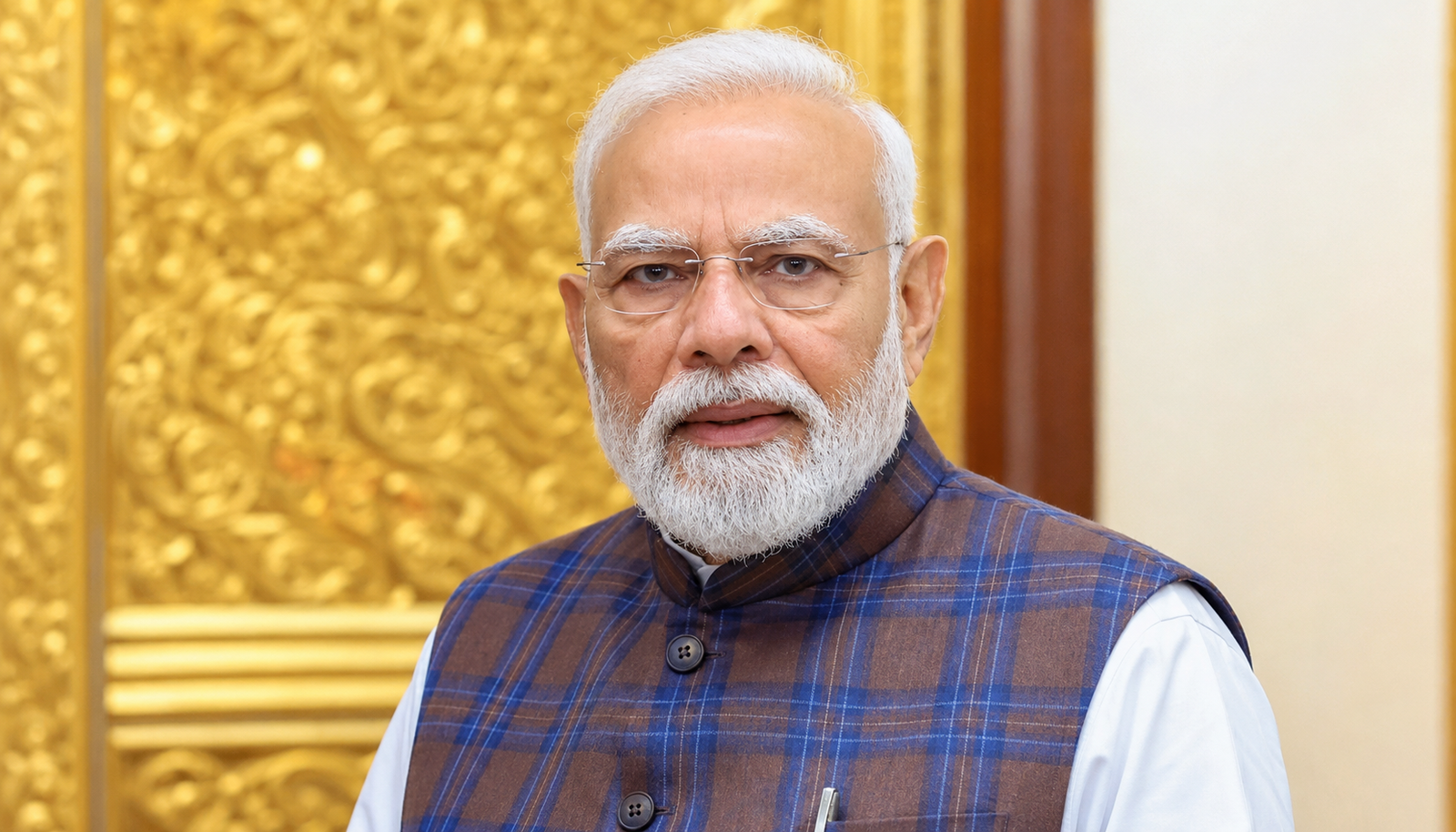
India’s economy clocked 7.8 per cent growth in the April-June quarter — better than what most people expected. And right on the heels of that, Prime Minister Narendra Modi jumped on a video from Bishkek, where he’s attending the SCO Summit, and spoke straight to the camera like he was sitting across from you at the dining table.
He started with congratulations. “Many congratulations to the people of the country,” he said. “7.8% growth has filled the country with happiness.” He called it a reflection of collective strength and hard work, especially when the world outside is still messy — wars, disrupted supply chains, uncertainty that has lingered since the pandemic years. India, he said, kept moving forward anyway.
Then he got to the part that has everyone talking. The same message he had floated earlier this year, now repeated with more force: if you’re planning a foreign holiday just for leisure, maybe don’t. If the family is dreaming of a destination wedding in some faraway country, put that idea aside. And gold — buy it only if you really need it, not just because it’s what we always do.
“We must live by the mantra of ‘wed in India’,” he said. “If we are going abroad for vacations, we must stop. If we are having weddings outside, we must stop.” On gold he was equally direct: “If possible, we must avoid buying gold unnecessarily.”
It’s the familiar Swadeshi pitch, but delivered at a moment when the economy is showing strength rather than weakness. The idea is simple when you sit with it. Every time a family books flights and hotels abroad, or spends lakhs on a wedding overseas, or imports more gold, dollars leave the country. In a time when global energy prices and supply lines are still shaky, keeping more of that money circulating at home helps. It supports local hotels, local event organisers, local artisans, and takes a bit of pressure off the foreign exchange reserves.
Modi tied it back to the bigger picture. The more we lean into “vocal for local” and self-reliance, he said, the stronger the chance that when India turns 100 years old as an independent nation, we hand over a developed country — a Viksit Bharat — to the next generation. “Through our hard work today, we will surely realise the dreams of our younger generation.”
He also took a quiet jab at the critics. While the country is posting these numbers, he noted, some people inside India are busy spreading what he called “jhooth ki goonj” — an echo of lies and despair. The growth figure, he suggested, cuts through that noise.
This is not the first time the Prime Minister has made this appeal. In May, amid the West Asia tensions and oil worries, he had asked people to hold off on non-essential foreign travel and overseas weddings for a year and to think twice before buying gold. The latest message is a reminder that the logic still holds even when the GDP numbers look good. Growth is one thing; sustaining it and making sure the benefits stay at home is another.
Of course, not everyone will love the advice. For many middle-class families, a foreign trip or a destination wedding has become a marker of having “arrived.” Gold remains deeply cultural — for weddings, for security, for tradition. Asking people to pause those habits can feel personal. Yet the numbers tell their own story. India remains one of the world’s largest gold importers. Outbound tourism has been rising sharply. Both create real outflows. Shifting even a portion of that spending to places inside India — hill stations, beaches, heritage cities, wedding venues in Rajasthan or Kerala or Himachal — keeps the money working here.
The growth figure itself deserves a second look. 7.8 per cent in the first quarter of FY27 is solid by any global standard, especially against the backdrop of geopolitical stress. It beat the Reserve Bank’s earlier forecast. It also shows the economy has held up better than many feared when oil prices and supply chains came under pressure. Still, growth moderated from the previous quarter’s higher reading, which is why the call to “maintain this pace” makes sense.
What Modi is essentially asking is for ordinary decisions to line up with the larger national goal. Choose the Indian hotel instead of the one in Dubai or Bali when the purpose is pure leisure. Celebrate the wedding in India so that the photographers, caterers, florists and venue owners here get the business. Treat gold as something you buy when you need it, not automatically. None of these are permanent bans. They are suggestions for a period when every bit of foreign exchange and every rupee spent at home helps.
Whether people listen is another matter. Some will. Some will roll their eyes and book the tickets anyway. That is how it usually goes. But the fact that the country’s highest leader is still making this pitch even after a strong growth print shows how seriously the government takes the twin goals of resilience and self-reliance.
For now, the message is out there, spoken plainly from Kyrgyzstan. The economy is growing. The invitation is to keep that growth rooted in choices made at home.
Sources:
NDTV, The Indian Express, Business Today, The Hindu, Scroll.in, Business Standard, ThePrint, Times of India, Moneycontrol, Hindustan Times (reporting based on PM Modi’s video message from Bishkek on 1 September 2026 and official GDP data for April-June quarter FY27).
@Rohit Manral