
Union Commerce Minister Piyush Goyal has been doing the rounds of interviews lately, and he’s pretty straightforward about not getting dragged into every single angle of this new interim trade framework with the US. The big headline from his chat with The Hindu? “Each Minister handles his responsibility.” No drama between him and External Affairs Minister S Jaishankar or anyone else—it’s just about everyone owning their portfolio.
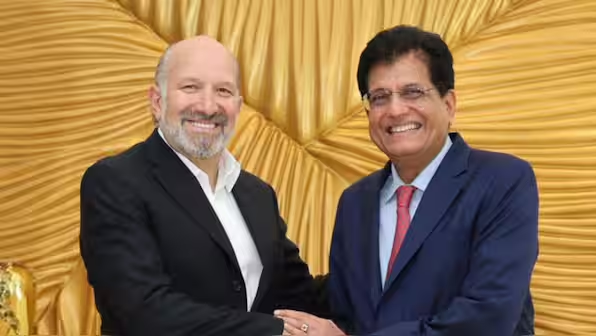
Basically, when folks ask him about the trade deal details—like how tariffs are dropping (US slashing that extra 25% penal duty, landing at around 18% reciprocal on Indian goods), opening up markets for our textiles, footwear, pharma, gems, and more—he’s all in. But on the hot-button issue of Russian oil? He’s like, “That’s not my department.” Trump has been claiming the tariff relief comes with India supposedly committing to ditch Russian crude and buy more American energy stuff. Goyal keeps redirecting those questions to the Ministry of External Affairs. He says the trade pact itself doesn’t dictate who we buy oil from—it’s about smoothing trade paths, giving preferential access, and making sure Indian exporters get a leg up over competitors like China (who face higher duties).
He did add that buying crude, LNG, or LPG from the US actually makes sense for India’s energy security—we’re diversifying sources, right? But the actual purchases? Those are decisions for companies and buyers, not forced by the deal. No mandates, no strings tying us to stop Russian imports outright in the trade text. It’s strategic diversification, not surrender.
On the farmer front, Goyal was super reassuring. Farmers’ unions have been worried about US ag products flooding in and hurting our folks. He straight-up said, “not a single farmer had anything to worry about.” Sensitive items—like dairy, certain crops, GM stuff—are excluded or shielded with quotas, phased duty reductions, and preference margins. India exports about $55 billion in farm and fish produce, so this opens bigger doors in the US for our tea, coffee, spices, mangoes, bananas, and more at zero or low tariffs. He called it balanced: go aggressive on exports to boost incomes, but super defensive on vulnerabilities. No red lines crossed.
Critics are out there saying this chips away at strategic autonomy or could widen our trade deficit if Russian oil flows slow. Opposition parties like Congress and CPI(M) are calling it a bad deal or even an attack on sovereignty. But Goyal’s framing it as a win from smart, tough negotiations—helping youth, women, MSMEs, artisans, handlooms, auto parts, you name it. It’s part of the bigger push toward a Viksit Bharat.
This interim thing is just phase one; talks for a fuller deal are ongoing. More details might drop soon, probably from the right ministries. For now, Goyal’s message is clear: focused roles, protected priorities, and real opportunities ahead.
Sources:
The Hindu
Hindustan Times
Times of India
ANI
Livemint
CNBC-TV18
Economic Times