
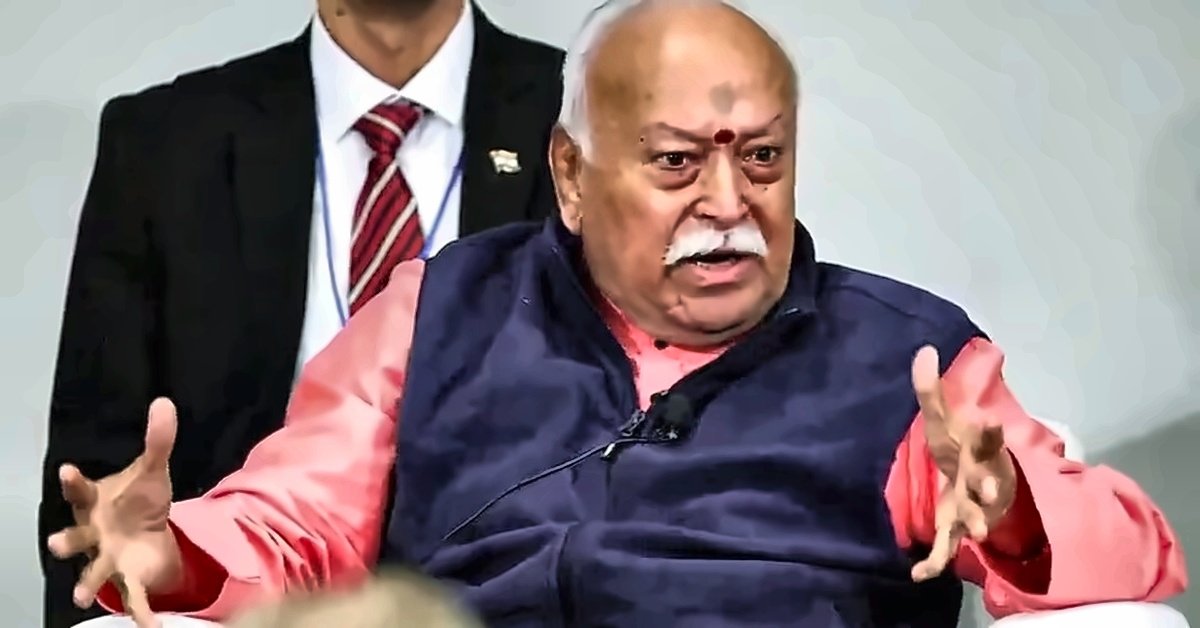
Just a day or two after Mohan Bhagwat stood in New York talking about unity in diversity like it was something baked into India’s bones, he lands in Toronto and keeps the same vibe going. The RSS chief is on this outreach trip, you know, part of the organisation’s big centenary push, hitting the US, Canada, and then the UK. In Canada he was at this event called ‘Hindu Vishwa Bandhu – Embrace the World in Friendship’, organised by Canadian Hindus for Outreach, Relations and Dialogue, or CHORD for short. Around 2,500 people from eight provinces showed up. Former Alberta premier and defence minister Jason Kenney was there too, talking up the improving India-Canada ties and even mentioning Modi’s expected visit later this year. The crowd loved that part – “Modi, Modi” chants and all.
Bhagwat didn’t waste time. He went straight into what he sees as India’s long habit of taking people in, even the ones who didn’t exactly arrive with open arms. “Many came to Bharat from outside as aggressors, but they still thrive there, with all their specialties intact. They are now Bharatiya citizens,” he said. Muslims are there, Christians are there, Jews in smaller numbers because a lot headed to Israel, Parsis are there. “Many people come to Bharat for asylum.” And he added that if someone was persecuted anywhere in the world, they found asylum in Bharat.
He kept coming back to this idea that Hindus respect and accept everyone. The word Hindu, he said, isn’t tied to one language, one style of worship, or one way of living. All those differences are just the natural variety of human beings. “Hindus respect and accept all… Anywhere in the world, if someone was persecuted, he got asylum in Bharat only.”
It wasn’t all history lessons. He talked about recent stuff too. Remember those Middle East evacuations a few years back? Indian planes didn’t just pull out Indian citizens – they brought home people from seven other countries as well. And going further back, he mentioned the Polish refugees during World War II who found shelter with the Maharaja of Jamnagar. “Whenever Bharat has been asked for help anywhere in the world, it has never refused, and it extends a helping hand even without being asked. This is our tradition, the DNA of Bharat.” That’s why the old saying, “If Hindus awaken, the world awakens.”
He pushed back against the superpower talk. People might call Bharat a superpower, he said, but that wasn’t the point. “It served the world. By its own character, it became Vishwaguru, not Mahashakti.” The rise of Bharat, in his view, should mean a more united, more free humanity – not just raw power. Ancestors travelled from Mexico to Siberia, crossed the Himalayas on foot, sailed to Southeast Asia in small boats. They didn’t conquer countries or force conversions. They shared knowledge – astronomy, Ayurveda, values. Even today, an ordinary Indian walks into another country and people greet them with a namaskar.
Diversity, for him, isn’t something to manage or tolerate. It’s part of the unity. “They have been taught to see unity in diversity. That is why diversity never poses a problem for unity in India; our tradition teaches us that not only is there unity in diversity, but diversity itself is a form of unity.” Nature is diverse, he said. Unity is the deeper reality. You deal with the natural variety while keeping that bigger truth in mind. That’s the old ethos. Vasudhaiva Kutumbakam – the world is one family. People look different on the outside, different bodies, shapes, complexions, but in essence we’re the same. Serving others is the duty that comes with that wisdom.
This Canada stop came right after the New York leg, which had its share of noise. There were protests, the New York mayor spoke against the event, some groups called the RSS ideology exclusionary, and the US Commission on International Religious Freedom made some strong statements. India pushed back, saying the commission was biased. Bhagwat still went ahead with the Madison Square Garden programme and talked about the same themes – oneness, pluralism in America versus unity in diversity in Bharat, loyalty to the land where you live and work while carrying the values from home.
In Toronto the mood seemed warmer. Organisers highlighted the turnout and the sense of connection. A former Canadian air force officer who spoke said he’d always stood as a proud Hindu while serving Canada, and this was a chance to hear Bhagwat directly.
Bhagwat’s overall pitch on this trip has been consistent. India’s civilisational approach is about service and acceptance rather than domination. Communities that arrived long ago – sometimes as invaders or outsiders – kept their ways and still live as citizens. Knowledge and refuge were shared freely. The diaspora, he keeps saying, should contribute to the countries they live in while staying true to that broader spirit.
It’s the kind of message that lands differently depending on who’s listening. Supporters hear an affirmation of India’s inclusive history and soft power. Critics of the RSS see it against the backdrop of domestic politics and the organisation’s own image. But on the day in Toronto, Bhagwat stuck to the civilisational story – asylum given, diversity celebrated, service as the core duty, and a world that could use more of that awakening.
Sources: Hindustan Times, ANI, India Today, The Statesman, CHORD Canada event coverage, X posts from ANI.
@Rohit Manral