
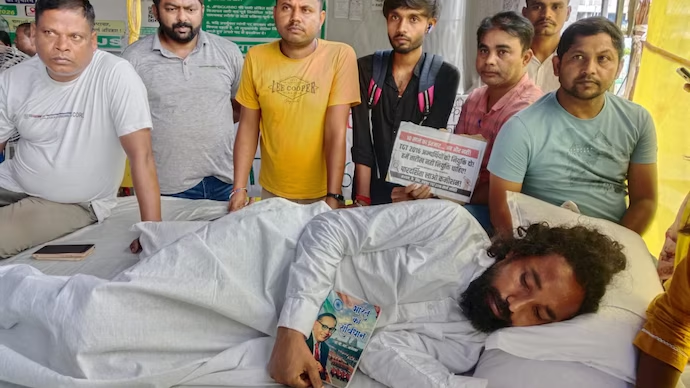
There’s a group of young people sitting at Jaipal Singh Munda Stadium in Ranchi right now, and some of them have stopped eating. Student leader Devendra Nath Mahto started an indefinite hunger strike late on Sunday. By Tuesday a few more had joined him. They’re tired. Not the kind of tired you get after a long study night. The deeper kind — the kind that comes after months of writing letters, meeting officials, marching, and still feeling unheard.
It started with the 14th JPSC preliminary exam results on 2 July. Aspirants looked at the marks and something didn’t feel right. OMR sheets allegedly leaked, scores that didn’t match what people expected, the same old whispers of paper leaks that have been doing the rounds in Jharkhand for years. Then the complaints spread to the JSSC-CGL and other recruitment tests. Suddenly it wasn’t just one exam. It felt like the whole system was broken again.
These students have been camping at the stadium since the end of July. They’ve met the Governor. They’ve met Chief Minister Hemant Soren. They organised a Constitution March. They took out torchlight processions. They submitted evidence. And still, they say, the core demands sit unmet.
What do they actually want? Cancel the 14th JPSC prelims. Bring in the CBI and ED for a real investigation instead of the state CID. Make OMR sheets and answer scripts public. Release category-wise cut-offs. Blacklist the agencies that keep getting accused of messing up exams. And fix the recruitment bodies so this doesn’t keep happening every few years.
The government has done some things. A CID probe was ordered. Eleven people were arrested. The JPSC chairman resigned. On paper it looks like action. But the students at the stadium call those arrests “eyewash.” They say the real people who benefit from the chaos are still walking free. They simply don’t trust a state-level investigation anymore.
That’s when Abhijeet Dipke entered the picture. On Sunday night he spoke to the student leaders on a video call. The same Abhijeet Dipke who had just finished leading that long, noisy protest at Jantar Mantar over the NEET paper leak — the one that ended with the Education Minister resigning. He told them the Cockroach Janta Party stands with the students of Jharkhand and supports their demands. He put it out on social media. Suddenly a local agitation that many outside the state hadn’t noticed started getting national eyes.
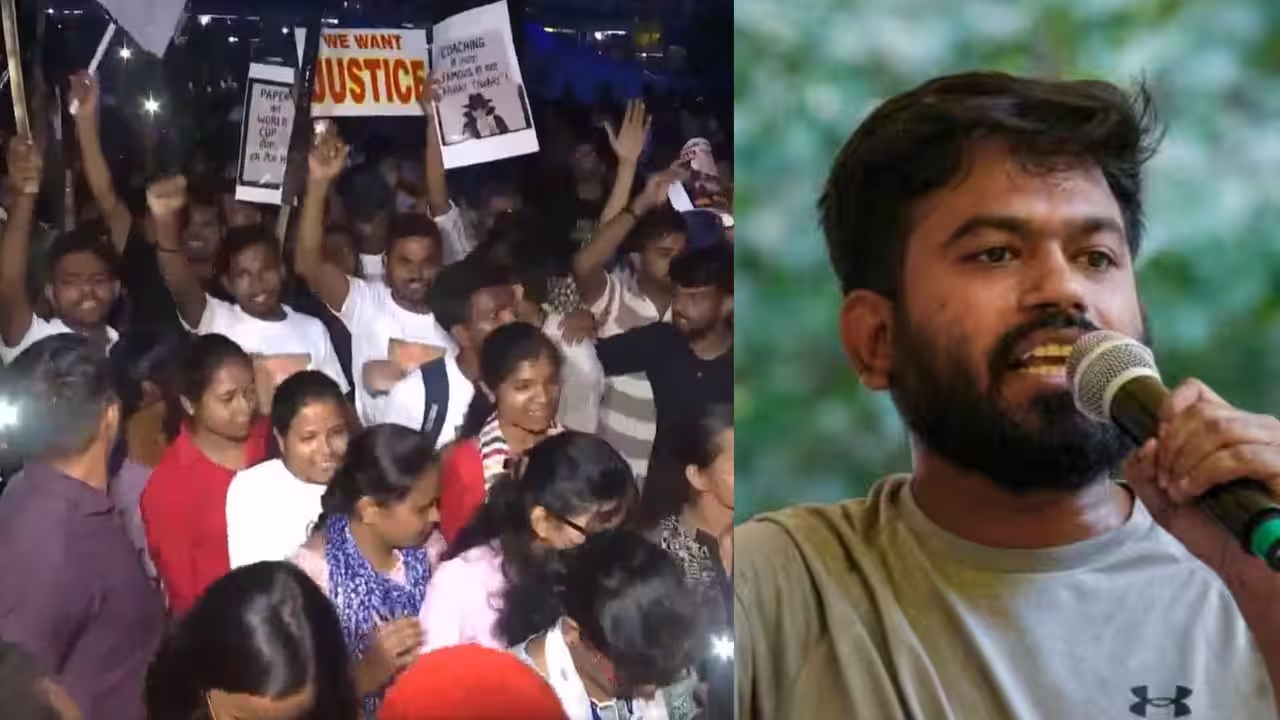
You can understand why the students reached out to him. Across the country, young people preparing for competitive exams have watched the same pattern: years of hard work, expensive coaching, high hopes — and then the fear that the exam itself might be compromised. In Jharkhand the stakes feel especially high. For a lot of these aspirants a government job isn’t just a career. It’s the difference between stability and constant worry for their families. When marks don’t add up or OMR sheets start circulating, it feels personal. It feels like the system is laughing at them.
Mahto has been careful to keep the protest clean. He keeps saying this isn’t about any political party or any one person. It’s about the future of hardworking youth in the state. The students have even planned a peaceful tribute march on Shibu Soren’s death anniversary. They’re trying hard not to let anyone hijack the movement.
By early August the sit-in was into its second week. Rain came down on the stadium and they stayed put. Five more students joined the hunger strike. The state government announced a high-level committee to talk to them. The students say they’re ready to talk, but they’re not interested in vague assurances. If nothing concrete comes, they’ve warned they’ll gherao the Assembly.
Dipke’s support has given the protest a louder voice, but the real strength is still those young people sitting under the open sky in Ranchi. Many of them have prepared for years. Some have already lost chances because of earlier paper-leak controversies. They watch people with lower scores somehow clear the exam and the questions keep coming. Why does this keep happening? Why is it so hard to fix?
This row isn’t just about one exam result. It’s about trust. When the process that decides who gets a government job starts looking shaky, the whole idea of fair competition starts to crack. The students in Jharkhand are saying they’ve had enough of waiting for the next committee report or the next set of arrests of middlemen. They want the exam cancelled, a proper independent probe, and real changes so the next batch doesn’t have to sit in the same stadium doing the same protest.
As of now the hunger strike is still on. Mahto and the others are still refusing food. The government has made some moves, but the gap between the stadium and the people who can actually fix things still feels wide. Whether the promised talks will close that gap, or whether this protest will grow further, is the question hanging over Ranchi this week.
Sources:
Business Standard, The Times of India, Hindustan Times, CNBC-TV18, Times Now, and PTI reports from early August 2026.
@Rohit Manral