
The Prime Minister stood up in the Rajya Sabha and spoke with that calm, firm voice we’ve come to know. The war in West Asia — now dragging into its fourth week — is no small thing. It’s created a real worry for all of us because so much of our oil, gas, and even fertilisers come through those troubled waters, especially the Strait of Hormuz.
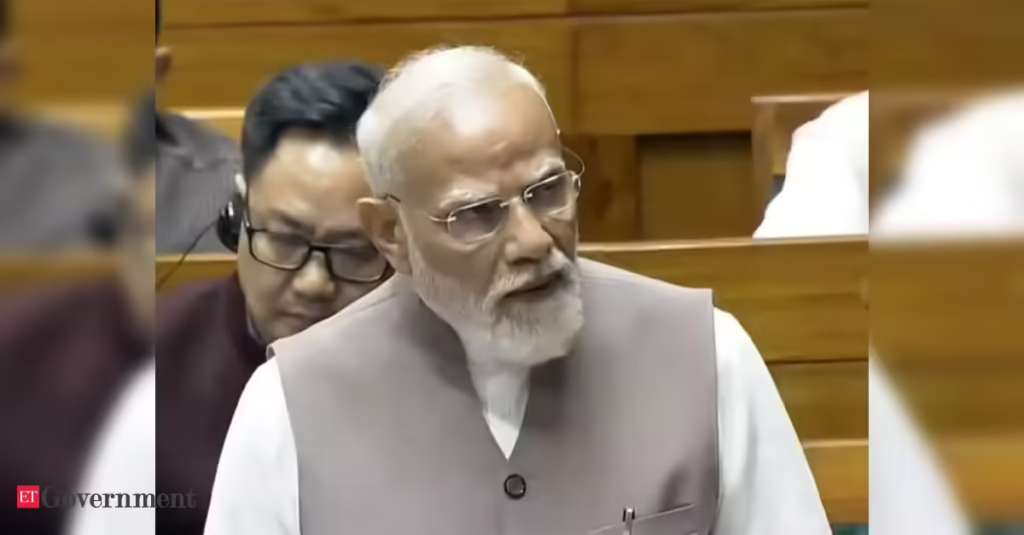
PM Modi didn’t sugarcoat it. He said clearly, “The circumstances is worrisome.” Ships are getting detained, some trade routes are disrupted, and the usual smooth flow of petrol, diesel, LPG, and fertiliser has taken a hit. Prices are jumping very high to the globally, and families are already suffering the pinch at the pump and in the kitchen. Approx one crore Indians live and work in the Gulf countries and their safety is on everyone’s mind. The government has already brought back thousands, including over 700 medical students from Iran, and Modi said he’s personally spoken to leaders in the region to ensure our people are protected.
But here’s the part that brought some relief: India is not caught unprepared. The Prime Minister assured the House and the entire nation, “We have adequate crude oil storage and robust arrangements for continuous supply.” Right now, our strategic petroleum reserves stand at more than 53 lakh metric tonnes — that’s over 5.3 million tonnes. Work is already going on to push this capacity beyond 65 lakh tonnes. And don’t forget, the oil companies hold their own extra stocks on top of that. These buffers were built exactly for moments like this.
He prompted us how much things have changed in the last 11 years under the push for Atmanirbhar Bharat. Earlier, we used to import energy from just 27 countries. Today, it’s 41. That spread has made us stronger and less dependent on any single region. Ethanol blending is saving us roughly 4.5 crore barrels of crude every single year. Railway tracks are getting electrified so faster that we’re saving huge amounts of diesel — visualise, without this, we’d need an extra 180 crore litres of diesel annually. Our metro network has jumped from under 250 km in 2014 to more than 1,100 km now. All these steps mean we burn less imported fuel in our daily life.
Modi also talked about the practical things the government is doing right now. An inter-ministerial group meets every day to monitor supplies and fix problems quickly. We’re talking to suppliers across the world — the US, Argentina, Russia, and others — to bring in LPG and crude from alternative routes. Some Indian-flagged ships that were stuck in the Hormuz area have already come back safely thanks to diplomatic efforts. Refining capacity has grown a lot too, giving us more flexibility.
The difficult times could extend on, affecting our economy, our farmers, and our households. That’s why he urged every Indian to stay united, stay alert, and not fall for rumours spread by those who want to create fright for their own gain. “We faced the coronavirus together,” he said, “and we will face this too by staying strong and focused on self-reliance.”
Only then can shocks like this hurt us less in the future. At the core of his message was a simple but powerful call: we must keep structured Atmanirbhar Bharat with full energy. Less helplessness on foreign oil, more domiciliary production, more renewable energy, better storage, smarter logistics.
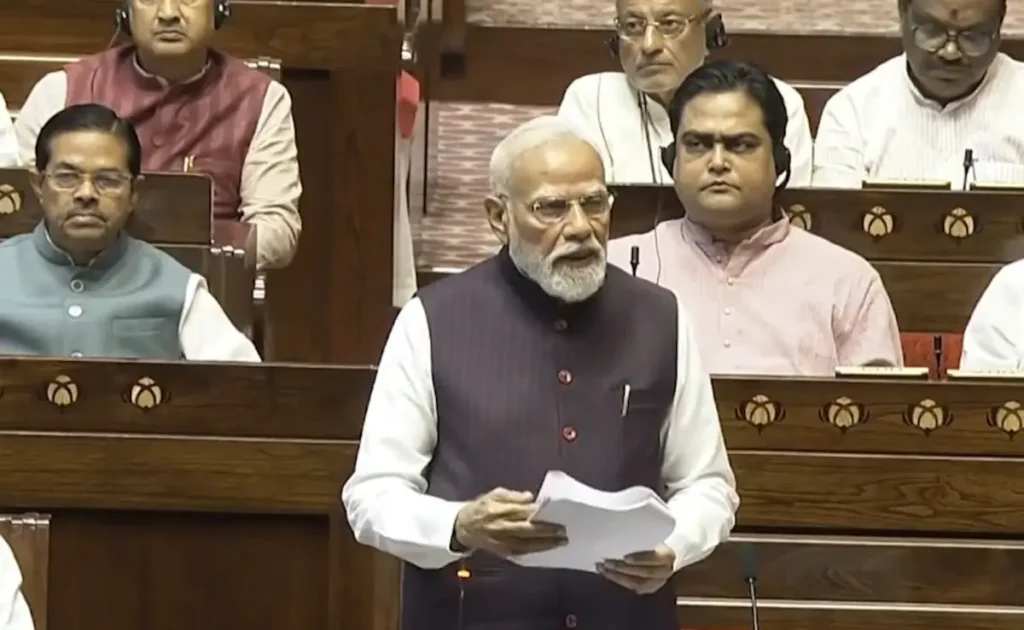
No one is saying everything is perfect. Oil prices are high, supply chains are wobbly, and fertiliser availability needs careful watching for the coming sowing season. But the government seems to be on its talking to global partners, waiving some duties temporarily, and keeping a close eye on every sector.
As ordinary citizens, use fuel wisely, avoid panic buying, support local efforts, and understand why becoming self-reliant isn’t just a slogan — it’s our shield in uncertain times.
Modi didn’t promise magic, but he showed confidence that India today is far better placed than before to handle such global storms. We have the stocks, the diversity, the systems, and most importantly, the collective will.
Sources:
- NDTV: Direct coverage of PM Modi’s statements in Parliament
- Times of India: Details on reserves, diversification, ethanol savings, and daily monitoring
- ANI, WION, Deccan Herald, and PIB releases confirming the 53 lakh MT reserves and expansion plans