
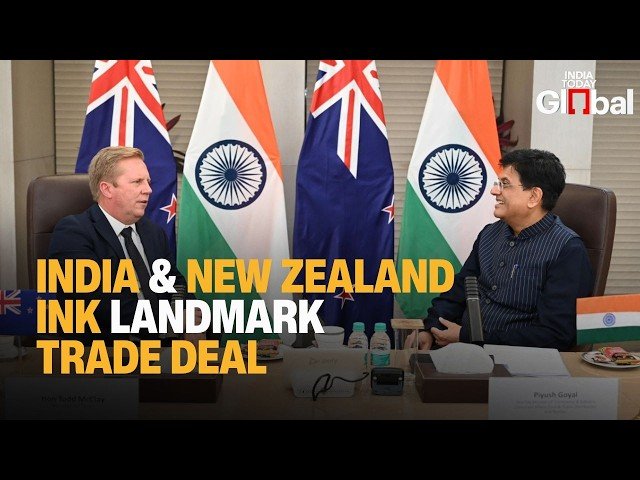
Yesterday’s on the 27th of April 2026, they finally signed that free trade agreement everyone’s calling “historic.” It happened right there in New Delhi at Bharat Mandapam, with our Commerce Minister Piyush Goyal and New Zealand’s Trade Minister Todd McClay shaking hands and putting pen to paper in front of a bunch of business people from both sides. It felt warm, you know? Like two countries that actually get along deciding to make life a bit easier for each other’s folks.
The talks really picked up speed last year – announced back in March 2025 when New Zealand’s PM Christopher Luxon came visiting. From there, things moved surprisingly fast. They wrapped up the negotiations by December 2025, just nine months or so. That’s pretty quick for these kinds of deals, especially with a developed country. Both Prime Ministers, Modi and Luxon, even hopped on a call to mark the end of talks, and you could tell there was real goodwill pushing it forward. No dragging feet for years like sometimes happens.
Now the paper is signed, but the actual benefits kick in a bit later this year once New Zealand sorts out their Parliament side of things (they’ve got elections coming, so that makes sense). Still, the signing itself has everyone buzzing. Luxon and his team have been calling it a “once-in-a-generation” kind of opportunity, and our side is saying it’s going to open real doors for jobs, exports, and just closer connections between people. It’s not some cold corporate thing – it feels more about everyday opportunities.
So what’s actually inside this deal that makes it special? For us in India, the best part is New Zealand dropping all tariffs on every single thing we export to them – 100% duty-free access across all 8,284 tariff lines. That covers textiles, medicines, leather stuff, engineering goods, spices, clothes, you name it. For our small and medium businesses, the MSMEs that keep so many families going, this could mean their products suddenly become way more competitive over there without extra costs eating into everything. Imagine a small workshop somewhere in India getting steady orders from New Zealand – that could mean more jobs, more income for workers. Feels pretty practical and hopeful.
On their side, we’re cutting or removing tariffs on about 95% of what New Zealand sends us. A good chunk goes duty-free right away – things like their honey, wine, some fruits, wool, and other quality products they’re known for. But they were careful with sensitive stuff like dairy, so our farmers don’t get hit hard suddenly. That’s important – these deals need to balance things so nobody’s livelihood gets washed away. Their exports to us aren’t huge right now, but this should give them a nice push while we gain better access for our diverse range of goods.
The goal they’re talking about is doubling the trade between us in the next five years or so, aiming for something around $5 billion. Currently it’s modest, maybe a couple billion, but with India’s huge market and New Zealand’s premium, clean products, it has real potential. And it’s not just about buying and selling stuff. The agreement also touches on services, easier movement for professionals and students, education links, and investment. They’ve mentioned New Zealand looking to bring around $20 billion in investments into India over the next 15 years – that could mean new projects, tech sharing, jobs for our young people, and fresh ideas flowing both ways. There’s even talk of special pathways for up to a few thousand Indian professionals and students.
What I really like hearing is how both sides keep saying “people first.” It’s meant to help farmers, women running businesses, students wanting to study abroad, and small entrepreneurs. An Indian kid might find it smoother to go study in one of New Zealand’s universities, while their know-how in things like sustainable farming or clean tech could support us here. Plus, there’s that broader strategic side in the Indo-Pacific region – stronger economic ties between two democracies when the world feels a bit uncertain with supply chains and all.
This fits into the way India’s been approaching trade lately – going for balanced, sensible agreements that boost our exports and create opportunities at home without hurting our sensitive areas. We’ve seen some momentum with other partners too, and this one with New Zealand stands out because it got done so efficiently. For them, getting good access to our massive growing market is a big deal, especially these days when global trade can feel shaky.
Of course, nothing’s fully live yet. Implementation comes after the formal steps, probably later in 2026. But the energy at the signing – gifts being exchanged, business forums happening, warm words from both ministers – shows they’re serious about making it work. Industrialists and economists on both ends are already very positive on this and talking about gains in trade, mighty more tourism, cultural exchanges, and joint work in new areas like renewable energy or digital stuff.
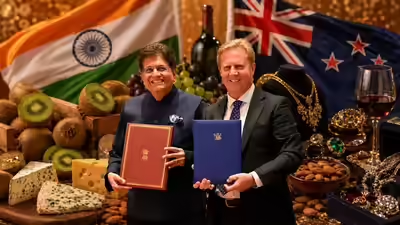
These agreements always sound full of numbers and percentages when you read the headlines, but when you sit back and think, they touch real lives. A weaver or artisan here might see more demand and hire a few extra hands. A honey producer or winemaker in New Zealand could reach way more customers. Young people from both places might travel, study, or work together and bring back fresh perspectives that spark something new. It’s about slowly building trust and real partnerships, not just quick money.
In today’s world, where sometimes trade talks get tense or countries turn inward, this feels like a nice, positive step – two nations respecting what the other needs. We protect our farmers where it counts, they get scale for their high-quality goods. We already share things like loving cricket (that always helps break the ice!), democratic values, and now these stronger economic links that could grow into something deeper over time.
If you’re someone exporting, running a small business, thinking about studying abroad, or just keeping an eye on how countries are connecting these days, keep watching this one. It might quietly create chances for a lot of ordinary families on both sides.
Sources:
- The Hindu reports on the signing and tariff details
- AP News, RNZ, and Bloomberg on the ceremony, reactions, and what ministers said
- New Zealand Government (Beehive) and India’s Commerce Ministry statements
- Economic Times and other coverage on the investment commitments and trade goals
- Official announcements and business forum mentions