
With the advent of cultural festivities in India, Government of India has announced GST reforms in the upcoming financial year of 2025. Finance Minister of India, Nirmala Sitharaman, announced the Goods and Services Tac reduction in 2025 to reduce the burdens for a common man of India. From September 22, 2025, the reforms will come into action and become more efficient and middle-class friendly. The reform was announced at the 56th GST council meeting which aimed towards making taxation a more simplified and less burdening process for the citizens of India.
The reforms
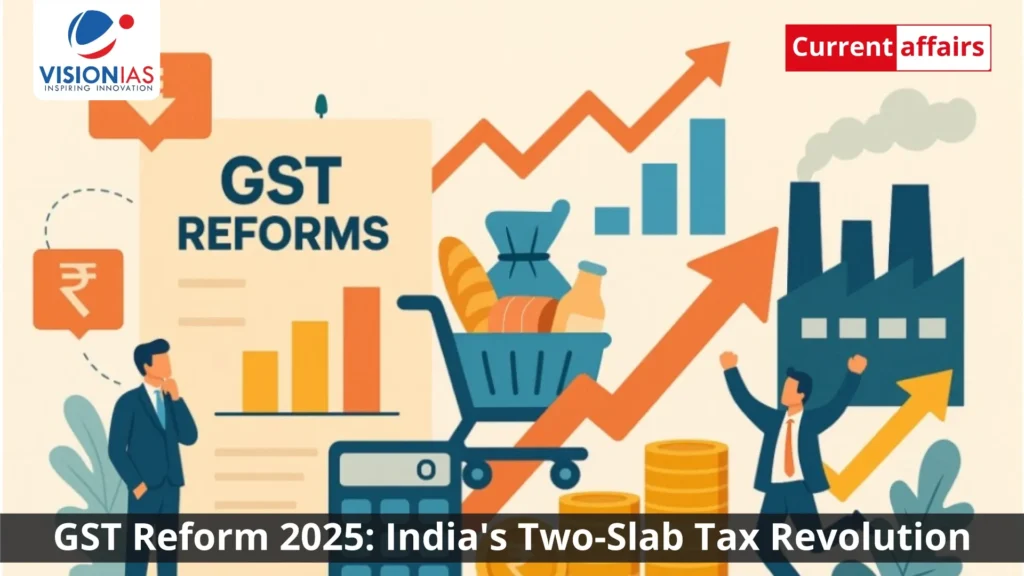
The complexity of a multi-tiered tax system often led to confusion and hidden costs. Recent reforms of 2025 are aiming to streamline this structure. By consolidating tax slabs and lowering rates on a wide range of essential goods and services, the policy is designed to have a direct and positive impact on household budgets. The earlier model of GST in India had 4-tier i.e. 5%, 12%,18% and 28%. This created classification disputed and made taxation a complexed process for the people of India. GST 2.0 has now been narrowed down to a 2-tier slab with 5% GST on essential and daily items and 18% on standard good and services such as transport. A 40% GST has been applied on luxury items such as premium drinks, vehicles, pan masala etc. the reforms are to come into action from the first day of Navratri i.e.22nd September 2025.
The GST division list
- Everyday food items: 0%-5% (e.g.- UHT milk, sauces, biscuits, paneer, oil etc.)
- Household essentials: 5% (e.g.- Detergent, soap, shampoo, toothpaste etc.)
- Consumer Durables 18% (e.g.- television, air conditioner, washing machines etc.)
- Automobiles: 18% (e.g.- small cars, two wheelers, trucks etc.)
- Healthcare Products:0% or 5% (e.g.- medicines, health and life insurance etc.)
- Luxury Goods: 40% (e.g. Tobacco, luxury cars, aerated drinks etc.)
How is this opportunity for economic growth?
The positive effects of the GST Reforms of 2025 extend beyond individual savings. By boosting income, these reforms will inspire demand across various sectors. This increased consumption will signal businesses to ramp up production, which in turn can lead to:
- Expansion and Hiring: Companies may invest in expanding operations, creating more job opportunities.
- Innovation: A strong market encourages businesses to innovate and improve their contributions in the economy of the nation.
This creates a fertile ground for new opportunities, particularly providing an advantage to the skilled middle class who are well-positioned to fill roles in a growing economy.
The Economic impact and reactions
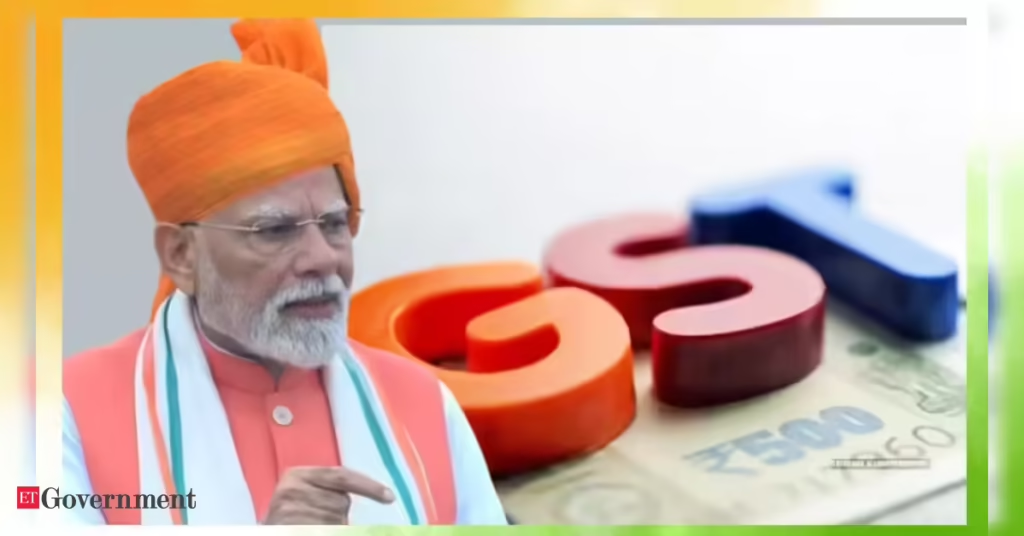
As the new GST reforms are now applied during the festive season in India, the reform mainly aims towards decreasing financial burden on families in India. The reforms also focus on stimulating economic growth ahead of festivities. Prime Minister of India, Narendra Modi declared this GST rollout of 2025 as, “GST BachatUtsav.” Further he shared on his X post,
“Interacted with traders and entrepreneurs in Itanagar today. They expressed their appreciation for the GST reforms and the launch of the GST BachatUtsav. They highlighted how these initiatives will benefit key sectors like fisheries, agriculture and other local enterprises.
I emphasised the importance of maintaining quality standards and nurturing a strong spirit of buying Made in India products.”
Home Minister of India, Amit Shah added on his X post, “The Modi government is increasing the income of the middle class by opening plenty of opportunities for them and ensuring that their savings rise constantly through #NextGenGSTReforms.
The steep reduction in the GST rates of daily essentials, healthcare products, electronic appliances, and educational items will boost their disposable income and encourage them to save even more.”
The opposition parties have shared their disapproval with the reforms and have called the step a ‘band-aid on deep wounds.’ The opposition stated that this step of GST reforms has come up after exhausting the citizens of India with extra tax-collection with high GST. Mamta Banerjee, Jairam Ramesh and other opposition leaders have spoken up against the new Reforms and calling it an act of covering higher taxes in the past. Jairam Ramesh shared on his X post, “This is not government, but govern-event. They make an event out of everything… This is an attempt to divert attention… This reform should have been done 8 years ago… Our economy got two major shocks – GST and demonetization…”
Conclusion
The Modi government has strategically designed the GST reforms 2025 to increase the financial resilience of India’s middle class. With a simplified tax structure, the reform aims to put more money back into the hands of households. A significant reduction in GST rates on daily essentials, from food items to healthcare products and common electronic appliances, directly lowers the cost of living. This steep cut in everyday expenses boosts the disposable income of families, allowing them to not only manage their budgets more effectively but also to increase their monthly savings.