
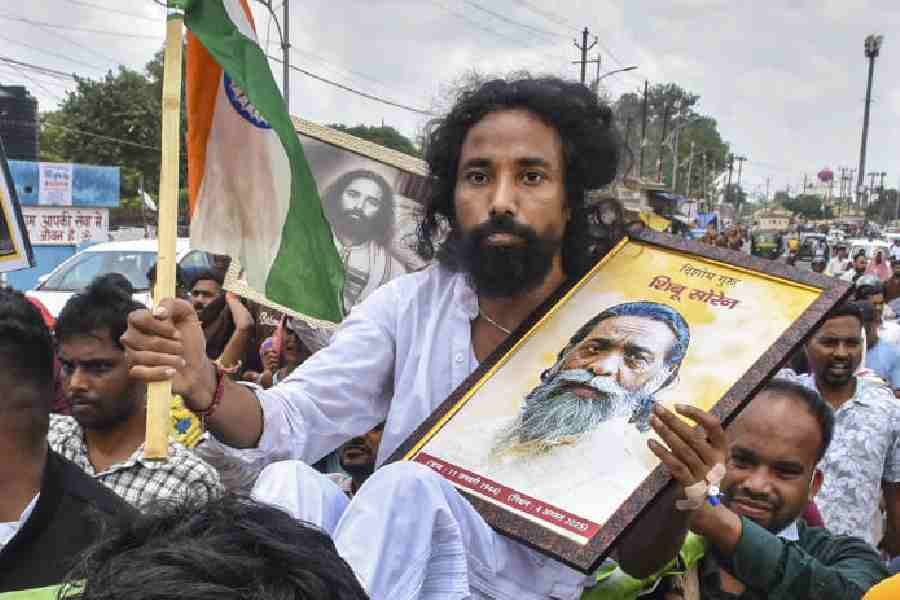
The tents, the quiet groups of students sitting under the lights, the tired but determined faces. Even after one big victory, nobody is packing up and going home just yet.
Devendra Mahto, the man who sat on hunger strike for 16 days and became the face of this whole movement, ended his fast late Monday night. But when he spoke to reporters on Tuesday, he made one thing very clear: the hunger strike is over, the protest is not.
“I have ended my hunger strike, not the protest,” he said. “The agitation will continue till the government gives a guarantee that no paper leak or irregularities will take place in recruitment examinations.”
That sentence landed with weight. Because for the thousands of young people who have been camping here, this was never only about one exam. It was about years of the same story repeating itself — paper leaks, alleged seat selling, results that no one fully trusted.
The government’s decision to cancel the JSSC-CGL exam and all recruitment tests done by the private agency TDPL since 2014 was a major step. Chief Minister Hemant Soren announced it after a special Cabinet meeting. Fourteen exams gone, results scrapped. Mahto called it a “historic win.” You could see the relief on many faces that night. Some students even celebrated.
But Mahto and others are already looking ahead. He says a second phase of the stir will start soon under the JPSC-JSSC Abhiyarthi Reform Manch, the group he heads. The demand is simple and stubborn: a system that is actually clean. No more leaks. No more irregularities. Real transparency in both JPSC and JSSC exams.
He is asking for a monitoring committee that actually watches the reforms. He wants a full audit — not just of the money, but of every step in the process. And if it takes a new law, even better. He has even said the Assembly should pass strong legislation, and if needed, go further, so that people who mess with exams face the harshest punishment possible.
Mahto has prepared a blueprint for how the examination system can be fixed. He plans to hand it over to the government. “A CBI or CID inquiry cannot give justice to the students,” he said. “We are demanding a guarantee of a leak-proof examination system and transparency in the future.”
The protest itself started after the 14th JPSC preliminary results came out in early July and allegations of irregularities spread fast. Students began gathering. Marches happened. Meetings with the Chief Minister took place. When things did not move fast enough, Mahto started his indefinite hunger strike on 2 August. Others joined him. The stadium became the centre of it all.
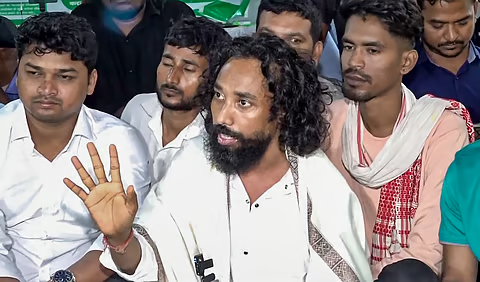
Some of the protesters are still on fast even now — Rahul Kranti, Sabita Kumari and Rupesh Pal among them. The movement has already run for 25 days. It has drawn attention from outside the state too. Activist Sonam Wangchuk spoke to Mahto over video during the strike.
The government has responded. An exam reforms committee headed by senior IAS officer Amitabh Kaushal has been formed. CID and SIT probes into exams since 2014 are going on. Arrests have been made. But a section of students still want a full CBI investigation. They feel only that will bring complete trust back.
For the young people sitting here, this is personal. Many have spent years preparing. Some have appeared in the same exams more than once, only to see them cancelled or clouded by controversy. The anger is real, but so is the hope that this time something permanent might change.
Mahto is not talking about endless confrontation. He is talking about making sure the next generation does not go through the same cycle. The second phase, whenever it starts, will keep the pressure on until the government gives that clear guarantee of a clean system.
As of Tuesday evening, the stadium is still active. Conversations continue under the lights. Students discuss what comes next. The hunger strike chapter has closed, but the larger story of demanding honest job examinations in Jharkhand is still being written.
Sources:
India Today, Times of India, The Hindu, Rediff, Moneycontrol, IANS, Firstpost, Hindustan Times, The Indian Express, Free Press Journal (reports from 17–18 August 2026).
@Rohit Manral