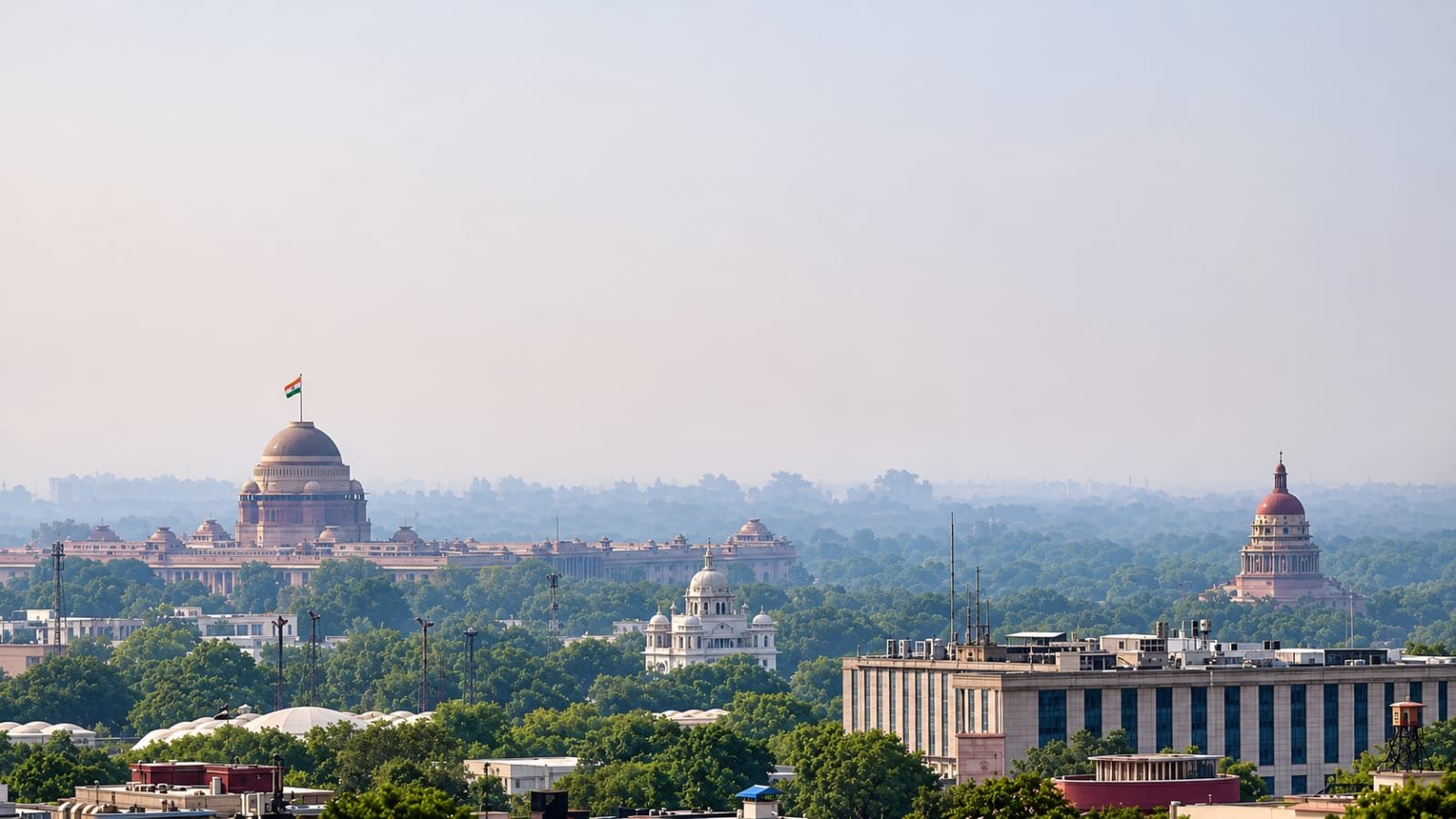
The overall AQI touched 384 according to the CPCB numbers. That’s deep into the “very poor” zone and just a few points away from severe.
In many places it was already past 400. Punjabi Bagh, Jahangirpuri, R K Puram, IIT Delhi, Bawana, Dwarka – all these spots were showing severe readings. Some stations were sitting around 440-450. Even near India Gate it was close to 400. You could literally see the grey haze hanging over the city. Visibility was down and the air felt heavy the moment you stepped out.
It wasn’t like the pollution suddenly appeared. Day before Diwali the average was already 369, which people are calling one of the worst Diwali-eve readings in years. By Sunday morning the mix of leftover pollution, almost no wind, cooler temperature and whatever festive emissions were there just pushed it higher.
You know how it is every year. Cars, dust, industry emissions are always there. Then stubble burning from Punjab and Haryana peaks around this time. Add Diwali smoke on top of that, and when the wind refuses to blow, everything just sits there. The weather people had already warned that Sunday and Monday would be bad.
Government had put GRAP Stage 3 in place a couple of days earlier – restrictions on construction, older diesel vehicles and all that. But when the air is already this loaded, these steps only slow things down a bit. Forecasts say it’ll stay very poor to severe for the next few days at least.
For regular people it’s the same old story. Eyes start burning, throat feels scratchy, and anyone with breathing issues feels it first. Kids, old people, asthma patients – they’re the ones who suffer more. Most folks just keep windows shut, put on masks if they have to go out, and run the air purifier if they can afford one. Life doesn’t stop though. People still have to step out for work and stuff.
Nearby areas like Noida, Gurugram, Ghaziabad weren’t great either, though a little better than the worst parts of Delhi. Smoke doesn’t care about borders anyway.
Every Diwali we see the same cycle. Courts give orders on crackers, governments run campaigns, people talk about green crackers and diyas. And still the AQI crashes. This year the Supreme Court allowed only green crackers in limited hours, but you know how it goes on the ground.
What stood out this time is that the air was already so bad even before the main night of bursting. 384 on the morning of Diwali itself tells you the base pollution was high. When the wind is calm and temperature drops, there’s no room left.
Delhi people have kind of got used to checking the AQI the way others check weather. Plan the day around it. Keep kids indoors if possible. Hospitals quietly prepare for more cough and breathlessness cases. It’s become part of the winter routine now.
Officials will keep watching the numbers through the day. If it gets worse they can tighten the rules further. For now the picture is clear – the air is bad, it’s going to stay bad for a few more days, and the usual combination of festival smoke, farm fires and unfavourable weather has once again left the city struggling on one of its biggest festive mornings.
Sources: CPCB data as reported by Indian Express, India Today, Business Standard, Financial Express and other papers on 8 November 2026.
@Rohit Manral