
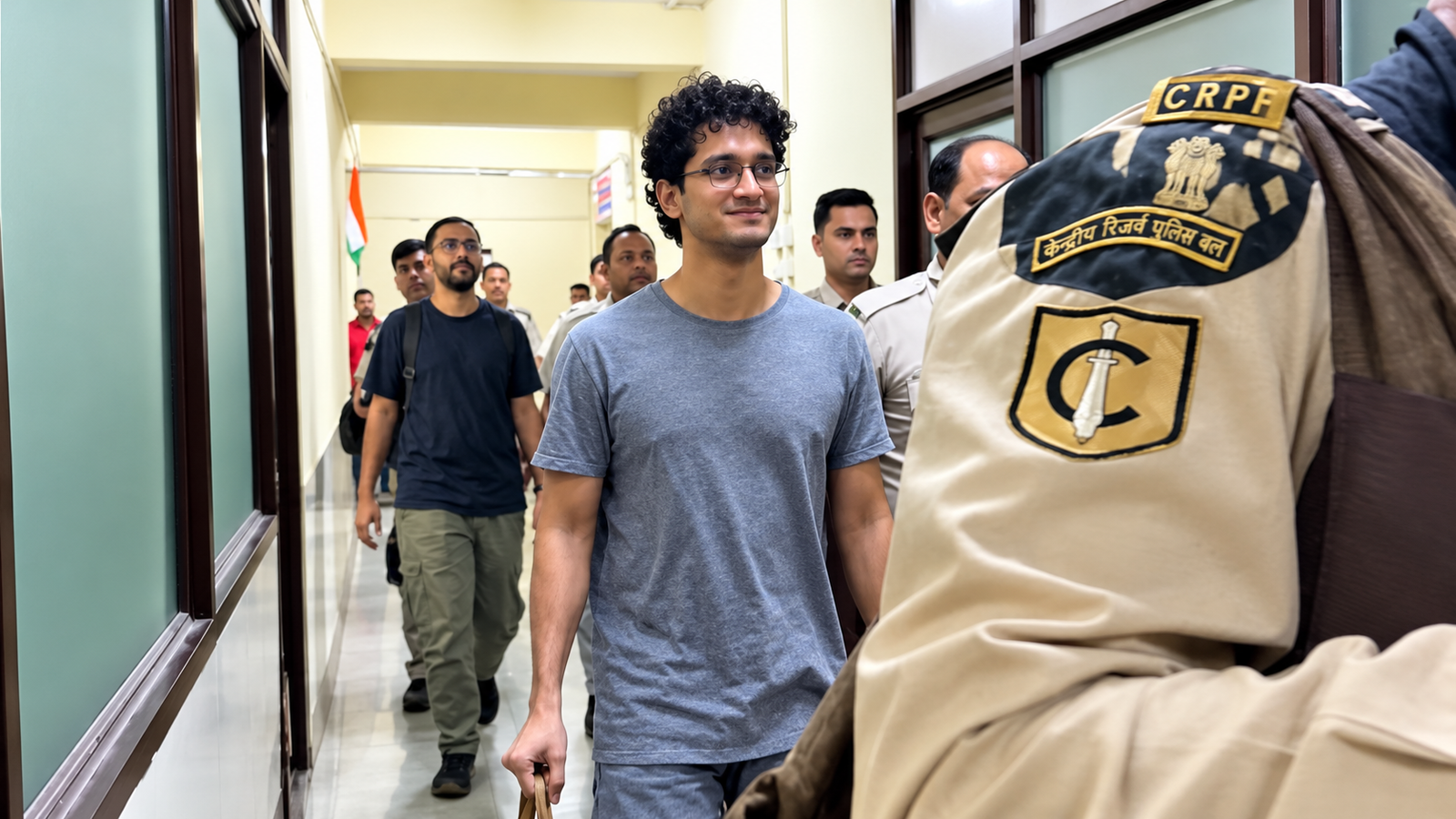
New Delhi: Cockroach Janta Party co-convenors Saurav Das and Ashutosh Ranka on Tuesday moved the Delhi High Court, challenging a Special Executive Magistrate’s order that extended their judicial custody by two more days. Their lawyer has sought an urgent hearing, arguing that the activists should not spend another minute behind bars and that their liberty must not be curtailed through what the legal team describes as political games.
The petition comes a day after SEM Ritu Raj at Mandir Marg police station remanded the two leaders to judicial custody until 21 October. They are scheduled to be produced before the magistrate at 2 pm that day. The police had sought five to seven days of further detention, citing an imminent threat to public order, but the magistrate granted only two days.
Das and Ranka were first detained in connection with a protest at Jantar Mantar. On 13 October, a day after the government denotified the iconic site as a designated protest venue, the two leaders and other CJP members allegedly entered the area by scaling barricades and waving the tricolour. They were protesting against the Special Intensive Revision of electoral rolls and demanding the resignation of the Chief Election Commissioner. Police registered cases alleging trespass, violation of prohibitory orders, breach of peace bond and obstruction of public servants.
The pair had earlier been detained on 10 October at the airport upon landing in Delhi, ahead of planned protests. They were released the next day after executing peace bonds of Rs 50,000 each under Sections 126 and 170 of the Bharatiya Nagarik Suraksha Sanhita, undertaking to maintain peace and good behaviour for a year. Police later accused them of deliberately breaching those bonds by mobilising people through social media and attempting to assemble at the now de-notified site.
On 14 October, Special Executive Magistrate Mahesh Kumar Meena sent them to Tihar Jail for five days of judicial custody. Their associate Ajinkya Shinde was released on a personal bond with conditions. When the five-day period ended, the matter came up again on 19 October. The previous magistrate recused himself after claiming he received a threatening WhatsApp message asking for their release. An FIR was registered against unknown persons, and the case was transferred to a new magistrate, SEM Ritu Raj.
In the fresh order, the magistrate observed that Das and Ranka had “deliberately” breached the bonds furnished on 11 October and immediately committed a breach of peace. Their assurance that they would not repeat the offence “does not inspire confidence,” the order said, citing material placed on record by the investigating officer. The magistrate noted their alleged “habitualness in calling protest at de-notified areas” and found that their conduct showed “no respect for law.”
Fresh sureties presented by the defence were rejected after the magistrate personally questioned them. One surety’s photograph on the bond did not match the Aadhaar card, while the second could not provide basic details such as parentage and address of Das. The magistrate concluded that neither surety had sufficient control over the activists to ensure their appearance before the authorities.
CJP’s legal team, including counsel Ratna Singh, has described the continued detention as unlawful and a clear violation of due process and Supreme Court precedents on sureties. Singh posted that the team had moved the High Court and requested an urgent night hearing, stating that Saurav and Ashutosh should not spend a single minute behind bars. Party founder Abhijeet Dipke and others have alleged that the authorities are deliberately prolonging the detention through procedural delays to keep the leaders jailed during Dussehra celebrations.
AAP Delhi chief Saurabh Bhardwaj called the extension “dictatorship” and said it was aimed at keeping them jailed while others celebrated the festival. The defence has maintained that the two leaders made no fresh protest calls after 10 October and had gone individually to Jantar Mantar. They argue that the grounds for further custody remain vague and that liberty is being curtailed without adequate justification.
Delhi Police, however, have pointed to the leaders’ past conduct, social media activity and the risk of further mobilisation at restricted sites. The investigating officer submitted material suggesting a possibility of breach of peace and disruption of public tranquillity. The magistrate accepted that there was a continuing necessity for preventive measures and directed the respondents to submit written arguments within two days.
The case has drawn attention because it involves preventive detention under the new BNSS provisions rather than a regular criminal trial at this stage. Section 126 deals with security for keeping the peace, while Section 170 allows arrest without warrant if there is knowledge of a design to commit a cognisable offence that cannot otherwise be prevented. Critics of the action see it as an attempt to stifle protest against electoral roll revisions, while the police maintain they are only enforcing prohibitory orders and earlier undertakings.
As the matter reaches the High Court, the two CJP leaders remain lodged in Tihar Jail. Their next production before the SEM is fixed for 21 October. The High Court petition seeks to set aside the extension order and secure their immediate release. Legal observers note that the outcome will be watched closely for its implications on the use of preventive custody in cases involving public protests and bond violations.
The developments come against the backdrop of ongoing political debate over the Special Intensive Revision exercise and the status of traditional protest sites in the capital. CJP has positioned itself as a vocal critic of the Election Commission’s processes, and its leaders’ repeated encounters with preventive proceedings have become a flashpoint. Whether the High Court grants urgent relief or upholds the magistrate’s assessment of risk will decide if Das and Ranka walk free before or after the next hearing date.
Sources: Moneycontrol, LiveLaw, India Today, The Print, Deccan Herald, Times of India, Indian Express, The Tribune, NDTV, Outlook India.
@Rohit Manral