
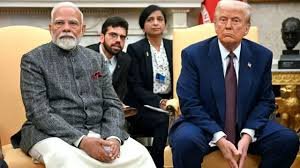
Description: For once, no one is rolling their eyes. The top U.S. trade official has privately told her team that India just handed over the strongest, most serious package of concessions in the entire 18-year history of these negotiations. People who have watched these talks die a dozen times are now checking flight schedules for a possible signing ceremony in early 2026.
Same Old Dance, Brand New Music
- Everyone knows the greatest hits of US-India trade drama by heart:
- America wants its almonds, cherries, and cheese in Indian supermarkets.
- India says its 80 million dairy farmers will riot if that happens.
- U.S. drug and device makers scream about price controls.
- India says its citizens can’t pay American prices for heart stents.
- Repeat every two years since 2007.
- That soundtrack just got flipped.
- The Sentence That Stopped the Room
End of November, Washington. The Indian delegation has just left the building. Ambassador Katherine Tai closes the door, turns to her core team, and says (I’m told almost word-for-word):
Guys, I need you to hear this clearly. These are the best offers—bar none—that the United States has ever received from India. Ever. In any administration. On any subject.”
She wasn’t shouting. She wasn’t smiling. She just wanted them to understand that history had quietly turned a corner.
What India Actually Put on the Table?
No leaks of full documents yet, but enough senior people have talked off the record that the picture is clear:
Tariffs on most American fruits, nuts, and premium farm goods heading toward zero over five to eight years.
A dairy chapter that actually has numbers in it—small but real quotas for cheese, butter oil, and milk powder, wrapped in food-safety language that lets India save face with its farmers.

A workable compromise on patents: India will stop the worst “evergreening” tricks and give companies a fair shot when generics try to jump the gun.
Real flexibility on data flows and cloud services—no more “build a data center in Mumbai or forget it.”
A big “Phase One” deal covering roughly $90 billion of current trade that both leaders could sign and celebrate by March 2026.
These aren’t opening bids meant to be negotiated away. They are the Indian bottom line, cleared at the very top of the government.
Why India Decided to Play Big
Simple version: the stars aligned.
Indian exporters are terrified of waking up one morning to new U.S. tariffs. Companies from Bangalore to Gurgaon have been screaming for certainty. At the same time, the Prime Minister’s team looked at the calendar and realized 2026 is the last quiet year before the next election cycle freezes everything. Add in the growing worry about China rewriting global supply chains, and suddenly “good enough” stopped feeling good enough. So New Delhi did something rare: it moved first, and it moved a lot.
The Stuff Still Keeping People Up at Night
Dairy is still dairy. India will never sign anything that looks like it’s selling out its farmers on television. But the distance between the two sides is now measured in percentage points, not light years.
Medical-device price caps are still there, but India has offered review panels and sunset clauses that didn’t exist six months ago.
The rest feels like normal haggling—bourbon vs. basmati labeling, exactly how many years before tariff line 4721 goes to zero. Normal. Boring. Doable.
Spring 2026 Is Suddenly on Everyone’s Calendar
December and January will be brutal—late nights, red-eye flights, endless spreadsheets. But for the first time in anyone’s memory, the people in those rooms are arguing about drafting language and transition periods instead of whether the whole thing is impossible.
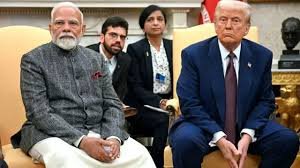
If nothing crazy happens, a signing ceremony in February or March 2026 is now the base case, not the fantasy.
It won’t be the grand, economy-wide free-trade dream that people sketched in 2005. It will be a thick, practical, grown-up agreement that makes life easier for companies and removes the dumbest fights.
After eighteen years of watching the same movie end the same way, the credits might actually roll this time. And it all started with one quiet sentence in a windowless conference room: These are the best offers I’ve ever seen in my life.
Sources:
- Moneycontrol
- News18 YouTube
- IBTimes India
- IANS Live