
New Delhi:
All India Students’ Association (AISA) national president Neha Bora made it clear on Saturday that she will not sign any peace bond. She stood firm even after the Delhi High Court dismissed her petition challenging the notice a day earlier. The next hearing before the Special Executive Magistrate is now fixed for October 29.
Bora appeared before the SEM at Mandir Marg Police Station on Saturday. Following the High Court’s directions, the magistrate handed over the documents the police had relied on to claim there was a likelihood of breach of peace. Her lawyer, Abhik Chimni, said they would examine the material carefully before responding on the 29th.
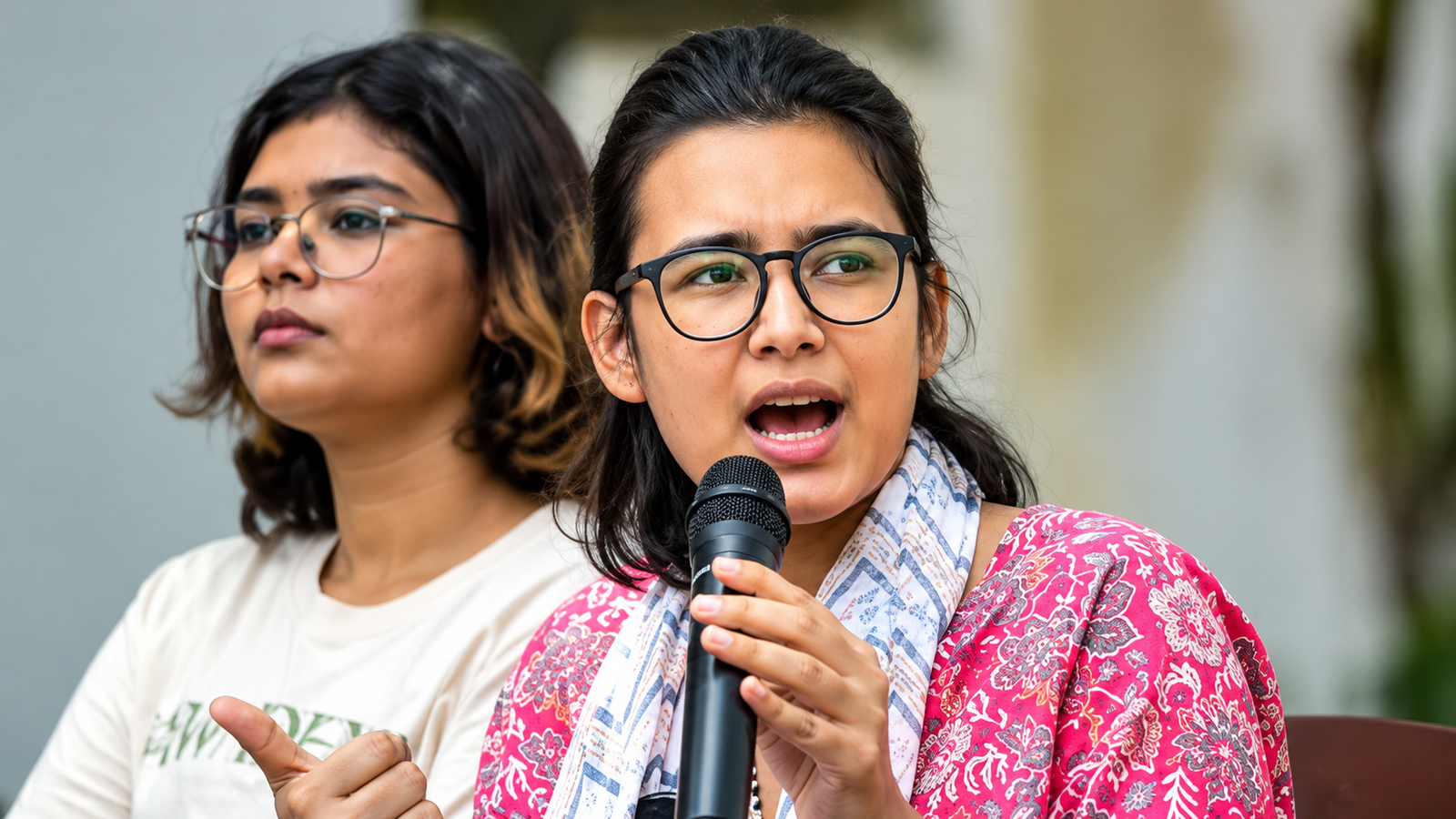
Speaking to reporters later at the CPI(ML) Liberation parliamentary office, Bora did not mince words. “Whose peace am I being asked to keep?” she asked. She said the Constitution gives citizens the right to dissent, yet these peace bonds are being used to detain people in the name of maintaining peace. “We were detained within ten minutes of protesting at Mandi House on October 16 and told we were in breach of peace. Peace bonds are being weaponised to curb democratic protests. Signing them is principally wrong for us. It is no less than signing away our democratic right to dissent.”
She added that AISA would not be part of normalising this practice. “The peace cannot be only for the government, but also for the people. We will keep challenging these bonds.”
The whole episode traces back to October 16. Bora was among those detained while participating in a protest near Barakhamba Road and Mandi House. The demonstration was part of wider actions demanding the resignation of Chief Election Commissioner Gyanesh Kumar over concerns about the Election Commission’s handling of the special intensive revision of electoral rolls. She was taken to an undisclosed location, then to RK Puram Police Station, held overnight, and released early the next morning.
On October 17, the Special Executive Magistrate issued a notice under Section 126 of the Bharatiya Nagarik Suraksha Sanhita (BNSS). It directed her to appear and show cause why she should not execute a personal bond of Rs 10,000 with one surety “for keeping peace for the period of inquiry.” The notice also referred to Sections 130 and 135(3).
Bora’s legal team moved the Delhi High Court, arguing that the notice was vague, factually incorrect, and lacked any real material showing a likelihood of breach of peace. They said it violated her fundamental rights under Articles 19 and 21. Justice Subramonium Prasad heard the matter and, on Friday, rejected the writ petition at that stage. The court held there was sufficient material before the SEM to initiate proceedings and that the notice was not based merely on hearsay. However, the judge directed that all material relied upon must be provided to Bora’s side and that principles of natural justice must be followed. The SEM was also asked to consider the proper stage for requiring any bond.
On Saturday the SEM complied with those directions. Documents were shared, and time was granted till October 29 for a reply. Chimni noted that while the High Court had dismissed the challenge to the notice itself, it had laid down important parameters that the defence would now examine.
Bora has said she will continue to participate in the proceedings but will not sign the bond. “We don’t have any conditions. We are not going to sign the bond,” she told reporters. She maintained that raising slogans or questioning institutions does not amount to a breach of peace, and that peaceful street demonstrations remain a democratic right.
The case has drawn attention because it touches on the wider use of preventive measures against student and political activists. AISA, the student wing of CPI(ML) Liberation, has argued that such bonds create a climate where peaceful protest is treated as a potential threat. Bora expressed hope that the courts, as custodians of constitutional morality, would eventually recognise the contradiction between these provisions and the right to dissent.
For now, the matter remains before the SEM. Bora’s team will study the documents shared on Saturday and prepare their response for the October 29 hearing. Whether the magistrate will ultimately require the bond, and what further legal steps follow, will depend on how the proceedings unfold.
The protests that led to the detention continue to be part of a larger debate around the Election Commission and electoral processes. Bora and AISA have insisted their actions were peaceful and within the bounds of democratic expression. The police and the magistrate’s proceedings rest on the assessment that preventive steps were necessary to maintain public order.
As things stand, Neha Bora has drawn a clear line. She will appear, she will engage with the process, but she will not sign a peace bond that, in her view, asks her to give up the right to dissent. The next chapter will play out on October 29.
Sources:
Times Now, The New Indian Express, Scroll.in, Moneycontrol, The Logical Indian, India Today, Lawbeat, The Federal, Mathrubhumi English, News18, Bar and Bench, and related reports published on 24 October 2026.
@Rohit Manral