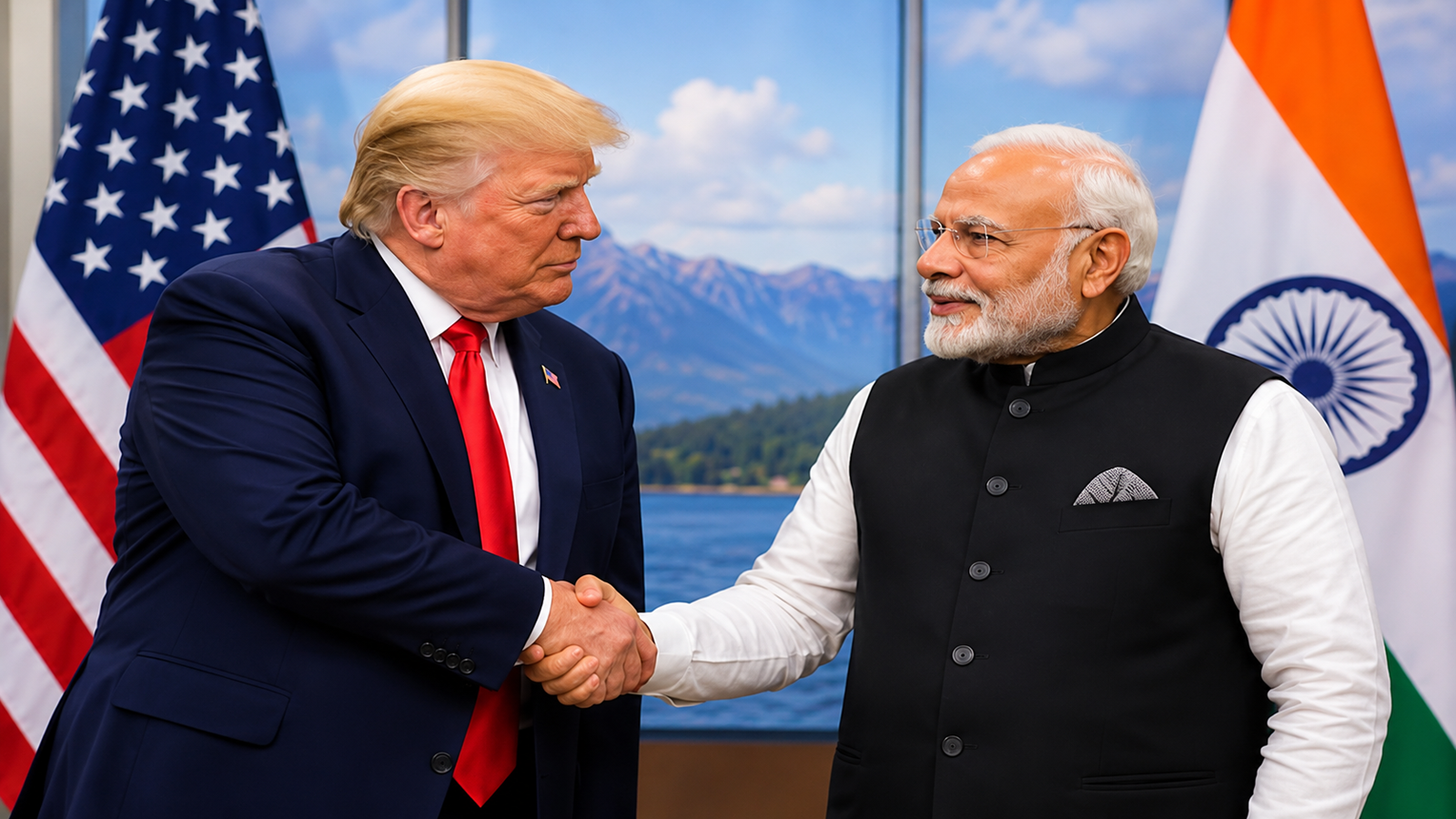
Yesterday (Friday, 13 November) Indian officials confirmed that the United States has given a clear assurance — India will get a comparative tariff advantage over its competitor countries once the deal is finalised. In simple words, our goods should face lower tariffs in America compared to what countries like Vietnam, Indonesia or others will face. This was the main condition India had been insisting on for a long time.
A small American team had come to Delhi in the first week of November. They sat with our officials and discussed customs and trade facilitation. According to Commerce Secretary Rajesh Agrawal, the talks went very well. He said there was good convergence on many points and the discussions are “on the right track.” The chief negotiators from both sides are also talking regularly over video calls to finalise the language of the agreement.
Commerce and Industry Minister Piyush Goyal was even more upbeat. He said the negotiations are going smoothly, there are no big obstacles left, and an announcement could come “quite soon.” He also claimed that India has managed to secure one of the best deals possible with the US. The deal, once done, is expected to help both countries reach the $500 billion bilateral trade target that Prime Minister Modi and President Trump had set earlier.
A few important details:
This first phase of the deal will cover only goods. Services (like IT, professional services etc.) will be taken up in the second phase later. Both sides are trying to wrap up this first tranche by the end of the current financial year, that is by March 2027.
You may remember that in February this year, Modi and Trump had already agreed on a basic framework for an interim trade agreement. After that, things slowed down a bit because of some tariff investigations and court-related issues in the US. But now the momentum is back.
Officials have also built in a safety clause. If either country changes its tariffs on the other after the deal is signed, the second country will have the right to adjust its own commitments. This gives both sides some protection.
For Indian exporters — especially in textiles, leather, chemicals, engineering goods, and agricultural products — this can be good news if the final tariff numbers work out in our favour. The US remains India’s largest export market, so even a modest improvement in market access matters a lot.
Of course, nothing is signed yet. The exact tariff numbers and the final legal text are still being worked out. But the tone from both Delhi and Washington is positive right now. After almost two years of talks, it looks like we may finally see the first part of the India-US trade deal coming through in the next few months.
That’s the situation as of today.
Sources:
The Hindu, Indian Express, Economic Times, CNBC-TV18, Business Today, Financial Express (reports dated 13–14 November 2026).
@Rohit Manral