
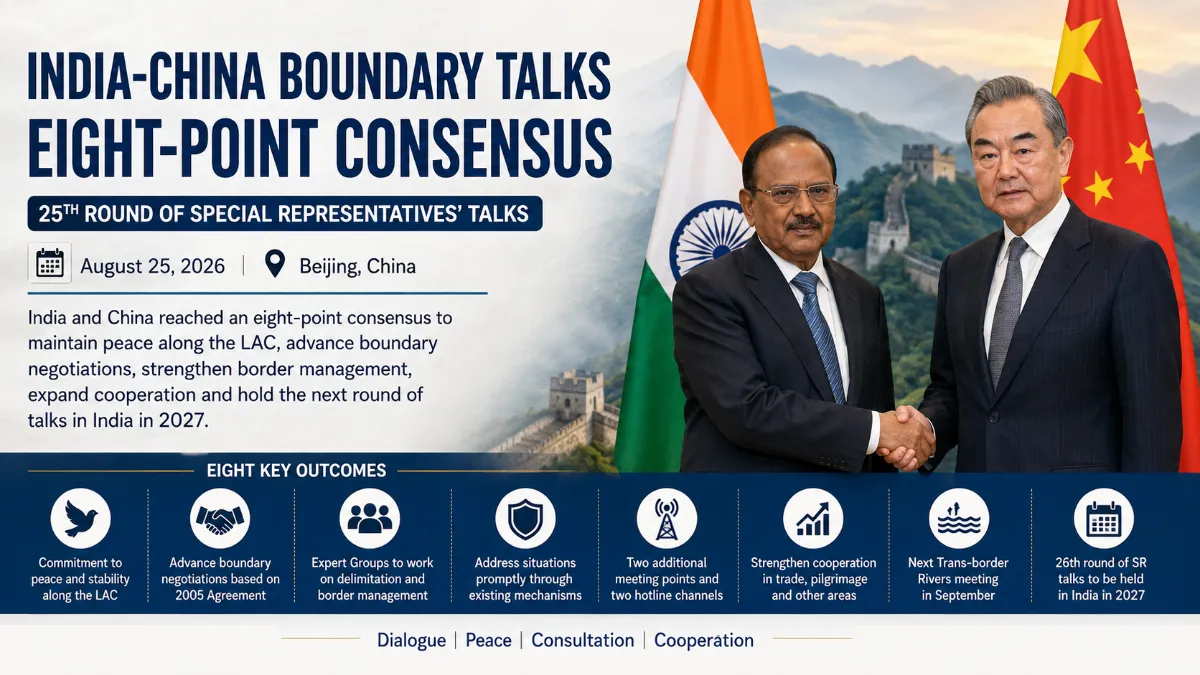
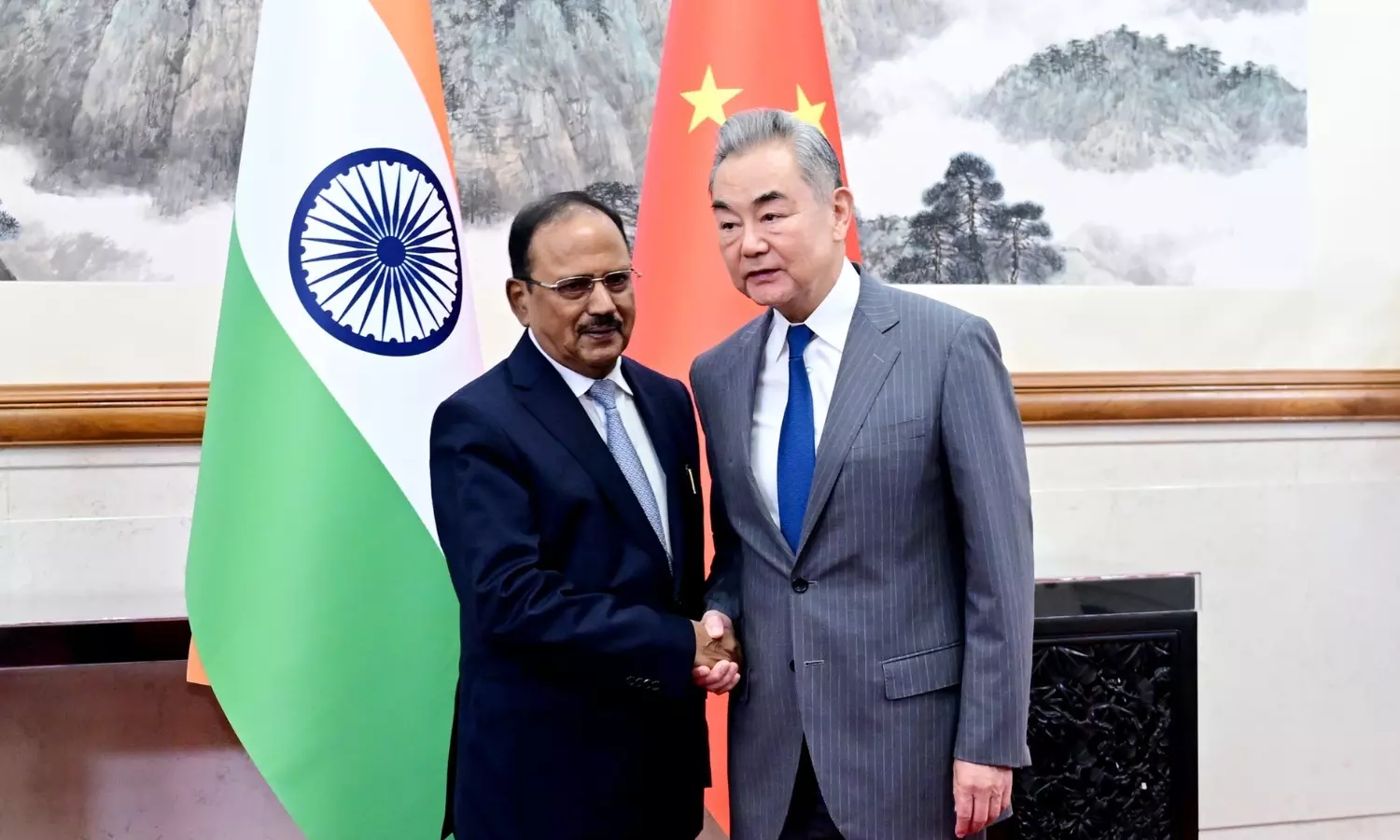
On 25 August, Ajit Doval and Wang Yi sat across the table for the 25th Special Representatives meeting on the boundary question. Next day both countries put out the same eight-point consensus. And the part that actually stands out is this: they have agreed to push for an “early and substantial harvest” on boundary delimitation.
Not the usual vague “we will continue discussions” line. They are telling the Expert Group on Boundary Delimitation and the Working Group on Border Management (both under the WMCC) to get moving. First job for those groups is simply to finalise their terms of reference so the real work can start. That’s a clear signal they want some concrete progress instead of just more rounds of talks.
They also repeated the usual commitments – follow the guidance from the leaders, keep the border peaceful, create the right atmosphere for the overall relationship to grow steadily. They said they will keep working on a fair, reasonable and mutually acceptable solution based on the 2005 political parameters agreement. Nothing new there, but they put it down again.
On the practical side, a few useful steps. If anything happens on the ground, they will handle it quickly through the existing channels – WMCC, local commanders, the usual mechanisms – so that small misunderstandings don’t turn into bigger problems. They also talked about improving understanding of the LAC in some areas so management becomes smoother.
They agreed on two more meeting points for the senior military commanders and two extra military hotlines in the Eastern and Middle Sectors. These are the kind of small, boring, practical things that actually reduce the chance of things going wrong when patrols get close or the weather is bad.
There was also a bit of good news on the people side. India thanked China for increasing the batches for the Kailash-Manasarovar yatra. The three old border trading points are open again, and both sides said they want to strengthen trade and pilgrimage links so the border areas feel a bit more normal.
They fixed the next expert-level meeting on trans-border rivers for September – important for sharing water data and renewing the old MoUs. And the next Special Representatives meeting will be in India in 2027. So the process continues without a long gap.
Look, nobody is claiming this is a breakthrough that settles the whole boundary. The differences are still there and the full settlement is a long road. But after the mess of 2020 and the long standoff that followed, these steps feel like both sides are trying to lock in the calm they have managed to restore. Last year they set up the expert groups. This year they are giving those groups a clearer job – deliver some early results.
It’s the kind of quiet, step-by-step work that doesn’t make big headlines but slowly reduces the risk of another crisis. New hotlines, extra meeting points, experts told to produce something concrete, and a clear commitment to keep talking. That’s what came out of Beijing this week.
Whether those groups actually deliver the “early harvest” is the real test. For now, both sides have put it in writing that they want to move in that direction. And in this relationship, putting it in writing still counts for something.
Sources:
Ministry of Foreign Affairs of China – Eight Points of Outcomes and Consensus, 26 August 2026
Hindustan Times, 26 August 2026
The Hindu, 26 August 2026
Reuters, 26 August 2026
@Rohit Manral