
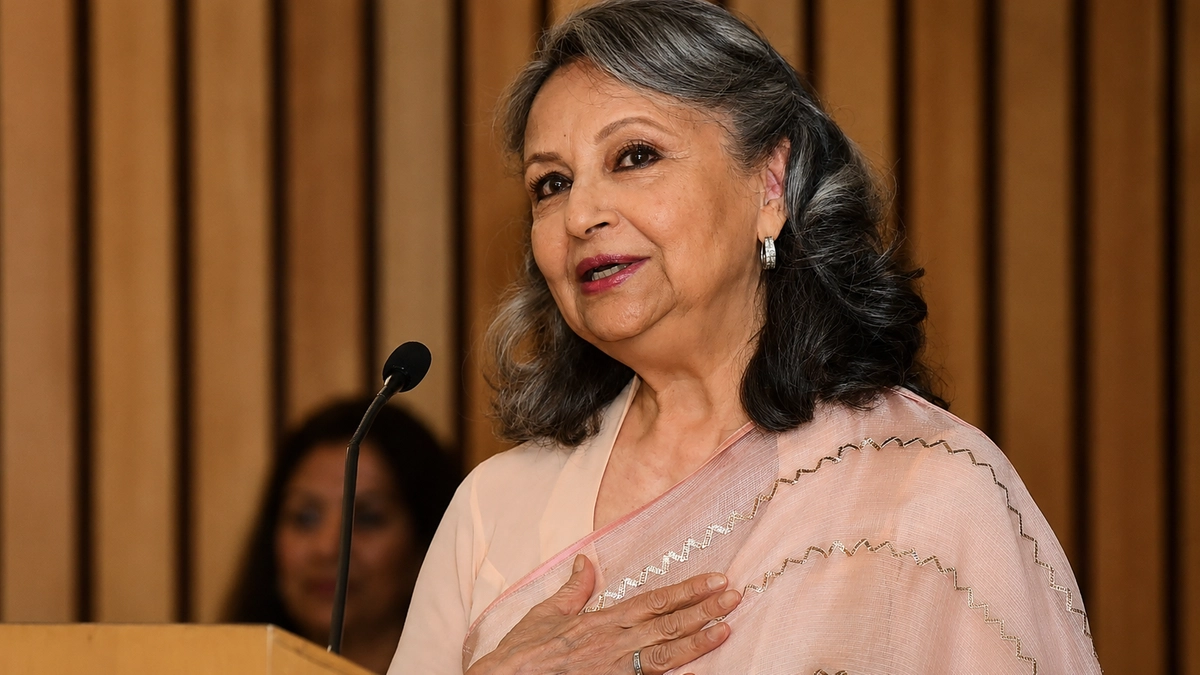
The veteran actress spoke to IANS and said something quite simple. She feels only the first two stanzas of the national song should be sung in public. Why? Because the later ones mention Kali and Durga, and that can feel awkward for people who believe in only one God. “My point of view is that there are many religious people who believe in one single God, not many Gods,” she said. “It is difficult for those who believe in one religion to say, ‘Vande Kali, Vande Durga’. Therefore, if we take all the religious people in India together, the first two stanzas are very good.” That’s it. No big speech, no political statement. Just her view. But the reaction came fast.
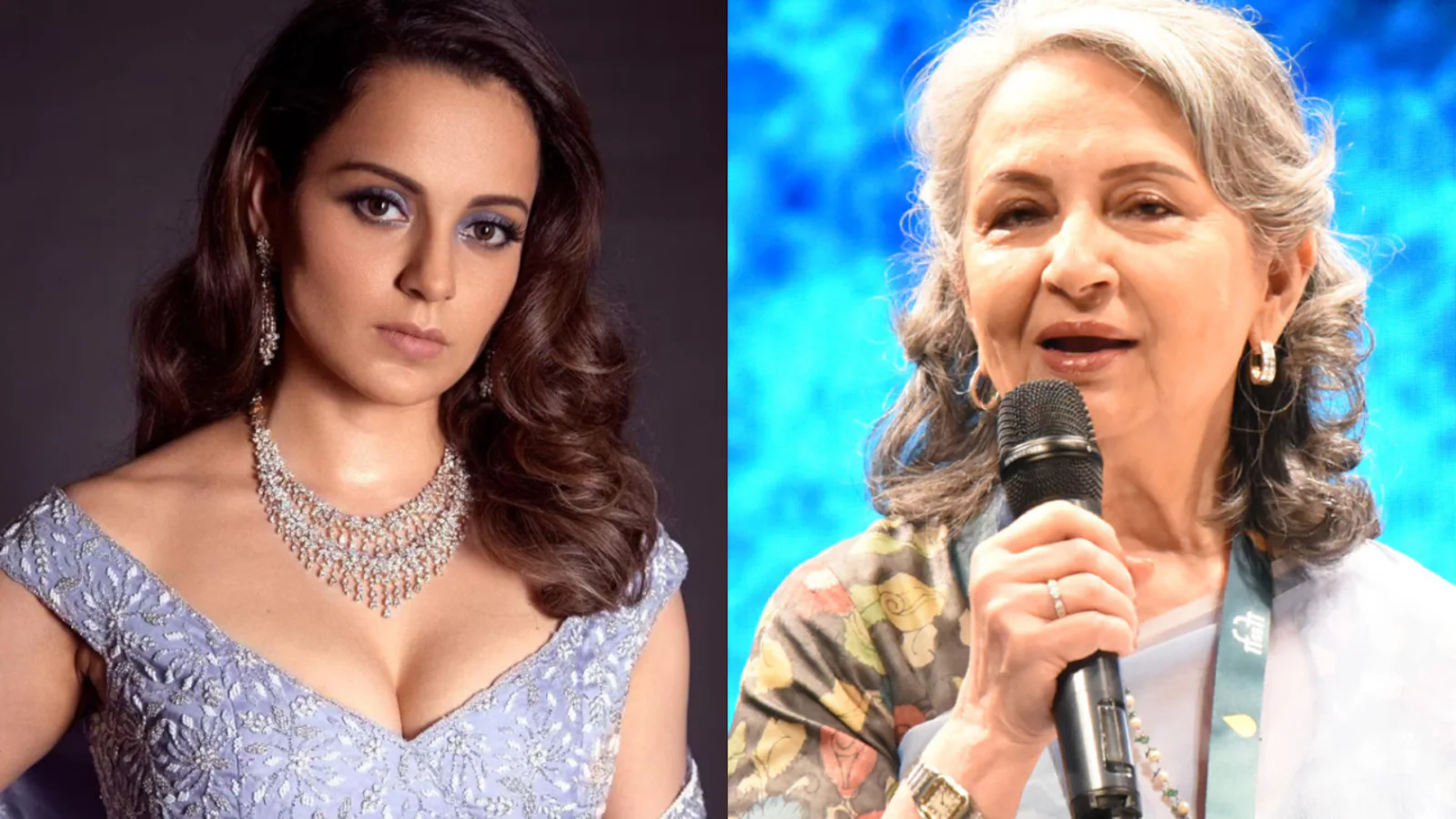
Kangana Ranaut, who is both an actor and a BJP MP, put up a story on Instagram. She said she respects Sharmila’s right to speak, but as an artist she was astonished. Poetry uses analogy, she wrote. Bankim Chandra wasn’t asking people to adore goddesses; he was trying to wake up the strength inside the country. Kangana also recounted people to come out of the Hindu-Muslim mindset.
Then the BJP leaders jumped in. West Bengal’s Indranil Khan didn’t hold back. “Is it from Sharmila Tagore or the Congress that we have to learn patriotism?” he asked. He said the party doesn’t need lessons from people who question the national song. The real teachers, according to him, were the freedom fighters who carried Vande Mataram in their hearts and took inspiration from Bankim’s Anandamath. “We have to learn from those who gave freedom to all of us from the British, not from those who don’t know what freedom is,” he added. He also said questioning the song is an insult to it.
Samik Bhattacharya, the state BJP president, was a bit mellower. He said it’s her personal opinion and she’s free to have it. But the comprehensive message from the party was clear enough: the full song is part of our heritage, and no one should be cutting it down to make it more relaxed.
This whole row didn’t start with Sharmila. It’s been building for weeks. On Independence Day the full six stanzas were sung at the Red Fort. The same way they have been doing since 1937. That year the party had decided, after talking to Rabindranath Tagore, that the opening verses were enough because they carried a gentle, unifying feeling. The later parts, more closely tied to the novel Anandamath, were left out to avoid communal tension.
The BJP sees that old decision as the beginning of “appeasement politics.” Home Minister Amit Shah has said it more than once. They argue the complete song inspired the freedom struggle and should be sung as it was written. The government has even given Vande Mataram the same legal protection as the national anthem.
So when Sharmila Tagore spoke, it fitted neatly into this larger fight. One side hears a reasonable suggestion for inclusivity. The other side hears yet another attempt to water down a national symbol. Both claim to be speaking for the country.
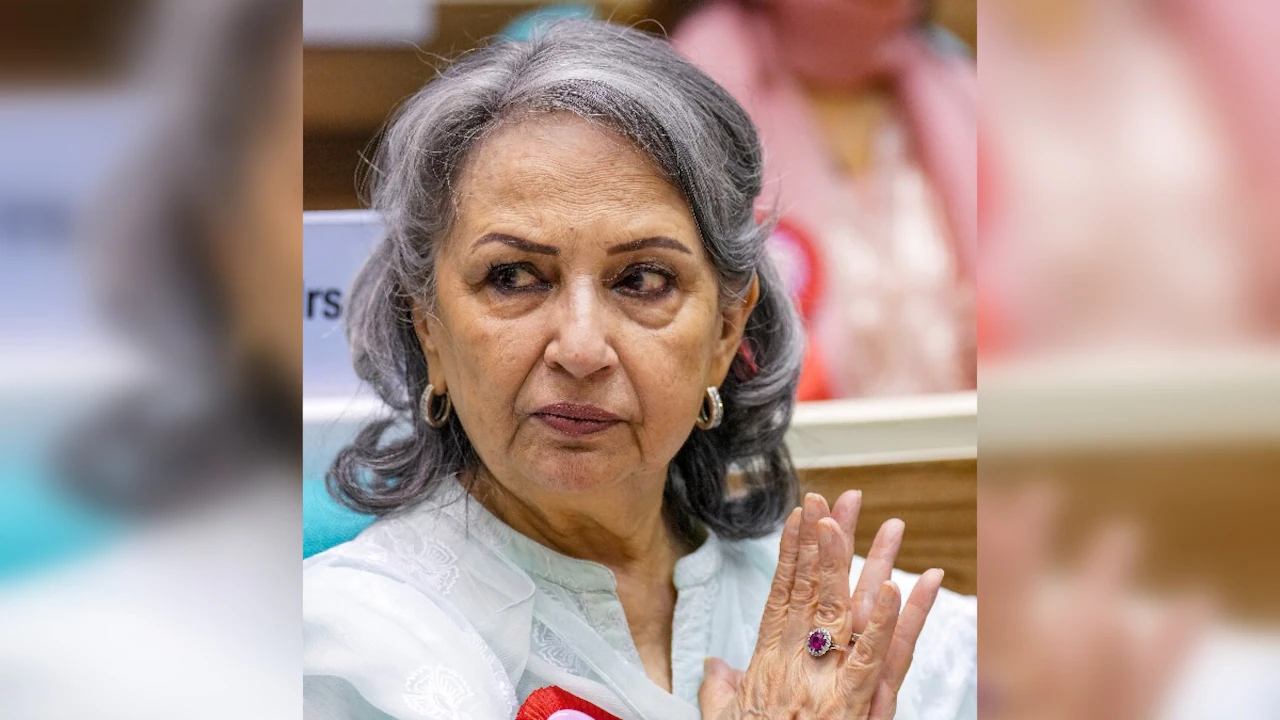
The song itself is more than a hundred years old. Bankim wrote it in the 1870s. Tagore set the first stanza to music and sang it in public as early as 1896. Over the years different groups have claimed different versions of it. What was once a practical compromise in 1937 is now treated like a test of loyalty.
Ordinary people watching all this must be getting tired. National symbols keep getting dragged into daily political fights. One side talks about diversity and comfort. The other talks about pride and history. Somewhere in the middle, the song itself keeps getting pulled in two directions.
Sharmila Tagore’s comment has at least brought the actual text back into focus. Should a diverse country sing the full poem, or is the shorter version still the wiser choice? The BJP’s sharp reply—“Will she teach patriotism?”—shows where they stand. For them the answer is already decided. Patriotism means accepting the song as it is, not editing it.
Whether that settles anything is another matter. For now, an actress’s quiet remark has become the latest spark in a debate that simply refuses to go away. The song is still here, still powerful, and still able to tell us more about today’s India than about the past.
Sources:
News18, Hindustan Times, India Today, The Print, and IANS interview quotes reported on 21 August 2026.
@Rohit Manral