
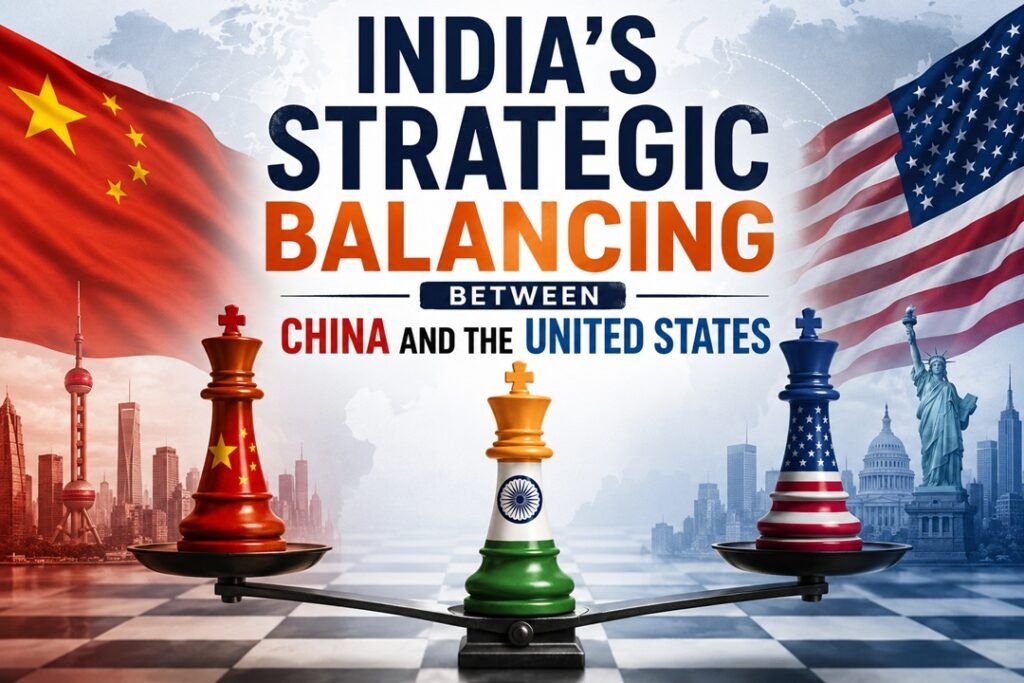
India’s been doing this balancing thing for years, and right now it’s getting messier and more interesting at the same time. On one hand you’ve got China — still the big supplier of everything from phone parts to solar panels. On the other, the Americans, who bring deeper pockets, better tech partnerships, and fewer political red flags. New Delhi wants more investment and trade from both without looking like it’s picking a side. It’s a proper tightrope walk.
Last financial year the total trade between the two countries shot up to about $151 billion. China is back as India’s largest trading partner. Our exports to them went up nicely — around $19.5 billion, a solid jump of over 36 percent. But imports? They jumped even higher, to roughly $132 billion. That leaves a trade deficit of more than $112 billion. We keep buying the stuff we need to run our factories, while selling them much less in return. It’s been like this for a while and it still makes a lot of people in Delhi uncomfortable.
Investment from China has always been tiny by comparison. Total Chinese FDI since 2000 is only about $2.5 billion — almost nothing next to the overall money flowing into India. After the 2020 border clash, the government slammed the brakes with Press Note 3. Almost anything from China or other neighbours needed special permission. The money basically stopped.
This year they eased it a bit. In March they brought in Press Note 2, 2026. It clarifies the rules around who actually controls the investment and allows smaller, non-controlling stakes without the long approval process. There’s also a faster track for manufacturing sectors India really wants — electronics, capital goods, solar and the like. It’s not a free-for-all. Security checks are still there. But the message is clear: if Chinese companies want to set up here and help build local capacity, the door is a little more open than before.
Now the American side feels warmer. In February the two countries announced an interim trade deal. The US brought down those high reciprocal tariffs on Indian goods to around 18 percent. India agreed to lower duties on a bunch of American industrial products and farm goods, and said it would buy a lot more US energy, aircraft, tech and other stuff — numbers floating around talk of over $500 billion over time. It’s not a full free-trade agreement yet, and some bits are still being sorted, but it takes the heat off Indian exporters in textiles, chemicals, leather and so on.
American companies have always put more money into India than the Chinese. They’re active in digital, manufacturing, semiconductors and clean energy. The strategic side is stronger too — defence ties, tech cooperation, talk of building supply chains that don’t depend too much on any one country. For the government, US money usually comes with fewer headaches.
So here’s the real game. India still needs Chinese components to keep its manufacturing push going. At the same time, it doesn’t want to stay so dependent. Letting in some Chinese investment is one way to bring more of the production chain inside the country. With the Americans, the focus is market access, higher-end technology and long-term partnerships.
Global companies are still looking for alternatives to China, and India is pitching hard. But Chinese firms themselves are big in electronics, batteries and solar. Shutting them out completely would slow things down. So the approach is selective — take the capital and know-how where it helps, keep a close eye on anything sensitive.
It’s not a pretty strategy and it won’t make everyone happy. Trade with China will probably keep growing because the demand is real. Chinese investment might pick up a bit if the new rules work. The American relationship should keep expanding on the back of the trade framework and shared interests. The big question is whether India can turn all this into more local value, more jobs, and a less lopsided trade picture.
For now, the government is doing what big countries often do when the world feels uncertain — keep both options open, take what it can from each side, and try not to get stuck depending on just one. It’s messy, practical, and very much the Indian way of handling a complicated world.
Sources:
- Embassy of India, Beijing – official trade data (FY25 & FY26)
- Economic Times / Commerce Ministry figures – China as top trading partner, $151 bn trade, $112 bn deficit
- DPIIT Press Note 2 (2026) – easing of FDI rules for China-linked investments
- Carnegie Endowment / Lowy Institute – Chinese FDI totals (~$2.5 bn cumulative)
- White House Fact Sheet & Joint Statement (Feb 2026) – US-India interim trade deal & tariff cut to 18%
@Rohit Manral