
This time it’s T.G. Mohandas, that Kerala-based RSS ideologue and former BJP intellectual cell man, talking about the recent Cockroach Janta Party protests at Jantar Mantar.
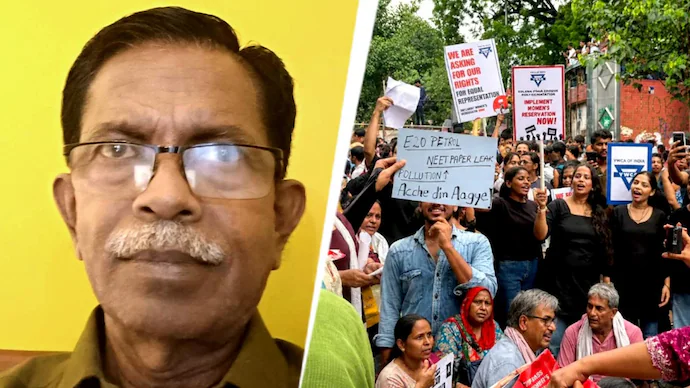
In a video on his Pathrika channel, Mohandas laid out what he would have done if he had been in charge of handling those student demonstrations over the NEET paper leak mess. He said he would first slap a curfew around a four-kilometre radius of Jantar Mantar. Then he’d announce three times over loudspeakers that everyone should disperse. And if they didn’t? He’d order the forces to open fire.
“People will run scattered. Some will die. Some will not. Some will suffer grave injuries. Within four hours the situation will become calm. We will collect the bodies and take them to the hospital,” he said, pretty much as matter-of-fact as if he was describing a traffic plan.
That alone was enough to set people off. But he didn’t stop there. He also went after the women who had joined the protests. He talked about gang rapes happening and claimed there wouldn’t be any complaints because, in his words, there are “rape-loving people, especially the Left wing, secular and democratic believers.” He basically suggested that certain women in those crowds “like being raped.”
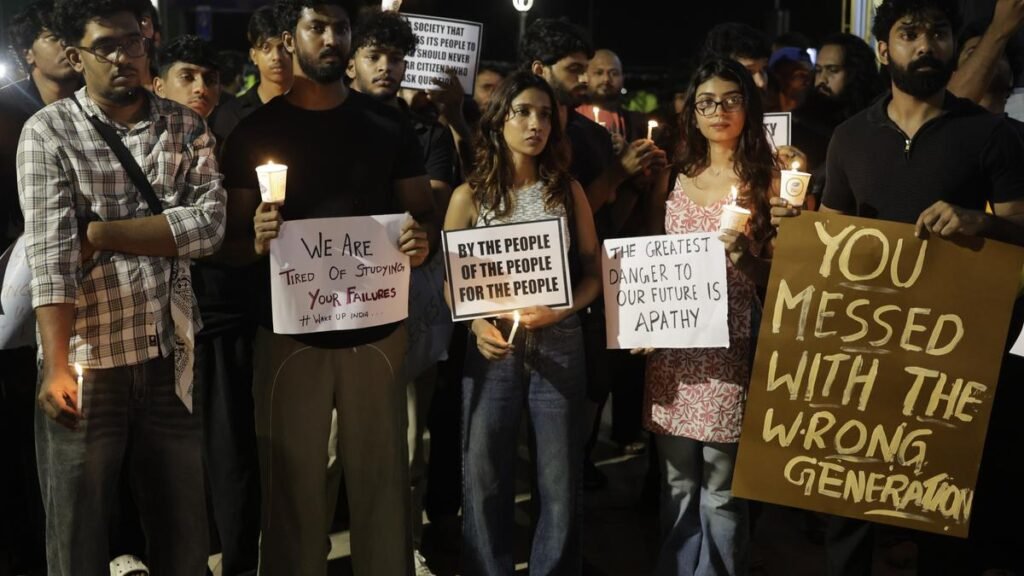
Now, you can imagine how that landed. Social media lit up. Student groups, opposition parties, ordinary people—everyone was sharing the clip and calling it out. The All India Students’ Federation (AISF) didn’t waste time. They filed a complaint with the Kerala State Police Chief, saying this wasn’t just some loose talk. They called it incitement to violence, an attack on the right to protest, and something that could spread fear if left alone. They want proper legal action.
The Student Federation of India also pushed for action, saying Mohandas had called for peaceful student protesters to be shot. Rajya Sabha MP A.A. Rahim from the Democratic Youth Federation of India said the remarks would be dealt with both politically and legally. He even sent the video to lawyers. “This is an opinion which exposes the BJP,” he said, arguing that leaders get people like Mohandas to say the things they themselves can’t say openly in a place like Kerala.
Mohandas, says the short clips that went viral are taken out of context from a longer 31-minute talk. According to him, it was satirical, full of Malayalam idioms and humour that doesn’t translate well into English. He claims he was just illustrating how police and administration usually handle violent situations—curfew, warnings, force if needed—and contrasting the “emotional” reactions of ordinary people with what he sees as Prime Minister Modi’s more measured approach to governance. He also accused certain media outlets and Left supporters of amplifying the controversy deliberately.
The BJP in Kerala has been careful. Party general secretary Dr J. Pramila Devi said Mohandas is a “free thinker” who has every right to express his opinions. But she was clear that the BJP does not endorse his statements and can’t be held responsible for them. Others pointed out that he no longer holds any official position in the party or the RSS. Still, critics aren’t buying the distance. They say when someone with his background talks like this, it reflects a certain mindset that many feel is becoming more open these days.
The protests themselves had already been tense. Students and youth groups under the CJP banner, along with others, had been out at Jantar Mantar demanding accountability over the NEET irregularities and the resignation of the then education minister. Things turned chaotic at points, with police using tear gas and batons, and there were allegations of attacks from different sides. Mohandas was reacting to that whole episode when he made these comments.
What makes this land so hard is the combination. Talking casually about shooting protesters is one thing. Adding those remarks about women and “rape-loving” people takes it to another level of ugliness. Even people who are no fans of the protests found the language hard to defend. On the other side, some of his supporters online have tried to argue that he was just being blunt about restoring order, or that the protests themselves had elements of disruption that needed a firm hand.
This isn’t the first time Mohandas has been in the news for strong views. He’s an engineer and lawyer by training, has written columns, done television, and earlier floated ideas that even raised eyebrows inside his own circles. But this particular video has clearly crossed a line for a lot of people.
As of now, the Kerala Home Department has ordered a probe after complaints reached the minister. Whether it leads to any formal case or just remains a political flashpoint remains to be seen. In the meantime, the clip keeps circulating, the arguments continue, and the old debate about free speech versus hate speech, protest rights versus public order, is playing out once again—this time with a particularly ugly edge.
It’s the kind of remark that sticks because it doesn’t just criticise a protest. In a democracy, people will keep arguing over where the line sits. This one, for a lot of folks, went well past it.
Sources:
- India Today (27 July 2026 report on TG Mohandas remarks and AISF complaint)
- The Hindu (27 July 2026 coverage of the video and political reactions)
- NDTV (clarification from Mohandas and context of the longer video)
- The South First (BJP response and SFI complaint details)