
Dharmendra Pradhan stepped down as Union Education Minister on 25 July 2026. The official reason he gave was the situation at Jantar Mantar and across the country — so that “anti-national forces” don’t take advantage. He said he respected the feelings of the youth. Fair enough on paper. But anyone who’s been watching Indian politics for a while knows this wasn’t just about one man’s conscience or a sudden attack of accountability.
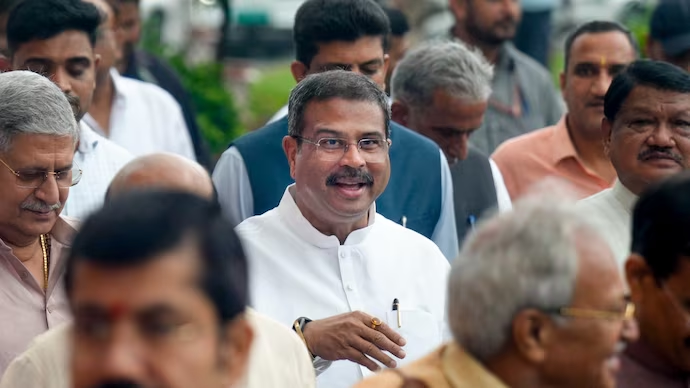
For weeks, students had been camping at Jantar Mantar. The Cockroach Janta Party (CJP), this new youth group that started almost like a meme and then grew into something much bigger, kept one clear demand: Pradhan must go. NEET-UG paper leak, the mess with marking schemes, the sense that higher education was turning into a joke for lakhs of aspirants — it all landed on his head. At least a dozen students had died by suicide linked to the stress. Police lathi-charges and tear gas on young protesters, many of them minors, only poured more fuel. Sonam Wangchuk’s hunger strike added moral weight. The Opposition sniffed opportunity and refused to let Parliament function. The first week of the monsoon session was a complete washout.
The BJP didn’t want to lose Pradhan. He’s no lightweight. Long-time RSS man, key organiser, the guy who helped deliver Odisha for the party in 2024. He implemented NEP 2020, pushed reforms, and was seen as loyal and competent inside the party. Letting him go risked setting a precedent — that sustained street pressure can force a Modi-era minister out. For twelve years that hadn’t happened. So they delayed. Senior leaders sat across the table with CJP’s young faces. They tried to cool things down. It didn’t work. The longer they held on, the more rigid and out-of-touch the government looked.
Then the calculation changed.
Sources inside the party and reports from people who track these things closely say the real worry was the monsoon session itself. The government has bigger plans. The delimitation bill is floating around again. It was tried earlier, tied with women’s reservation, and failed because they couldn’t get the two-thirds majority. Since then the numbers have shifted. NDA strength in Lok Sabha and Rajya Sabha has grown through defections and realignments. The political arithmetic looks better now. This session was supposed to be about guts and guile — pushing through the kind of structural change that reshapes Parliament for decades.
But you can’t push a major constitutional bill when the streets are on fire and the Opposition is using every disruption to keep the House non-functional. Jantar Mantar had become the single biggest story. As long as that protest stayed combustible, the government’s parliamentary agenda was stuck. So Pradhan became the sacrifice. Not because the party suddenly discovered humility, but because the bigger goal — getting the House working and the delimitation process moving — mattered more than one minister’s face.
It’s the same logic we saw with the farm laws. When a protest starts taking a shape the government can’t fully control, they know how to take a tactical step back. Prestige is important in the BJP. Parampara, pratishtha, anushasan — those words mean something to them. But survival and long-term power mean more. Pradhan’s resignation cleared the immediate blockage. The protests were called off. Parliament could, in theory, get back to business. The party can now argue it listened to the youth while still protecting its larger agenda.
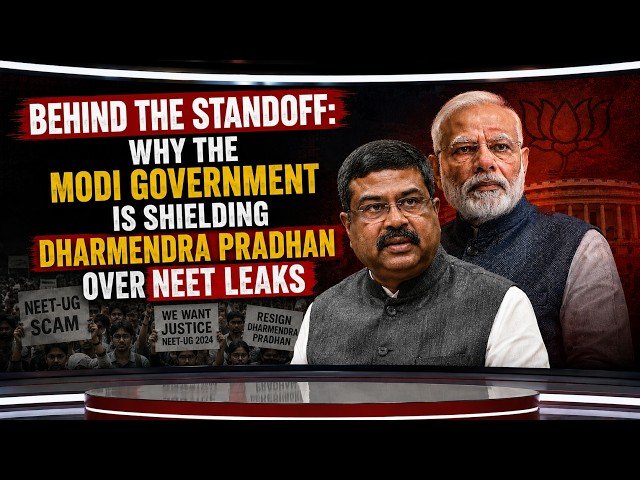
Of course, questions remain. Why let it fester so long? Why not make the sacrifice earlier and look more responsive? Why did it take police brutality and a nationwide youth upsurge to force the move? And what does this mean for accountability going forward? One resignation doesn’t magically fix paper leaks or restore trust in the examination system. The deeper problems in education — coaching culture, inequality, pressure — are still there.
For the BJP, though, the immediate math is clear. One loyal minister is a small price if it keeps the bigger parliamentary game alive. Whether that game succeeds, and whether the youth movement that forced this exit settles for one scalp or keeps pushing, is the next chapter. For now, Pradhan is out, the streets have quietened a bit, and the party that always plans for tomorrow has bought itself some breathing space today.
That’s the story as it looks from here. Politics is rarely pure principle. Mostly it’s trade-offs. This one just happened to be very public.
Sources:
- India Today: “Dharmendra Pradhan a small sacrifice for BJP’s bigger goals?” (26 July 2026)
- The Guardian: “India’s education minister resigns in victory for Cockroach youth movement protests” (25 July 2026)
- Times of India: BJP leaders’ reactions to the resignation (25 July 2026)
- NDTV and other contemporaneous reports on the Jantar Mantar protests, NEET-UG controversy, and parliamentary numbers.