
India-US interim trade pact that’s got everyone talking, especially our farmers back home. Announced just days ago in early February 2026 after talks between PM Modi and President Trump, it’s like a first step toward a bigger friendship deal between the two countries. But man, the part hitting closest to home is what it means for the millions of farmers across Bihar, UP, MP, and beyond.
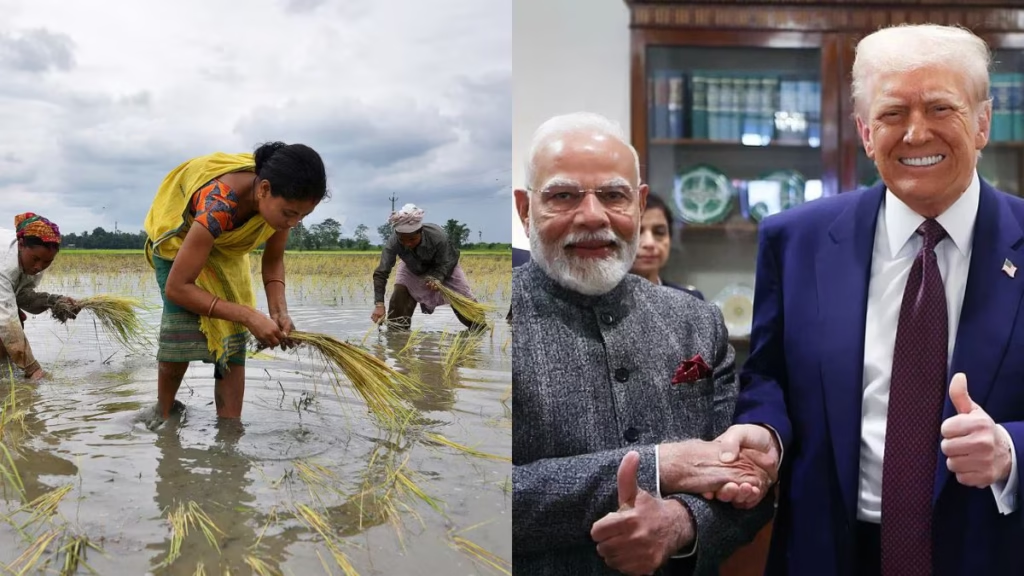
Picture this: the US is dropping its tariffs on a bunch of Indian stuff—from as high as 50% down to just 18%. That opens the massive American market for our textiles, leather goods, gems, medicines, and yes—key farm exports like tea, coffee, spices, basmati rice, fruits, nuts, and even some seafood.
The government is calling it access to a “$30 trillion market,” and honestly, for growers in Assam, Kerala, Tamil Nadu, or Punjab’s rice belts, this could mean better prices and more buyers. Exporters of those cash crops are probably smiling right now—potentially billions in extra earnings without those heavy duties.
But here’s where it gets real and a bit tense. In return, India is agreeing to cut or scrap tariffs on a list of US goods, including some farm items like dried distillers’ grains (DDGS—that’s a protein-rich animal feed from corn ethanol), red sorghum (another feed stuff), soybean oil, tree nuts, fresh and processed fruits, wine, spirits, and a few “additional products.” No big openings for staples though—wheat, rice, maize, dairy, poultry, meat are all protected, no concessions there. The government insists it’s “calibrated,” with things like tariff-rate quotas (limits on how much comes in cheap) and phased rollouts over years to give time to adjust.
Now, the farmers’ side is buzzing with worry—and it’s not small noise. Groups like the Samyukt Kisan Morcha (SKM) are fired up, calling it a “total surrender” to US big agribusiness. They’ve announced nationwide protests, including a big strike on February 12, and some are even demanding Commerce Minister Piyush Goyal’s resignation. Why? Cheaper US bring in of DDGS and sorghum could inundation the feed market, overcast costs for poultry and dairy farmers (that’s a win for them and maybe cheaper chicken or milk for us), but it hurts soybean and oilseed growers big time.
Places like Madhya Pradesh and Maharashtra already have surpluses—more cheap feed means less demand for local soyameal, crashing prices, and pushing farmers to switch crops. Soybean oil imports under quotas could add pressure too. Critics say US farmers get massive subsidies and huge farms, so our smallholders can’t compete fairly.
On the flip side, the government pushes back hard—Piyush Goyal says they’ve aggressively protected sensitivities, no GM crops or dairy floods, and this boosts our exports while meeting needs like better feed. Opposition parties are slamming it as one-sided, but officials call the fears overblown.
Bottom line? It’s a mixed bag for our farmers. Export stars like spice, tea, and fruit growers could see real gains and higher incomes. But oilseed, soybean, and feed-crop folks in central India might face squeezed margins and price drops if imports surge. With protests heating up and details still rolling out, this deal could reshape rural life—some for the better, some tougher. We’ll have to watch how it’s implemented and if safety nets like better MSP or support come in.
Sources:
Reuters
The White House
Bloomberg
BBC
The Economic Times
Down To Earth
The Hindu
Indian Express