
Yesterday the Indian rupee did something it has never done in 78 years of independence: it closed weaker than 90 against the US dollar. The final number on the screen was 90.23 – a drop of 32 paise in a single day, and almost 4 rupees weaker than where it stood just three months ago.

For ordinary people, that number means petrol and diesel will soon cost ₹1.5–2 more per litre. Flight tickets to Dubai, London or New York have already jumped 6–12% this week. Anyone with a child studying abroad or a parent planning medical treatment outside India just saw the bill go up another 4–5% in rupee terms, without anything else changing.
Why did it happen so suddenly?
Everything hit at once.
Exports are barely growing (up only 1.2% last month), but imports shot up 11%. We bought more gold for Diwali weddings, more oil because prices refuse to come down, and more electronics because everyone wanted the new phone before festive discounts ended. The trade gap blew out to $31 billion – the worst in over a year.
Foreign investors decided this was the right time to take money out of India. In just October and November they pulled out ₹1.14 lakh crore – the biggest two-month exit since the dark days of March 2020. When that much money leaves, someone has to sell rupees to buy dollars, and the rupee suffers.
Oil refuses to behave. Brent crude is stuck above $83 a barrel because ships are still taking the long route around Africa to avoid trouble in the Red Sea. Every single dollar the oil price stays high costs India another ₹12,000 crore a year.
And just when we thought a small trade deal with the United States might give some good news, reports came that the new administration in Washington is talking about 10–25% extra tariffs on Indian steel, aluminium, cars and even shrimp starting next year. Markets hate uncertainty; the rupee got hammered on the news.
The Reserve Bank tried its best. Traders say it sold close to $1.8 billion yesterday through public-sector banks to slow the fall. It worked a little – without that, we might have seen 91 on the board already – but the RBI can’t fight the entire market forever.
Inside dealing rooms, the mood is grim. One treasury head told me, “It’s in free-fall now. The RBI can decide how fast we fall, but only fresh dollars coming in can stop it.” Most traders are quietly betting the rupee will touch 91.50–92 by March, and some big global banks have already started telling their clients 93 is possible in the next twelve months.
For the millions of families who keep a small fixed deposit or sip mutual funds, this feels unfair. India is still the fastest-growing big economy in the world, yet the currency keeps sliding. The truth is simple: we still import far more than we sell to the world, we still need oil for almost everything we do, and when the world gets nervous, money runs to the US dollar first.
The RBI still has more than $680 billion in reserves – enough to fight for many months – but every billion it spends is a billion less for a rainy day.
Next week the central bank meets to decide interest rates. A few months ago everyone thought they would cut rates soon. Now economists are whispering that if oil stays high, inflation could cross 6% again by February, and rate cuts might be off the table.
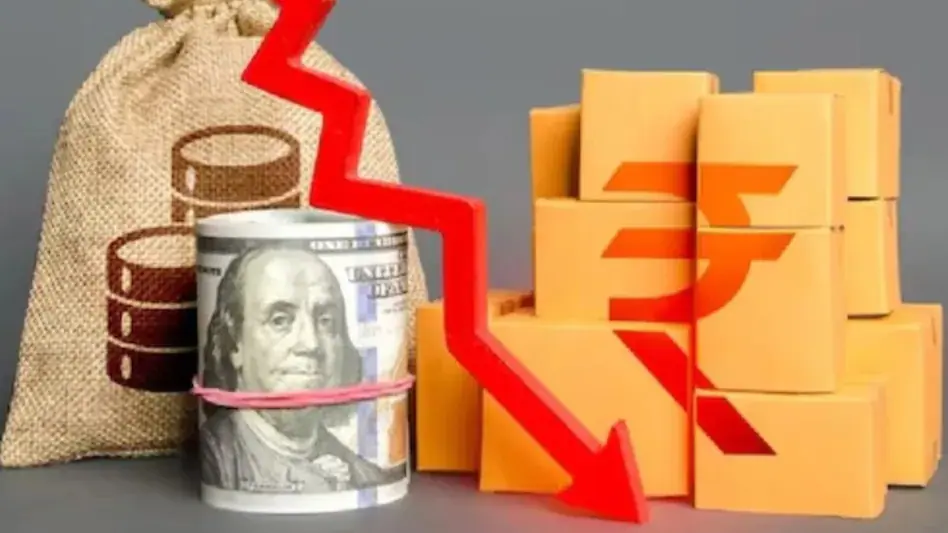
For now, 90 is not just a number. It is a reminder that even when the economy feels strong at home, the world outside can shake the ground under our feet in a single afternoon. (Sources: RBI daily reference rate, Ministry of Commerce October trade data, NSDL FPI flows, Reuters and Bloomberg terminals, The Economic Times, Business Standard, notes from Emkay Global and treasury desks of three large banks.)