
Every year a familiar grey pollution layer blankets the whole Delhi city, which results in degraded air quality, children coughing and elderly struggling to even breathe.

Against this , the news of artificial raisin delhi feels like a sweet hug.
On 23rd October, CM Rekha Gupta announced that the preparation for first ever artificial rain by cloud seeding is complete.the first trail was done in burarai area of delhi, and if the weather conditions coordinate, the operation will take place on October 29th.
The human side of this story brings hope tpo the people of Delhi, struggling while breathing , this kind of announcement brings hope to the people.
What Actually Happened ?
A test flight over Burari was carried out by a team from the Delhi Environment Department and IIT Kanpur. The plane used the “pyro method” to seed clouds by releasing salt flares and silver iodide. However, there was no rainfall during the trial because the cloud moisture was too low.
Better cloud conditions are now anticipated by the IMD for October 28–30, with theDelhi’s Bold Leap into Artificial Rainirst full cloud-seeding attempt most likely to occur on October 29.
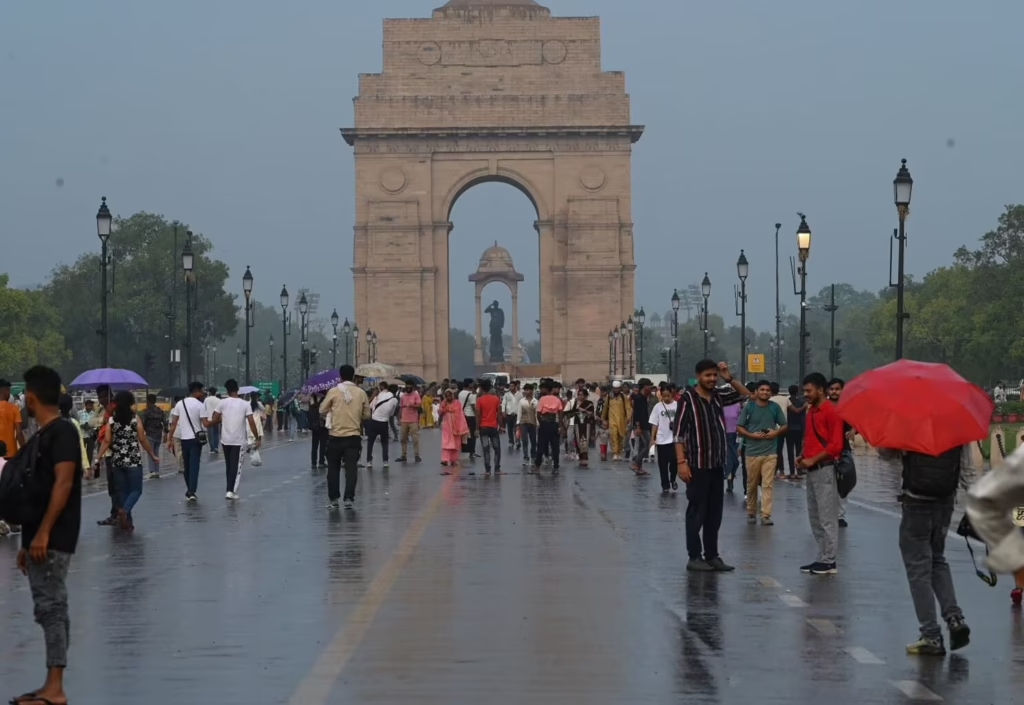
Why was this important?
- Technology meets Environmental Needs:
This step is not only a technical win for Delhi, but also a win over the smog blanket that covers the whole delhi during these months.
- Pollution Urgency:
The air quality index of Delhi is now lower than it has ever been.
- Powerful Idea:
The idea that a city can seed clouds , looks like a very powerful innovation and appeal.
So what is next?
In the coming days and week to come , here how the process will play out:
- The authorities will have an eye on the weather condition of Delhi, and once the conditions are seen favourable for the cloud seeding a flight is expected to go ahead on October 29th.
- After the rainfall is successfully induced, the authorities will collect the data, that will monitor the quality of air to know the difference in AQI.
- But , this alone will not help the city to fight pollutants , other measures like stricter vehicle emissions, construction regulation, stubble-burning bans, dust control shall also be put into proper check.
- If this model worked for Delhi city , this model must be implemented on other cities as well.

Conclusion:
If cloud seeding causes the skies over Delhi to open up and raindrops to fall on October 29, it will be a spectacular sight to watch. What is going to follows, however, we will tell the true story: Did the rainfall reduce pollution? Did it result in less hospitalization, clearer lungs, and cleaner air? Or was it a short-lived event that faded after two days, like many headlines?
Either way, Delhi has taken its steps . It’s an experiment with promise, risk, all at once. If it succeeds, perhaps the “artificial rain” pilot will be remembered as a turning point. If it struggles, it will still remind us of the reality that cleaning the air takes persistent effort, hundreds of small changes rather than one big show.