
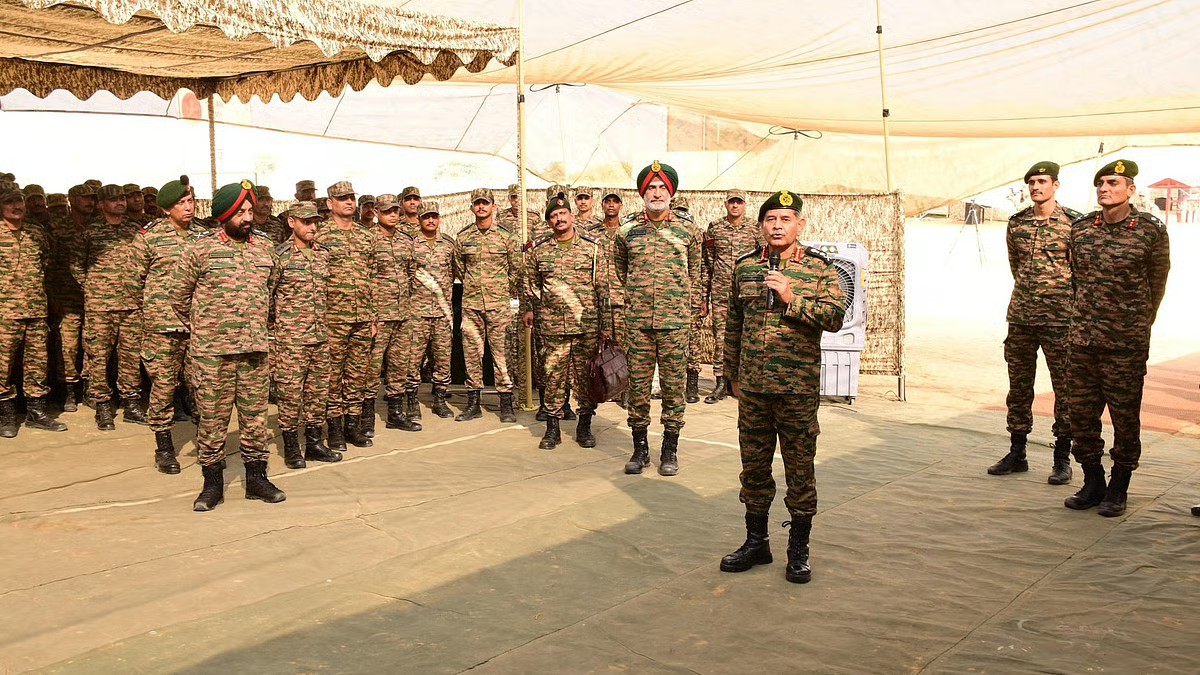
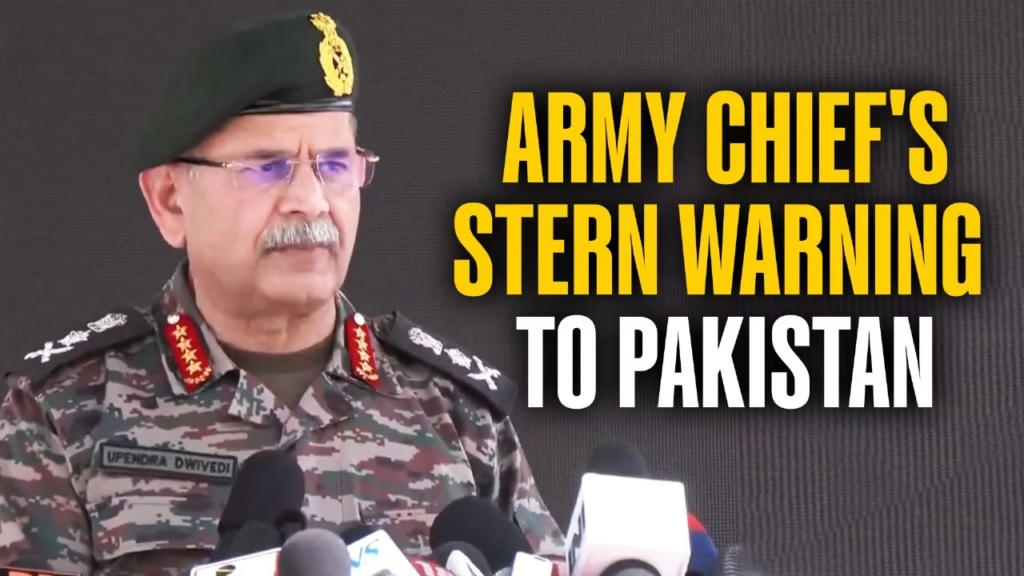
Indian Army chief General Upendra Dwivedi on 3rd of October gave a direct warning to Pakistan, while addressing troops and media at Anupgarh in Rajasthan’s Sriganganagar district. General Dwivedi warned that Pakistan must stop supporting terrorism if it wants to remain on the world map. “India is fully prepared this time and won’t show the restraints it showed during operation Sindoor” Dwivedi said. The visit to Anupgarh was a strategical one and emphasized on the operational readiness of Army. He also stated that India had a clear stance during operation Sindoor to target only the terrorist camps and hideouts, and not ordinary Pakistani citizens. Also mentioning that nine Pakistani sites were hit – sevenhits by Army and two by Air Force, he stated that complaints from India are not against Pakistani citizens but rather against the Pakistan funded terrorism.
Why Anupgarh? What is the strategic significance
Anupgarh is situated in Rajasthan, close to India-Pakistan border. It lies just opposite to the Bahawalpur, one of the Pakistani sites targeted during operation Sindoor. And this recent visit and addressing emphasize the border capabilities of Indian Armed forces. Two key things made by this addressing –
- General Dwivedi demonstrated the operational readiness and that Indian Armed forces are alert and very much present at the border frontiers. The message was conveyed as an assurance to the Indian citizens while for potential foreign threats it was a clear warning.
- While the majority of attention is paid on the Northern borders, visit reminded that the western border is under active vigilance and modernization.
What were the main keypoints of addressing?
- A clear message was given that India, unlike its past will not tolerate any cross-border provocations. And perhaps the main headline was India’s future approach by not restraining itself like Sindoor 1.0. India would be taking approach more aggressive and unbounded by any caution.
- Warning to Pakistan was another highlight of the addressing. It was warned to be removed from the world map if state-funded terrorism does not stop.
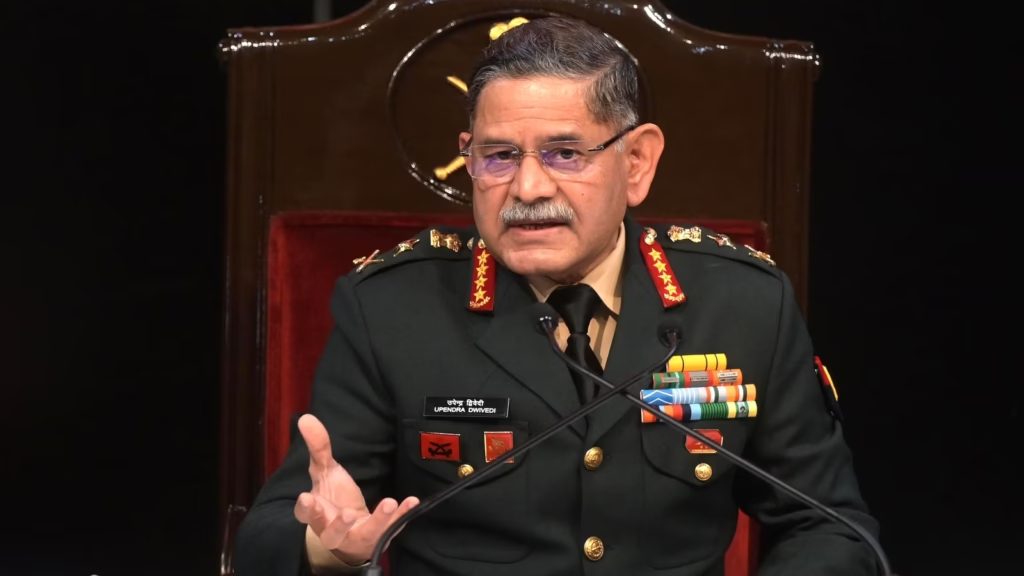
If Pakistan wants to maintain a place in world history and geography, it must stop state-sponsored terrorism. We will not show any restraint this time as we did during Operation Sindoor 1.0 and will go a step ahead if provoked again” were the words from Army chief.
- Operation Sindoor, launched on 7th May as a response to the Pahalgam terror attack was named a big success,giving evidence of Indian force’s capabilities.
- Addressing soldiers, he also asked them to be battle ready and cited that if God wantsan opportunity would arrive soon for the engagement. Implying how new India believes in action-taking approach and not in the old peaceful mediation.
- The moral values of India were well reflected by Terror targeting and not civilians’ statement. As reported by PTI (Press Trust of India) General Dwivedi said “We had identified the targets because we only wanted to harm the terrorists. We had aimed to strike their bases. We have no complaints against ordinary Pakistani citizens, so long as their country does not sponsor terrorists. Because terrorists were being sponsored, those terrorist targets were hit”
Throwing some light on Operation Sindoor
On April 22, a group of five terrorists executed one of the worst terror attacks in last two decades witnessed in India. The targeted site was a beautiful tourist place, Pahalgam in the Baisaran Valley. The attack took lives of 26 tourists and raised a question on the internal security and failure of Intelligence.
As a response, India launched Operation Sindoor on May 7, targeting multiple terrorist sites. The strikes were precise and destroyed nine terror launchpads and over 100 terrorists got killed. Pakistan attempted with drone and missile attacks to target Indian locations for following 2-3 days but their every attempt was foiled by Indian Air Defense System. Later the attacks stopped on 10th May on the request of Pakistan DGMO (Director General of Military Operations) for ceasefire. Post ceasefire, claims were made by U.S. President Donald Trump to have initiated the mediation between both the countries. However, India denied any form of third-member involvement leading to peace installment. Though ceasefire was agreed upon, a neighbor like Pakistan can never be trusted with numerous cases of ceasefire violation throughout the history of 78 years.
What is India’s approach to counter any threat from Pakistan? While the ideology of Pakistan is hardly likely to change, the nation in itself faces so much terrorism that it stands at second place in the list of countries most affected by terrorism. Yet it leads in export of terrorism. With the diplomatic spheres changing, India has left behind its old principles of peace and non-violence. India now has made its approach very clear to deal with unsound neighbors that the nation is bound to take any step appropriate and necessary to restore national peace.